
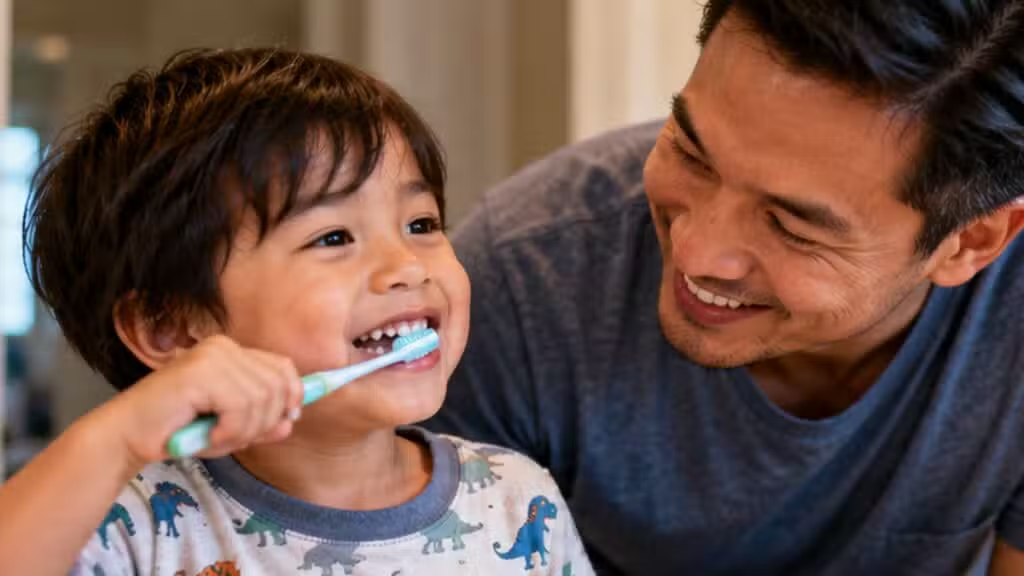
If your preschooler squirms, clamps their mouth shut, or treats toothbrushing like a negotiation, you’re not alone.
At this age, dental hygiene is less about knowing what to do and more about getting it done consistently. Preschoolers are old enough to have strong opinions, but not old enough to clean their teeth well on their own. That’s why a simple routine, a little patience, and the right habits matter so much.
Cavities are common in young children. The American Academy of Pediatrics notes that nearly 1 in 4 children ages 2 to 5 have had cavities in their baby teeth. The good news is that many of the biggest risk factors are manageable at home.
At Pedodontic Associates, we help families across Oahu and Maui build practical routines that protect growing smiles. Here’s what we want Hawaii parents to know about dental hygiene for preschoolers.
Why Baby Teeth Still Deserve Serious Attention
A lot of parents hear, “They’re baby teeth — they fall out anyway.”
But baby teeth do important work while your child grows. They help children chew comfortably, speak clearly, and hold space for the permanent teeth coming in later. When a baby tooth develops decay or is lost too early, it can affect comfort, nutrition, and how the adult teeth eventually erupt.
The good news is that preschool cavities are often preventable with the right combination of:
- fluoride exposure
- daily brushing and flossing
- healthy snack and drink habits
- regular dental visits
We also want parents to hear this clearly: a cavity is not a parenting failure. More often, it means a routine needs adjusting. Preschool years are a great time to make those changes.
A Simple Daily Dental Routine for Preschoolers
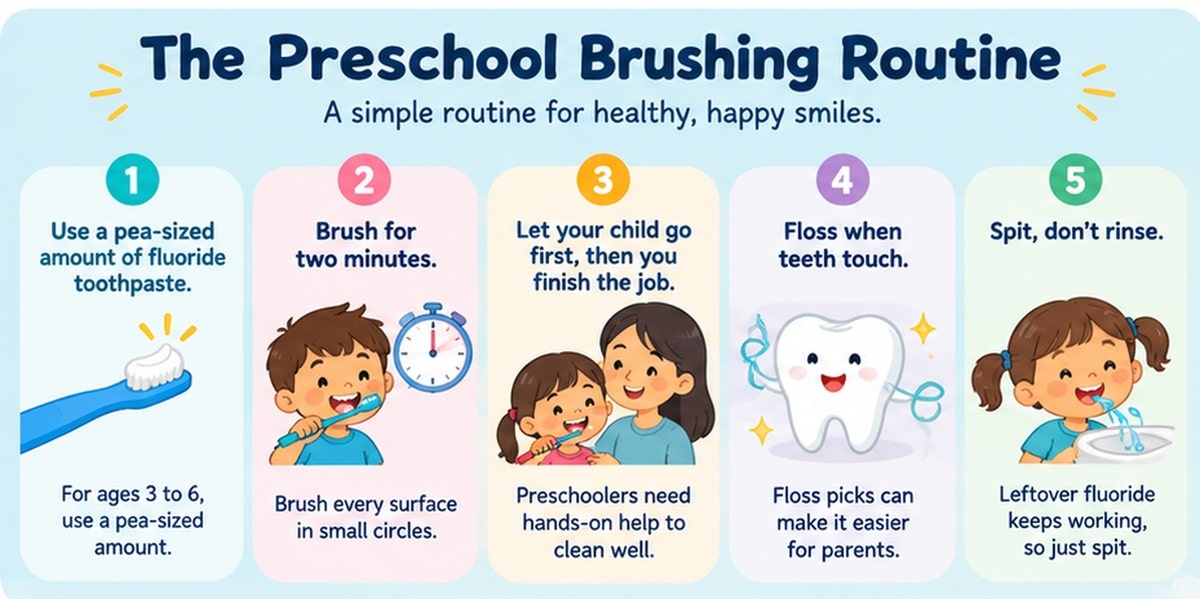
For most families, the goal is not a perfect routine. The goal is a routine you can actually repeat every day.
Brush twice a day, and finish the job yourself
Preschoolers usually want independence, but they still need hands-on help.
We recommend letting your child take the first turn, then you take the second. This “my turn, your turn” approach gives them some control while making sure the brushing is actually effective.
For ages 3 to 6:
- use a soft, child-sized toothbrush
- use a pea-sized amount of fluoride toothpaste
- brush for two full minutes
- brush twice a day, especially before bed
Bedtime brushing matters the most. Once your child is done eating and drinking for the night, brushing should be the last step before sleep unless they’re having plain water.
If you want more detailed toothpaste guidance, see our post on how much fluoride toothpaste kids should actually use.
Floss once teeth touch
If two teeth touch, a toothbrush cannot clean the space between them well enough on its own.
That means many preschoolers are ready for flossing, especially between the molars and crowded front teeth. Parents usually need to do this part themselves.
Floss picks can make the process easier for both you and your child. If you want a more detailed walkthrough, read our guide on when to start flossing kids’ teeth and easy techniques for parents.
Choose simple, age-appropriate tools
You do not need an elaborate setup.
A good preschool routine usually only needs:
- a soft-bristled toothbrush with a small head
- fluoride toothpaste for children
- floss or floss picks
- a timer, song, or visual cue to help with consistency
If you’re choosing between products, keep it simple. A child may care about the character on the toothbrush, but what matters most is that the brush fits their mouth and the routine gets done.
How to Teach Dental Hygiene to Preschoolers Without a Nightly Battle
Preschoolers learn best through repetition, play, and choice. If brushing has become a struggle, changing the mood around it can help.
Let them choose between acceptable options
Offer choices that still lead to the same result:
- “Do you want the blue toothbrush or the yellow toothbrush?”
- “Do you want to brush first, or should I brush first?”
- “Do you want the timer or the brushing song?”
This helps your child feel involved without turning brushing into a debate about whether it happens at all.
Use games that reinforce the routine
A few simple activities can make dental hygiene feel less like a chore:
Two-minute brushing song
Pick one song your child only hears during brushing time.
Sticker chart
A sticker after morning and bedtime brushing can help some children stay motivated.
Brush the stuffed animal first
Let your child “teach” a stuffed animal or toy how to brush.
Pretend dentist game
Take turns counting teeth with a toothbrush and a mirror.
Food sorting game
Sort snacks into “everyday choices” and “sometimes choices” so your child starts linking food habits and tooth care.
You do not need to do every activity. For most families, one or two rotating tools work better than turning the routine into a full production.
Keep your language calm and predictable
Preschoolers respond well to routines that sound familiar.
Short phrases help:
- “First brush, then book.”
- “Your turn, then my turn.”
- “We’re brushing the sugar bugs away.”
Consistency matters more than creativity. A calm routine repeated every day usually works better than constant reinvention.
Diet, Fluoride, and Habits That Help Protect Preschool Teeth
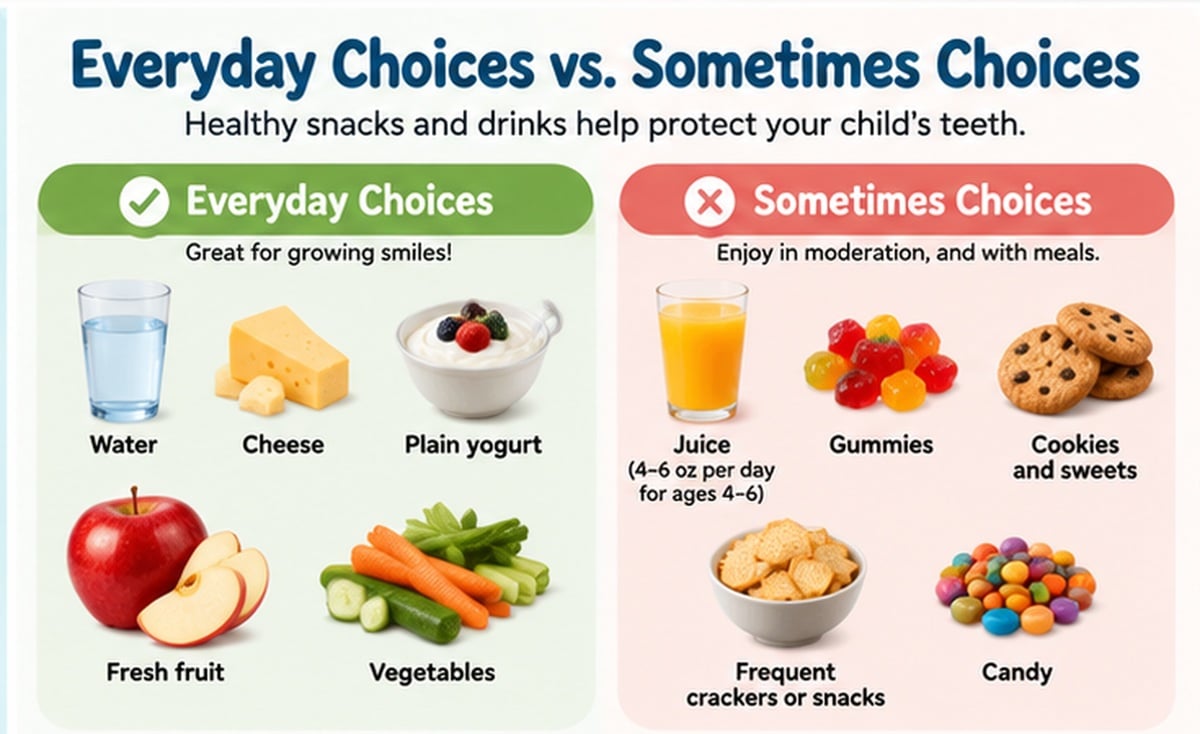
Brushing is only part of the picture. What your child eats, drinks, and does between brushing sessions also affects cavity risk.
Watch the frequency of snacking and sipping
For teeth, frequency matters a lot.
A child who sips juice all afternoon or snacks constantly gives cavity-causing bacteria repeated fuel throughout the day. Even foods that don’t look especially sugary can keep that cycle going.
We usually recommend:
- water between meals
- snacks at predictable times instead of all-day grazing
- limiting sticky or sugary snacks
- serving sweets with meals rather than as frequent stand-alone snacks
Be careful with juice
For children ages 4 to 6, the American Academy of Pediatrics recommends limiting 100% juice to about 4 to 6 ounces per day.
Even when the juice is “natural,” it still exposes the teeth to sugar. If your child drinks juice, offer it with meals rather than letting them sip it over a long period of time.
Fluoride still matters in the preschool years
Fluoride helps strengthen enamel and reduce cavity risk.
For preschoolers, that usually includes:
- fluoride toothpaste at home
- professional fluoride treatments when appropriate
- attention to fluoride exposure from your child’s water source
Because fluoride exposure can vary depending on where a family lives and what water source they use, it is worth asking about if you’re unsure. We can help you think through whether your child’s home routine is giving them enough protection.
You can also learn more from our pediatric oral hygiene page.
Watch prolonged oral habits
Thumb-sucking and pacifier use are common in early childhood, but if a habit is continuing beyond the preschool years, it’s worth discussing at your child’s visit.
That does not mean every child who sucks a thumb will develop a bite problem. It just means persistent habits should be part of the conversation.
Warning Signs You Shouldn’t Ignore
A lot of dental problems start quietly.
Call us if you notice:
- white, chalky spots near the gumline
- brown or black spots on the teeth
- gums that look swollen, red, or bleed often
- persistent bad breath
- tooth pain or sensitivity
- your child suddenly avoiding chewing on one side
- a broken tooth or dental injury
White spots can be one of the earliest visible signs of enamel breakdown, so they’re worth paying attention to.
If your preschooler has a dental injury, remember that baby teeth and permanent teeth are handled differently. A knocked-out baby tooth should not be put back in place. If an older child loses a permanent tooth, the response is different and time-sensitive.
For a step-by-step injury guide, see our article on what to do if your child knocks out a tooth.
If your child is in pain now or you’re worried about swelling, call our office directly.
What Preschool Dental Visits Usually Focus On
If your child is already in the preschool years and has not established a dental home yet, now is a good time to start.
A preschool dental visit may include:
- an exam
- a gentle cleaning
- fluoride treatment when appropriate
- X-rays when clinically appropriate
- parent coaching on brushing, flossing, diet, and habits
These visits are not just about “checking for cavities.” They’re also an opportunity for us to help you troubleshoot the routines that are hardest at home.
If you’re wondering whether your child should have been seen earlier, our article on the importance of seeing a pediatric dentist by age 1 explains why early visits matter. If your child is now 4 or 5 and hasn’t been in yet, that’s still a good reason to schedule rather than wait longer.
You can also explore our pediatric dentistry services to learn more about how we care for children at different stages.
Start Tonight With the Basics
If you only change a few things, start here:
- Brush twice a day with a pea-sized amount of fluoride toothpaste.
- Finish the brushing yourself, even if your child wants to do it alone first.
- Keep snacks and sweet drinks from becoming an all-day habit.
Those three changes go a long way.
At Pedodontic Associates, we help parents build routines that fit real family life. If your preschooler is due for a visit, or if you want help with brushing resistance, cavity prevention, or home care habits, we’d love to help.
Visit our contact page for office details, or call the location most convenient for your family:
- Pearlridge Office: (808) 487-7933
- Kahala Office: (808) 735-1733
- Maui Office: (808) 877-0066
Medical disclaimer: This article is for general educational purposes only and is not a substitute for professional medical or dental advice, diagnosis, or treatment. If your child has severe pain, swelling, bleeding, or a dental injury, contact a qualified dental professional promptly.