

Few moments cause more immediate panic for a parent than seeing a child take a hard blow to the mouth that results in a knocked-out tooth. Whether the injury happens during a soccer game, a bicycle fall, or an unexpected stumble at the playground, dental trauma requires quick thinking and calm, decisive action.
When a tooth is completely dislodged from its socket, the clock starts ticking immediately. However, the proper emergency response depends entirely on whether the displaced tooth is a primary baby tooth or a permanent adult tooth. Knowing the difference between the two and following a step-by-step action plan gives your child the best possible outcome.
The Golden Rule: Never Replant a Knocked-Out Baby Tooth
When parents picture a knocked-out tooth, they often remember the classic first-aid rule: find the tooth, keep it moist, and put it back in the socket.
However, that rule only applies to permanent adult teeth.
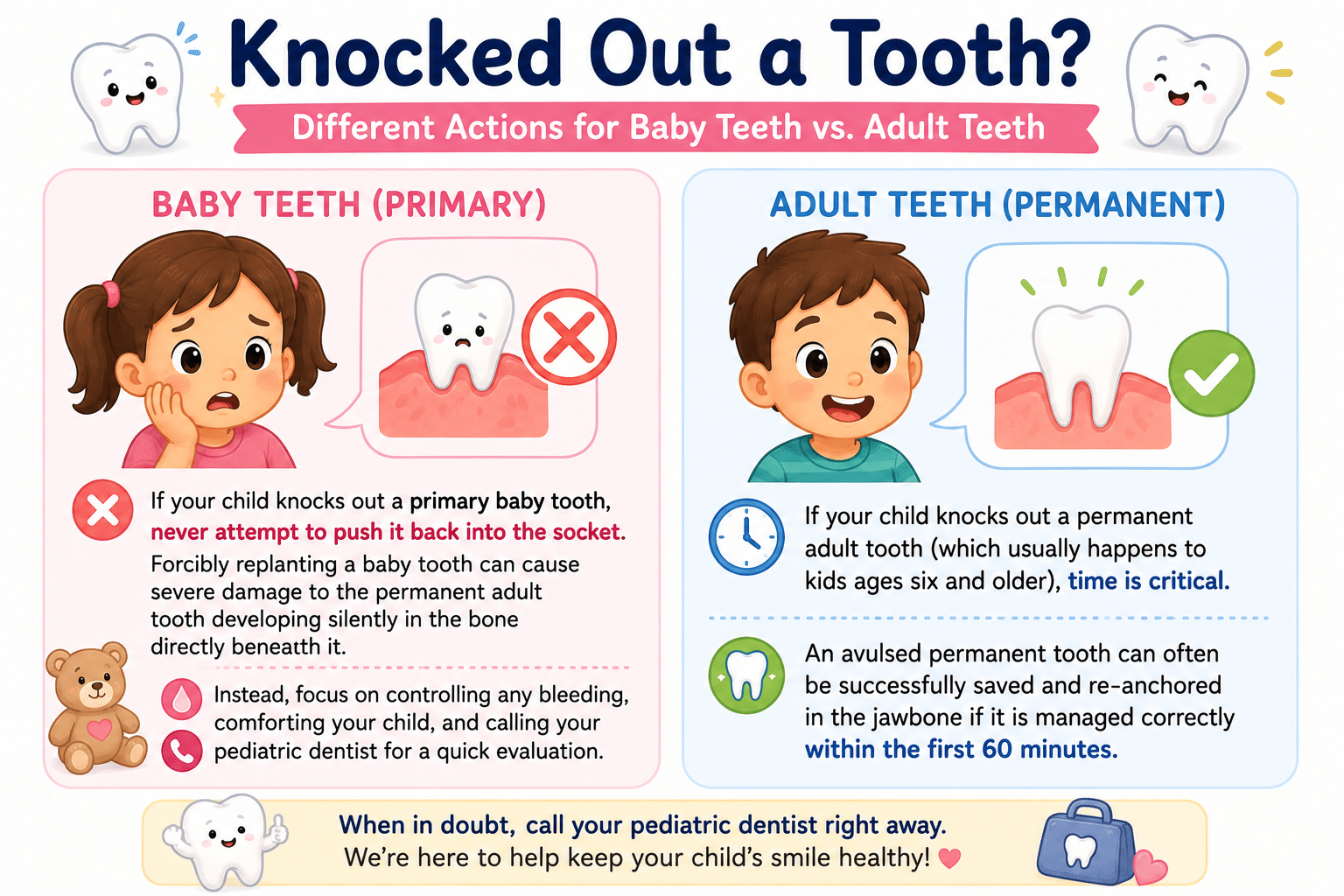
Baby Teeth (Primary): If your child knocks out a primary baby tooth, never attempt to push it back into the socket. Forcibly replanting a baby tooth can cause severe damage to the permanent adult tooth developing silently in the bone directly beneath it. Instead, focus on controlling any bleeding, comforting your child, and calling your pediatric dentist for a quick evaluation.
Adult Teeth (Permanent): If your child knocks out a permanent adult tooth (which usually happens to kids ages six and older), time is critical. An avulsed permanent tooth can often be successfully saved and re-anchored in the jawbone if it is managed correctly within the first 60 minutes.
Step-by-Step Emergency Action Plan for a Knocked-Out Adult Tooth
If your child knocks out a permanent adult tooth, follow these exact emergency steps immediately:
Step 1: Stay Calm and Locate the Tooth
Take a deep breath. Reassure your child in a gentle, confident voice. Search the area immediately to find the knocked-out tooth.
Step 2: Handle the Tooth by the Crown Only
Pick up the tooth carefully by the crown (the white chewing surface that is normally visible in the mouth). Never touch the root. Touching the delicate, living root cells can destroy them and prevent the tooth from re-bonding to the jawbone.
Step 3: Gently Rinse with Water (If Dirty)
If the tooth has dirt or debris on it, rinse it gently with clean, running water or milk for no more than 10 seconds.
- Crucial Warning: Do not scrub the tooth, do not use soap or chemicals, and do not dry it with a cloth or paper towel.
Step 4: Replant the Tooth Immediately (If Possible)
If your child is cooperative and old enough not to swallow it, try to place the clean tooth back into its empty socket right away.
- Gently push it down until it matches the height of the neighboring teeth.
- Have your child bite down gently on a clean gauze pad or cloth to hold the tooth stable in place.
Step 5: Store Safely if Replantation Isn’t Possible
If you cannot slip the tooth back into its socket safely, keeping the root moist is your top priority. Store the tooth in one of these approved preservation mediums:
- A cup of cold milk: The proteins and pH balance in milk help keep root cells alive.
- Saliva: Have your child spit into a clean container to submerge the tooth (or place the tooth inside their cheek if they are old enough not to swallow it).
- Saline solution: Use a sterile contact lens saline rinse if available.
- Never store a knocked-out tooth in plain tap water, as the water balance damages live root cells instantly.
Step 6: Call Our Office and Head In Immediately
Contact our pediatric dental office right away or proceed directly to an emergency pediatric dental clinic. Bring the tooth with you in its container. Quick professional stabilization within the first hour gives the tooth the best opportunity of successful reattachment.
Summary Emergency Action Table
Keep this quick reference guide in mind for any dental trauma situation:
| Dental Emergency Type | Immediate Action Required | What NOT to Do |
|---|---|---|
| Knocked-Out Baby Tooth | Control bleeding with gauze; call dentist for a checkup. | Never replant a baby tooth back into the socket. |
| Knocked-Out Permanent Tooth | Handle by crown, rinse gently, replant in socket or store in milk, and rush to dentist. | Never touch the root or store the tooth in tap water. |
| Severe Jaw Trauma or Concussion | Check for dizziness, confusion, or vomiting. | Do not wait if head trauma is suspected; call 911 immediately. |
What Happens After a Permanent Tooth Is Replanted?
When you arrive at the dental office with a replanted adult tooth, the pediatric dentist will stabilize it using a flexible wire or resin splint attached to the neighboring teeth.
The tooth typically remains splinted for two to three weeks while the jawbone and periodontal ligaments heal around the root. In many cases, root canal treatment may be required later for permanent teeth that have suffered complete avulsion, as the internal nerve supply is often severed during the impact.
Partner with a Pediatric Specialist
Accidents happen when kids are running, playing sports, or exploring the world around them. Having an established dental home ensures you know exactly who to call when unexpected emergencies strike.
Both the American Academy of Pediatric Dentistry and the American Academy of Pediatrics recommend preventative dental checkups every six months so your child is familiar and comfortable with their dental team.
If your child has experienced dental trauma, a knocked-out tooth, or urgent oral pain, our experienced team is here to support your family. Explore our full range of emergency services on our Pediatric Dental Services page or Visit Us to schedule an appointment today!
Medical & Legal Disclaimer: The content on this blog is provided for general informational purposes only and is not intended as medical advice, diagnosis, or treatment. Always seek the advice of a qualified pediatric dentist regarding your child’s specific oral health needs. If your child is experiencing a dental emergency, call 911 or proceed to the nearest emergency room immediately.