
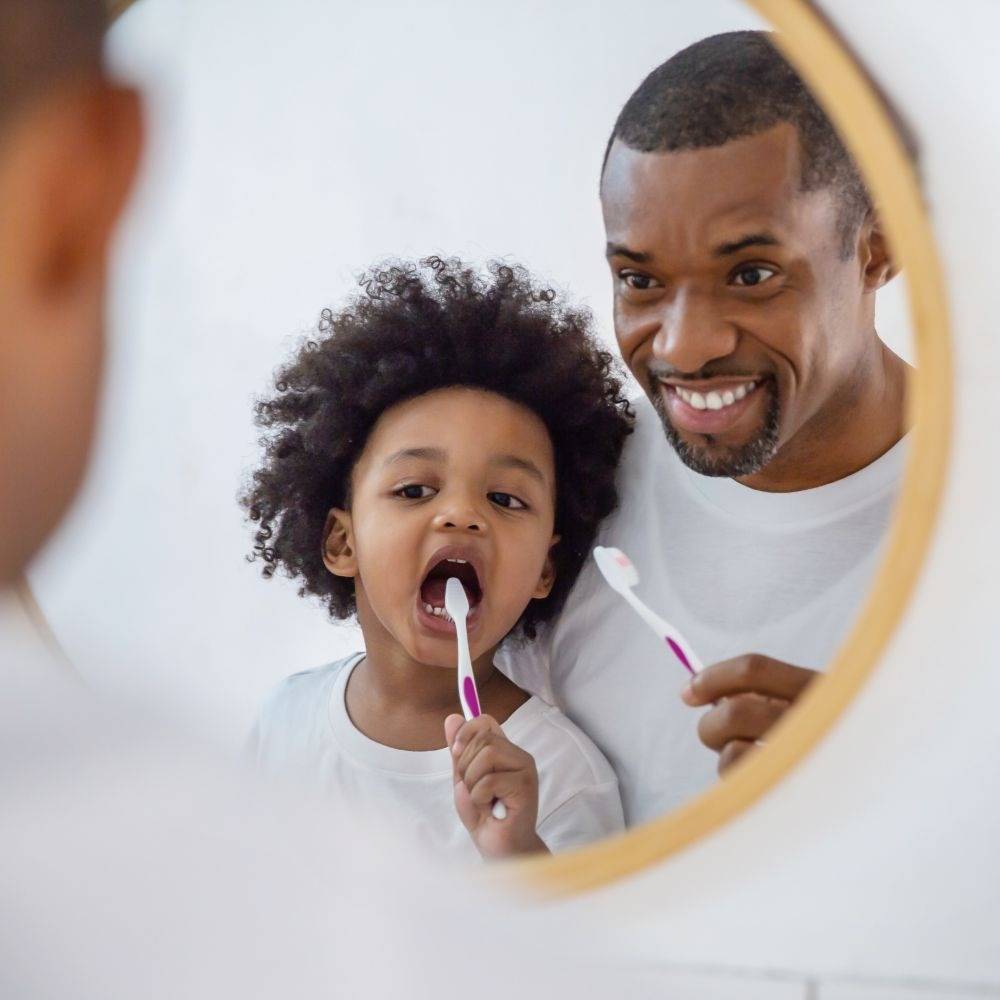
Teaching your child a proper dental brushing technique is one of the most significant health milestones you will achieve together as a family. While it might seem like a simple daily chore, the biological stakes are remarkably high. National health statistics indicate that 20% of children ages 5–11 have at least one untreated decayed tooth. The good news? Cavities and early childhood caries are almost entirely preventable with the right tools, the correct sequence, and a little bit of patience.
At Pedodontic Associates, we have been the premier specialized pediatric dentistry home for Hawaii’s keiki since 1977. We understand that the goal isn’t just to get the teeth clean for tonight—it’s to build the physical muscle memory, manual dexterity, and lifelong hygiene habits that protect your child’s smile through the challenging teen years and into adulthood. This comprehensive guide walks you through exactly when to start, the professional tools you need, and the step-by-step technique that stops decay in its tracks across our Aiea, Honolulu, and Maui locations.
Why Dental Brushing Technique Matters More Than You Think
Primary teeth, or “baby teeth,” do far more than just help your child chew their favorite local snacks. They serve as essential placeholders for permanent adult teeth, guide the symmetrical developmental growth of the jawbone, and play a critical role in early speech development and phonetics.
When cavities develop in baby teeth, they aren’t just minor localized problems. They create an active reservoir of bacteria and infection that can actually spread down through the roots and permanently damage the permanent tooth buds developing directly underneath the gumline.
Proper technique ensures you are removing the sticky bacterial biofilm (plaque) before it can produce enamel-eroding acid. Since 1977, our pediatric dentists have seen a clear pattern: the most successful dental patients are those whose parents invested time in teaching correct brush movements during the formative preschool years.
When to Start and How Often to Brush
The countdown to a healthy smile begins the very day that first primary tooth breaks through the gumline.
- Start Immediately: Don’t wait for a full mouthful of teeth. Use a soft-bristled infant brush and a tiny, rice-grain smear of fluoride toothpaste as soon as the first tooth appears (usually around six months of age).
- Twice Daily is the Clinical Standard: You should brush your child’s teeth once in the morning and once immediately before bed. The nighttime session is the absolute most critical window. Saliva production drops significantly while we sleep, losing its natural mouth-washing effect. Without a proper nighttime brush, bacteria have hours to produce enamel-eroding acid in a warm, dry environment.
- The Two-Minute Rule: Each session must last two full minutes. Most children only brush for about 45 seconds, which leaves behind up to 50% of the active biofilm. Use a digital timer, a sand timer, or a favorite two-minute brushing song to ensure every single quadrant of the mouth is reached.
Choosing the Right Tools for Your Child’s Age
A generic, one-size-fits-all approach does not work in pediatric oral care. The tools utilized must match the child’s physical hand dexterity and the physical size of their changing oral cavity.
Recommended Dental Tools by Developmental Stage
| Age Group | Toothbrush Design Pathway | Fluoride Guidelines | Primary Clinical Goal |
|---|---|---|---|
| Infants (0–3 Years) | Extra-soft bristles, small-headed brush | Tiny rice-grain smear | Desensitization and baseline habit building |
| Toddlers (3–6 Years) | Easy-grip handles / Kid’s power brush | Small pea-sized amount | Back-and-forth muscle memory development |
| Pre-Teens (6–12 Years) | Youth-sized soft brush transitions | Standard pea-sized amount | Cleaning and protecting new permanent molars |
| Adolescents (13+ Years) | Adult soft or oscillating power brush | Standard pea-sized amount | Orthodontic care coordination and independence |
Always look for the official American Dental Association (ADA) Seal of Acceptance on packaging. This ensures the bristles are high-quality, non-abrasive, and that the toothpaste contains the safe, correct concentration of fluoride to prevent early childhood decay.
The Correct Brushing Technique That Actually Works
While many adult resources mention complex circular patterns or the modified Bass technique, these movements are often far too complex for a young child’s fine motor control. Our pediatric specialists instruct parents and kids to use a simple, highly effective back-and-forth scrubbing motion for the general surfaces of the teeth.
Step-by-Step Home Brushing Sequence:
- Dry Brush Start: Apply the fluoride toothpaste to a completely dry brush. Wetting the bristles can dilute the active therapeutic ingredients too quickly.
- The 45-Degree Angle: Position the toothbrush bristles at a 45-degree angle where the teeth meet the gumline. This allows the bristles to gently reach slightly beneath the gum margin where sticky plaque loves to hide.
- Back-and-Forth Scrubbing: Use short, gentle, back-and-forth horizontal scrubbing motions across the outer surfaces of the back molars. Avoid aggressive, hard sawing, which can irritate delicate gum tissue.
- Vertical Front Cleaning: When cleaning the inside (tongue-side) surfaces of the front teeth, tilt the toothbrush completely vertically and use short, vertical up-and-down strokes to clear away plaque. This area is highly prone to rapid tartar accumulation.
- Chewing Surface Clearing: Use a flat, firm back-and-forth stroke directly on the chewing surfaces of the molars, getting deep into the deep pits and fissures where protective dental sealants are normally placed.
- Gently Brush the Tongue: Clean the tongue from back to front to eliminate lingering mouth bacteria and keep breath completely fresh.
- Spit, Don’t Rinse: Have your child spit out the excess paste, but do not rinse the mouth with water. Rinsing washes away the concentrated fluoride layer that the enamel needs to re-mineralize and resist cavities overnight.
Teaching Independence Without Sacrificing Thoroughness
Children generally lack the precise fine motor coordination required for effective, independent brushing until they can successfully tie their own shoes or write their names smoothly in cursive—milestones that usually occur between ages 6 and 8.
- Birth to Age 3: The parent handles 100% of the dental brushing routine.
- Ages 3 to 6: Let your child practice brushing first to build their confidence, but the parent must always go in afterward to finish the job, ensuring the hard-to-reach back molars are actually clean.
- Ages 6 to 8: Supervise the process closely and perform a visual check after they finish.
- Flossing Timing: Flossing should be performed consistently at nighttime before bed, ensuring that food particles trapped between tight tooth spaces are cleared before saliva flow drops.
Common Mistakes That Undermine Your Efforts
Even with the absolute best intentions, minor home care mistakes can stall your child’s oral health progress:
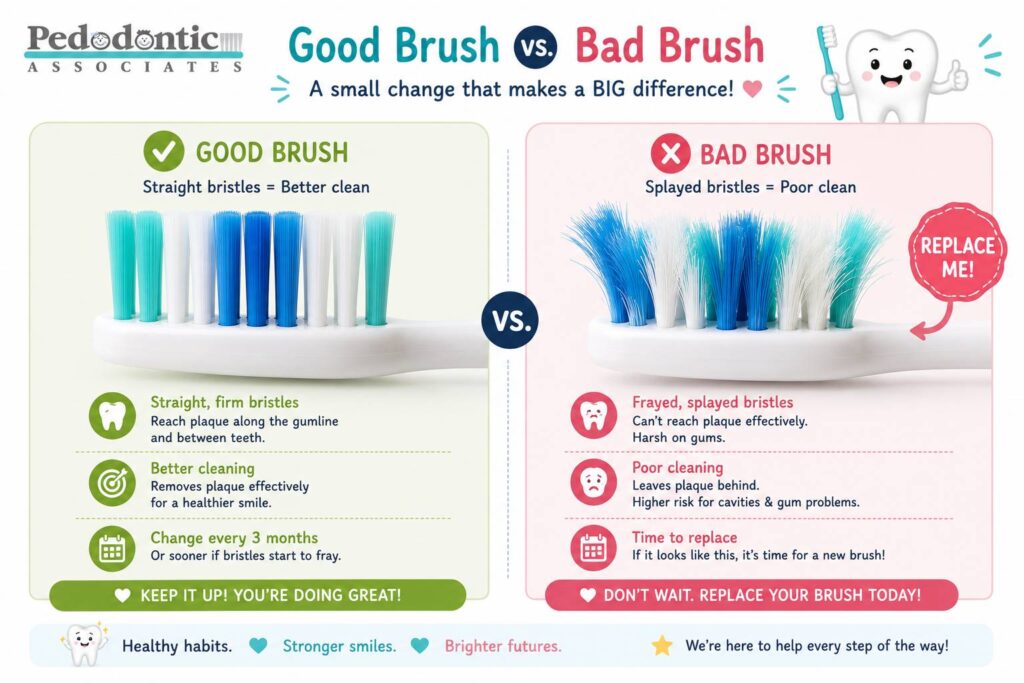
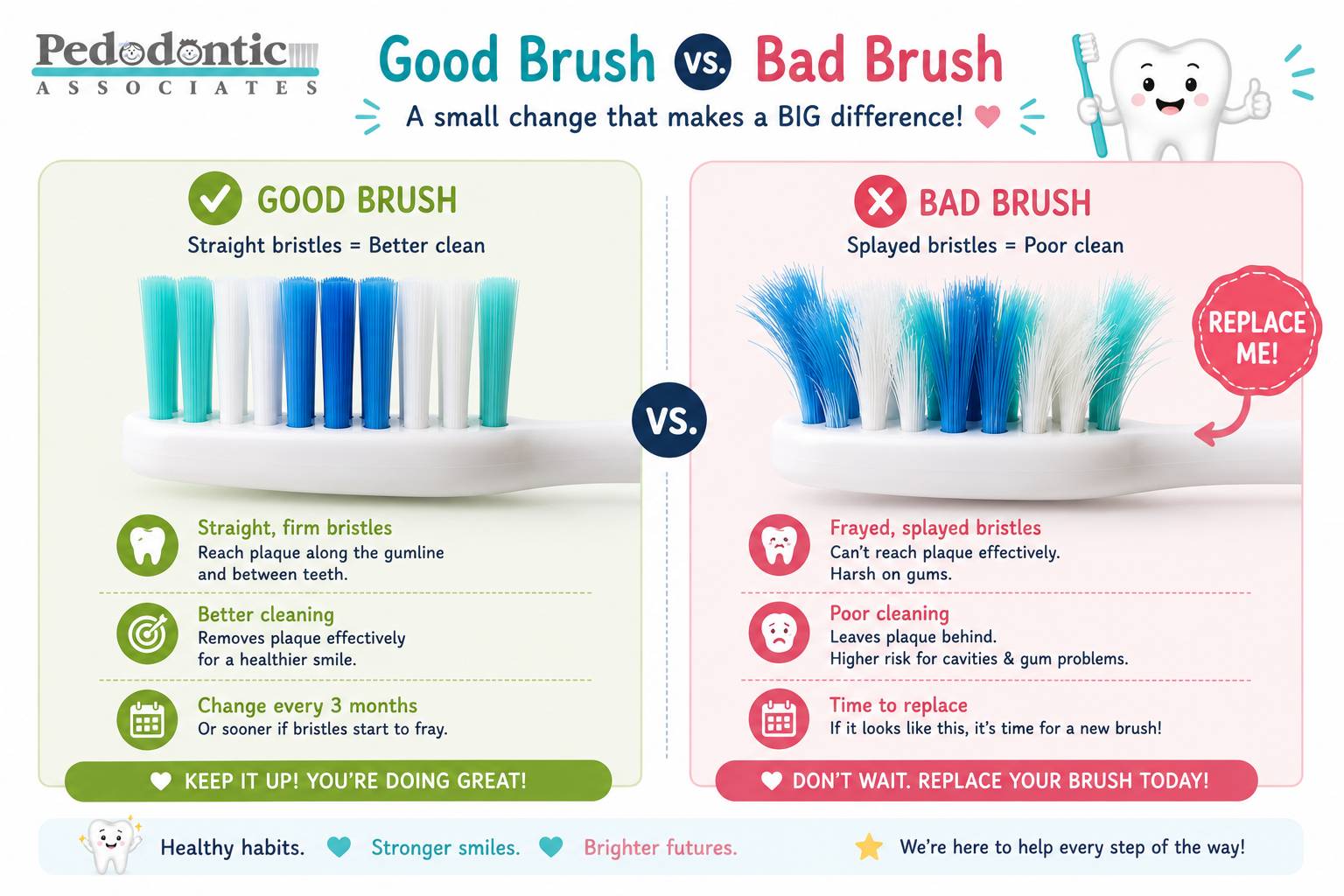
- Brushing Too Forcefully: Aggressive scrubbing can cause permanent gum recession and enamel wear. If the bristles on your child’s toothbrush are splayed outward or flattened after just a few weeks of use, they are pressing down much too hard.
- Stopping Parental Supervision Too Early: Most children will rush the process or only brush their front teeth the moment a parent looks away. Stay in the bathroom to guide them until at least age 8.
- Using Worn-Out Bristles: A toothbrush must be replaced every three months, or immediately following a cold or flu. Worn-out bristles lose their elasticity and are up to 30% less effective at breaking down the bacterial biofilm.
Hawaii Patient Stories & Reviews
Our commitment to teaching these foundational techniques is why Hawaii families have trusted us for decades.
When Professional Care Becomes Essential
No matter how meticulous your home brushing technique is, professional pediatric cleanings are the essential backup that every growing smile requires. Over time, mineralized saliva can turn soft plaque into calculus (tartar)—a hardened deposit that a standard toothbrush cannot physically move.
During routine six-month checkups, our dental hygienists use specialized manual techniques, alongside sensory-friendly instruments, to safely clear away this buildup. To keep these essential preventive visits accessible for local families, our offices provide convenient Saturday appointment options across Oahu and Maui.
Protecting Accessible Care Options
We believe every child across our islands deserves a healthy smile. Our administrative team works directly with major local insurance networks to maximize your benefits and keep care affordable. We proudly accept and process claims with Hawaii Dental Service (HDS)—the state’s largest standalone dental insurer—alongside HMSA, HMAA, and Hawaii Quest (Medicaid) community programs.
Are you ready to ensure your child’s home brushing technique is on the right track? Contact Us today to schedule a routine preventive oral hygiene visit at our Aiea, Honolulu, or Maui office!
Medical & Legal Disclaimer:The content on this blog is provided for general informational purposes only and is not intended as medical advice, diagnosis, or treatment. Always seek the advice of a qualified pediatric dentist regarding your child’s specific oral health needs. If your child is experiencing a medical emergency, call 911 or proceed to the nearest emergency room immediately.