
You spot a tiny dark mark on your child’s back molar while they’re laughing, or perhaps you notice them wincing slightly when they eat cold treats at the beach. As a parent, the immediate question is: Is it a cavity? Followed quickly by: Does it need an invasive filling, or can it wait until their next six-month checkup? These are the stressful questions that keep parents up at night, especially when trying to balance their child’s emotional comfort with the clinical necessity of proper oral care.
In the world of specialized pediatric dentistry, these are the most common concerns we address daily. National health statistics indicate that a significant portion of preschoolers experience at least one cavity by the time they start kindergarten. Most parents struggle to determine when a small spot of decay requires immediate clinical action and when it can be successfully managed with improved home care or non-invasive alternative treatments. The answer depends entirely on the specific stage of decay—and in growing children, the window for “waiting” closes much faster than it does for adults. At Pedodontic Associates, we believe in a philosophy of conservative guidance, ensuring that every Hawaii family has the information they need to protect their keiki’s smiles across our Aiea, Honolulu, and Maui locations.
What Hawaii Families Say About Our Care
Trust is the foundation of everything we do. For over four decades, we have been the “dental home” for generations of Hawaii families. See why parents across Aiea, Honolulu, and Maui trust our specialists:
What Small Cavities Look Like and Why Kids Get Them
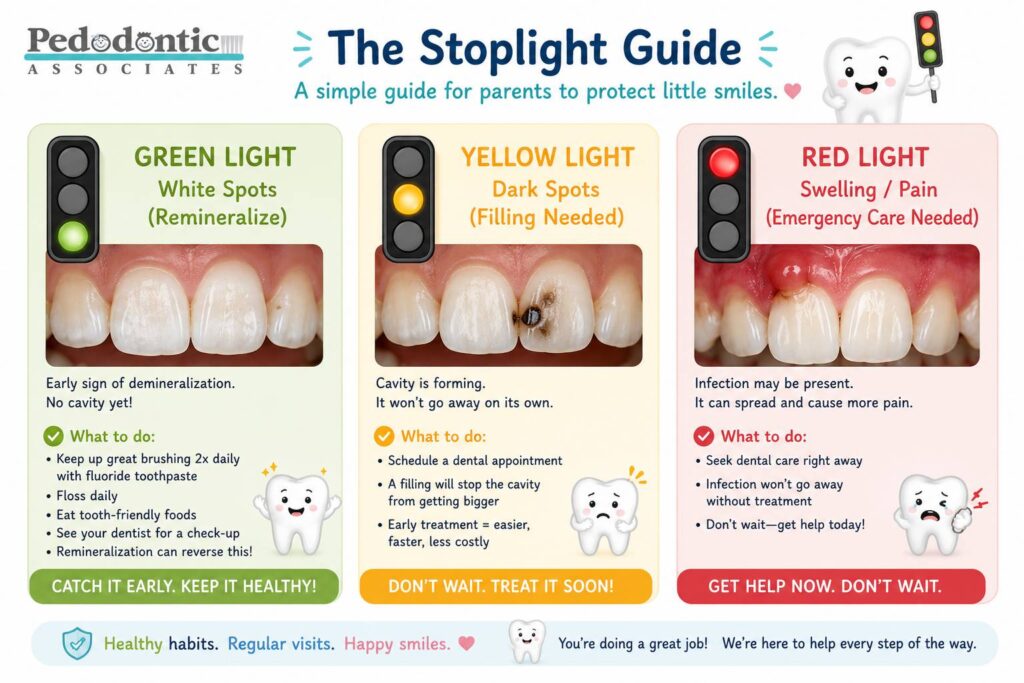
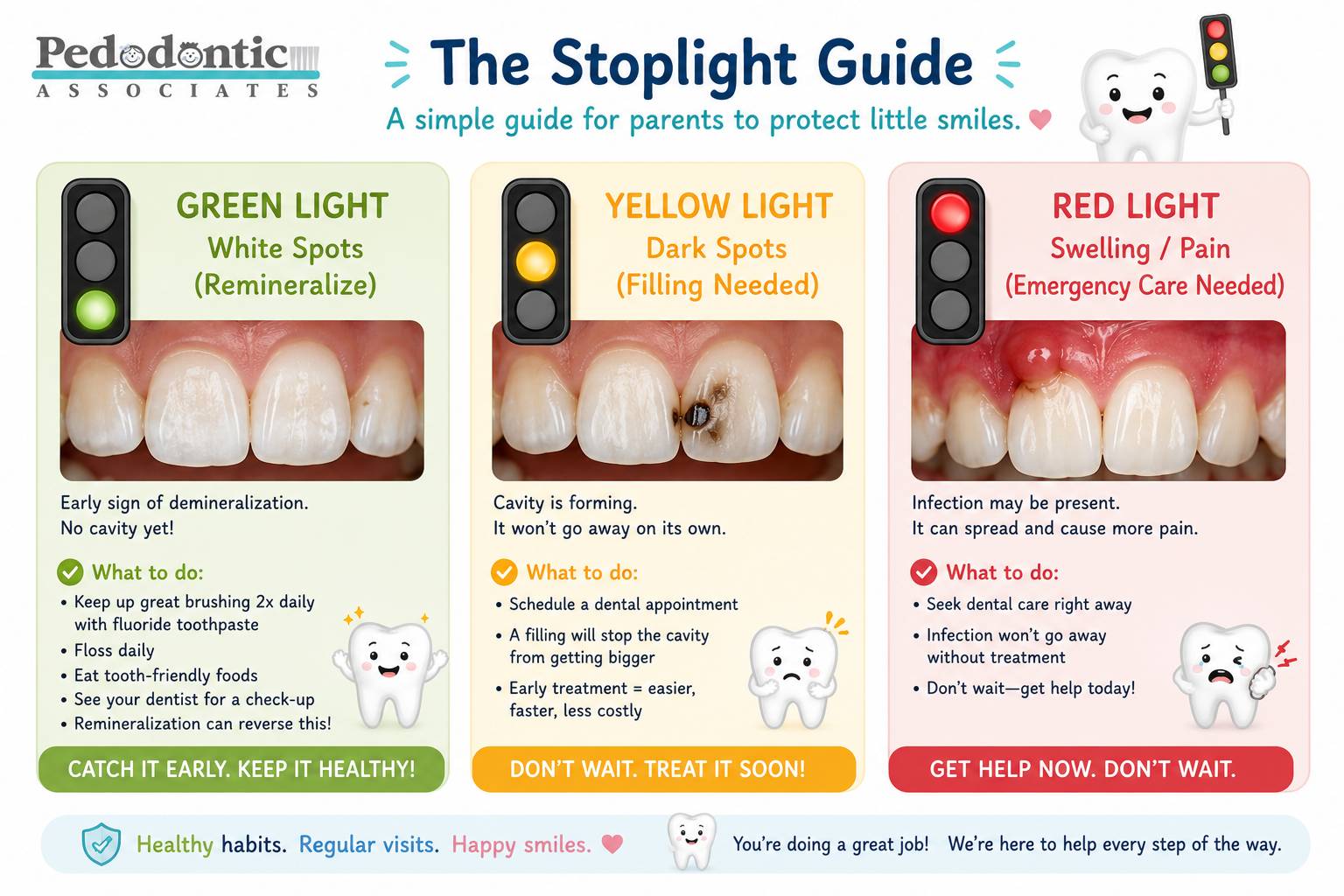
The earliest stage of a cavity isn’t actually a physical hole—it’s a “white spot lesion.” These appear as chalky, opaque, matte-white marks near the gumline or nestled deep within the microscopic grooves of the back molars. This is the visual signal that the tooth enamel has begun to lose its vital mineral content due to bacterial plaque acids, a process known as demineralization. As the decay progresses and the crystalline structure of the enamel inevitably collapses, these white spots turn into light brown, dark brown, or eventually deep black pits.
Why Growing Children Are Biologically More Vulnerable
Children are anatomically and biologically more susceptible to rapid, aggressive decay because their primary baby teeth possess structural layers that are significantly thinner than adult permanent teeth:
- Enamel Thickness: Primary baby enamel is only about 1mm thick, whereas adult permanent teeth enjoy a much stronger 2.5mm protective layer. This thinner barrier means that harmful bacteria and food acids can travel from the surface to the inner structures of the tooth twice as fast as they would in an adult.
- Large Pulp Chambers: Children’s primary teeth possess proportionally larger pulp chambers (the inner nerve center). This means decay doesn’t have to travel very far before it causes a deep, irreversible infection or a painful, thumping toothache.
At Pedodontic Associates, our pediatric specialists are specifically trained to distinguish between completely harmless, superficial tooth staining (often caused by daily chewable vitamins or iron-rich foods) and active, structural decay. Catching these spots while they are still in the closed, white stage is the cornerstone of modern preventive pediatric dentistry.
When Small Cavities Need Immediate Treatment (and the “No-Drill” Option)
Not every small mark or dark spot requires a traditional drill-and-fill procedure. At our practice, we utilize a tiered approach to treatment based entirely on the depth and active progression of the decay. This ensures we remain as conservative as possible while completely protecting the tooth’s structural integrity and your child’s emotional well-being.
1. Reversible Decay: The Non-Invasive “No-Drill” Zone
If a localized cavity is caught early enough—meaning the outer enamel surface is still closed, hard, and visually intact—we can frequently avoid the dental drill entirely using non-invasive therapies:
- Professional Fluoride Varnish: A highly concentrated, targeted mineral boost that our team paints onto the enamel surfaces during routine oral hygiene visits to re-harden the tooth structure and encourage rapid remineralization.
- Curodont™ Repair Fluoride Plus: This represents our most advanced, revolutionary non-invasive option. Curodont™ is a specialized peptide liquid that is gently brushed onto an early-stage cavity. It sinks deep into the microscopic pores of the demineralized enamel, acting as a supportive scaffold that pulls natural calcium and phosphate from the child’s saliva to rebuild and regenerate the tooth structure from the inside out. There are no needles, no drills, and no physical discomfort, making it the perfect solution for early “watch” areas before they ever degrade into actual holes.
2. Irreversible Decay: The Filling Zone
Once cavity-causing bacteria have physically broken through the enamel surface and entered the dentin (the softer, internal layer of the tooth beneath the enamel), non-invasive options are no longer clinically effective. At this stage, the bacteria are sheltered inside a physical cavity where standard toothbrushes and topical rinses cannot reach them. The decay then requires a gentle dental filling to thoroughly clean out the infection and seal the tooth walls to prevent it from tracking down into the roots.
Pediatric Tooth Decay Treatment Tiers
| Stage of Tooth Decay | Severity Level | Recommended Clinical Treatment | Needle / Drill Required? |
|---|---|---|---|
| White Spot Lesion | Early / Incipient | Professional Fluoride Varnish & Home Care Adjustment | Absolutely Not |
| Enamel Decay | Moderate / Closed | Curodont™ Guided Enamel Regeneration Therapy | Absolutely Not |
| Dentin Decay | Advanced / Structural | Aesthetic Composite Dental Fillings | Yes, minimal preparation required |
| Pulp Exposure | Severe / Deep Infection | Pediatric Pulp Therapy & Protective Pediatric Crown | Yes, full restoration required |
How Quickly Cavities Progress in Children
In the field of pediatric dentistry, a passive “wait and see” approach to structural decay can be incredibly risky for your child’s health. Because baby teeth are physically smaller and their protective structural barriers are thin, a small cavity can travel from the outer surface to the nerve tissue in a matter of months rather than the years it typically takes in adult teeth.
The Silent, Rapid Progress of Decay
One of the most dangerous dental myths is that “if my child isn’t complaining of pain, the tooth is perfectly fine.” In reality, oral pain is a late-stage symptom of deep dental breakdown. A vast majority of childhood cavities do not cause any physical discomfort until they have reached the deep, soft dentin or the inner nerve pulp.
By the time a child is actively crying, refusing to chew their food on one side of their mouth, or avoiding cold drinks, the window of opportunity for a completely non-invasive Curodont™ treatment has unfortunately passed. Furthermore, leaving untreated decay in primary molars can cause chronic root infections that can permanently stain or damage the permanent adult tooth buds developing directly beneath them.
Warning Signs to Watch Between Dental Visits
Since parents cannot easily see between the teeth with the naked eye (the most common spot for hidden “interproximal” cavities to take root), families across Oahu and Maui should keep a close eye out for these subtle behavioral and visual red flags:
- Sudden Behavioral Changes: Unexpected avoidance of cold treats (like local shave ice), consistently favoring one side of the mouth while chewing meals, or general irritability and picking at food during dinner.
- Visual Texture Alterations: Chalky white lines or opaque spots forming right along the gumline, or dark, tiny pepper-like spots settling into the deep anatomical grooves of the back chewing molars.
- Persistent Food Catching: If you notice that fibrous foods always seem to get stuck tightly in the exact same spot between two specific teeth, it could indicate a structural “cavity trap” caused by a collapsing enamel wall.
- Unusual Oral Odor: Chronic bad breath that persists even after rigorous brushing can sometimes indicate trapped food particles and volatile compounds multiplying inside an active, deep dental lesion.
Why Some Kids Keep Getting Cavities
It can be incredibly frustrating for a parent when one sibling never gets a single cavity, while another sibling seems to develop a new spot at every six-month checkup. While genetics, oral anatomy, and natural saliva pH chemistry account for a portion of a child’s systemic risk, daily lifestyle and dietary choices usually play the primary role.
In our unique tropical environment, popular local snacks like dried mango, fruit snacks, and sticky candies are highly acidic and exceptionally tacky, adhering into the grooves of the teeth for hours at a time. Constant snacking or grazing on these items throughout the day, rather than eating them during structured meals, creates a continuous acid bath that rapidly softens and demineralizes thin primary enamel. Furthermore, letting a young child sleep with a bottle or a sippy cup containing milk or juice increases exposure to sugars, driving up the risk of rapid early childhood decay.
Prevention Strategies That Work in Hawaii Families
Effective dental prevention means being consistently proactive. Between busy school days, beach trips, and sports practices, here is how you can build an unshakeable shield around your keiki’s smile:
- Apply Protective Dental Sealants: These are ultra-thin, highly effective protective coatings that our team applies to the deep, complex chewing grooves of permanent adult molars as soon as they erupt. They act as a smooth physical shield, preventing food debris from getting trapped and stopping a vast majority of molar cavities before they can ever start.
- Master Brushing Mechanics: When supporting your child’s home hygiene routine, instruct them to use a gentle back-and-forth scrubbing motion across the flat chewing surfaces and both the tongue facing surfaces and the cheek facing surfaces of their molars. When cleaning the inside surfaces of the front teeth, tilt the toothbrush completely vertically and use short, vertical up-and-down strokes to clear away plaque.
- Emphasize Water as the Default Drink: Encourage your child to choose plain water over local juices, sodas, or sports beverages. Drinking water regularly helps naturally neutralize harmful mouth acids, stimulates healthy saliva flow, and washes away loose food particles after snacks.
- Introduce Flossing Early: Do not wait until your child has a mouth full of permanent teeth to start flossing. Begin cleaning consistently at nighttime right before bed with gentle floss as soon as any two adjacent teeth physically touch. If a standard toothbrush bristle cannot reach between tight spaces, a cavity can easily form there.
- Maintain Timely Routine Exams: Schedule routine specialized pediatric dental exams and clear diagnostic dental X-rays every six months. This allows our team to track changes over time and utilize conservative materials to manage early wear.
When to Bring Your Child In
If you notice a suspicious dark spot, a visible structural hole, or if your child expresses any level of sensitivity while eating or drinking, it is time to schedule a specialized professional evaluation. Early detection consistently saves your family time, lowers out-of-pocket healthcare costs, and most importantly, preserves your child’s long-term physical comfort and social confidence. By utilizing advanced, modern materials like non-invasive Curodont™ therapy, our team can frequently fix small cavities completely stress-free.
Since 1977, Pedodontic Associates has proudly served the Hawaii community with specialized, hospital-trained expertise. To ensure premium care is accessible to all local families, our offices work directly with major island insurance networks, including Hawaii Dental Service (HDS)—the state’s largest standalone dental provider—alongside HMSA, HMAA, and Hawaii Quest (Medicaid) community health programs. We also provide convenient Saturday appointment blocks to accommodate the hectic schedules of working parents and active students.
Explore our locations and plan your family’s visit using our office tour links below:
- Aiea Office: Explore our Aiea dental office tour right by Pearlridge Center, providing a convenient hub for Central and West Oahu families.
- Honolulu Office: Visit our Honolulu dental office tour centrally positioned to serve busy parents across Metro Honolulu.
- Maui Office: See our Maui dental office tour located in Kahului, ensuring neighbor island families have direct access to cutting-edge pediatric care.
Don’t wait for a tiny, reversible spot to turn into a major, painful dental problem. Contact Us today to schedule a comprehensive pediatric consultation at our Aiea, Honolulu, or Maui office!
Medical & Legal Disclaimer:The content on this blog is provided for general informational purposes only and is not intended as medical advice, diagnosis, or treatment. Always seek the advice of a qualified pediatric dentist regarding your child’s specific oral health needs. If your child is experiencing a medical emergency, including severe facial swelling or unmanageable pain, call 911 or proceed to the nearest emergency room immediately.