
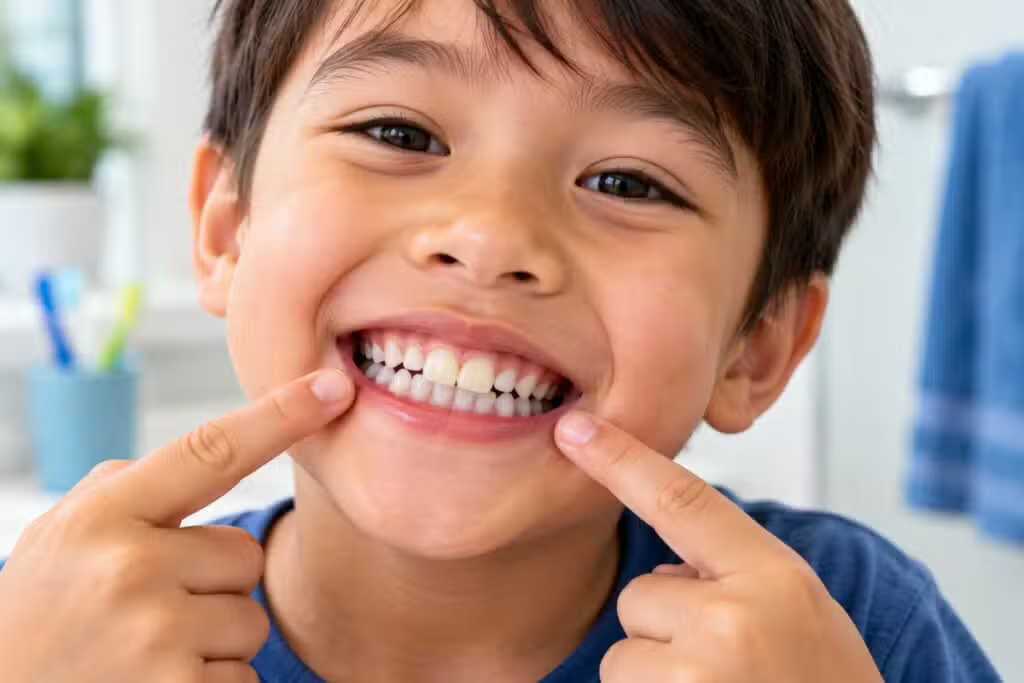
When a child loses their first front baby tooth, parents celebrate the milestone. When the permanent tooth finally pushes through the gums, that excitement often turns into mild panic. The new tooth usually looks dramatically different from the one it replaced. It appears surprisingly yellow and disproportionately large.
Parents immediately worry that their child is suffering from severe enamel decay. They often blame their home brushing routine. The reality is far less alarming. This striking visual contrast is a completely normal part of human biological development. Getting to know the anatomy of growing smiles helps ease these worries. You can read more about how the pediatric specialists at Pedodontic Associates approach childhood dental development on our about page.
The Anatomy of Tooth Color
The color of a tooth is determined by its internal structure. Every tooth is made of two primary layers. The outer layer is the hard protective enamel. The inner core is a softer tissue called dentin.
Dentin naturally carries a strong yellow color. Permanent teeth contain a massive amount of thick dentin to keep the tooth strong for decades. The enamel covering adult teeth is surprisingly translucent. This clear outer shell allows the heavy yellow core to shine straight through to the surface.
Primary baby teeth possess a completely different structural makeup. They hold very little yellow dentin inside. The enamel on baby teeth is also highly calcified and opaque. This gives them a distinct milky white appearance. When a translucent adult tooth erupts directly next to an opaque baby tooth, the optical contrast is extreme. Once all the baby teeth fall out, the adult smile will look uniform and bright.
The Optical Illusion of Size
Parents often ask if their child's new adult teeth will eventually shrink over time. The scientific truth is that teeth never change size once they erupt.
The permanent teeth coming into your seven-year-old's mouth are the exact same size they will be when your child is thirty years old. They look oversized because they are resting inside a small pediatric jawbone. The surrounding baby teeth are tiny in comparison. This creates an optical illusion that the new teeth are comically huge.
As your child goes through puberty, their facial bones will stretch and widen. Their jaw will gradually expand to accommodate the larger adult root structures. The face will eventually grow to fit the teeth perfectly.
Myth vs. Fact: Erupting Adult Teeth
Hearing conflicting advice from other parents makes the transition to adult teeth confusing. Let's clear up the most common misconceptions about newly erupting smiles.
| Common Parent Concern (Myth) | The Biological Reality (Fact) |
|---|---|
| "The yellow color means my child isn't brushing well enough." | The yellow tint comes from the thick inner dentin core shining through translucent enamel. |
| "The teeth are too big and will definitely need braces to fit." | The jawbone will continue to grow for several years to accommodate the larger tooth size. |
| "The jagged edges mean the teeth are chipped or broken." | These natural bumps help the tooth cut through the gums and will wear flat naturally over time. |
Explaining Those Bumpy Biting Edges
Color and size are not the only things that surprise parents. Newly erupted permanent incisors often have a serrated edge. These ridges make the tooth look like a jagged saw blade.
These bumps are called mamelons. They serve a very specific biological purpose. The textured edge helps the new tooth slice through the thick gum tissue during eruption. Mamelons are completely harmless. As your child eats and chews over the next few years, the friction will gradually wear those bumps down until the biting edge is perfectly flat.
When Discoloration Actually Points to a Problem
While a natural yellowish tint is normal, certain types of discoloration require professional attention.
If you notice bright orange crust resting along the gumline, you are looking at hardened plaque. This means the child is missing the base of the new tooth during their brushing routine. If you see distinct chalky white spots or deep brown pits on the flat surface of the new enamel, the tooth may have formed improperly before erupting. This condition leaves the tooth highly vulnerable to cavities.
If you suspect the discoloration is caused by decay rather than natural anatomy, you should book a clinical evaluation through our pediatric dental services page. Our dentists will assess the enamel thickness and apply protective fluoride treatments if necessary.
Hear From Other Hawaii Families
Watching your child's smile transition through the awkward mixed-dentition phase brings up plenty of questions. Having a trusted pediatric dental team makes navigating these developmental changes much easier. Read how other local parents describe their experiences with our clinics.
Read Tianne R.‘s review of Pedodontic Associates – Maui on Yelp
Read Maritess C.‘s review of Pedodontic Associates – Pearlridge on Yelp
Partnering with Your Hawaii Pediatric Dentist
You do not need to worry about your child's oversized adult teeth. This awkward phase of dental development is a sign that their body is growing exactly as it should.
Our team is ready to support your family with welcoming clinics across Oahu and Maui. Explore our Pearlridge office in Aiea or check out our Kahala office in Honolulu. We also serve our neighbor island patients at our Maui office. You can contact our scheduling team today to book your child's next preventive visit.
Medical & Legal Disclaimer: The content on this blog is provided for general informational purposes only and is not intended as medical advice, diagnosis, or treatment. Always seek the advice of a qualified pediatric dentist regarding your child’s specific oral health needs. If your child is experiencing a severe medical emergency, call 911 or proceed to the nearest emergency room immediately.