
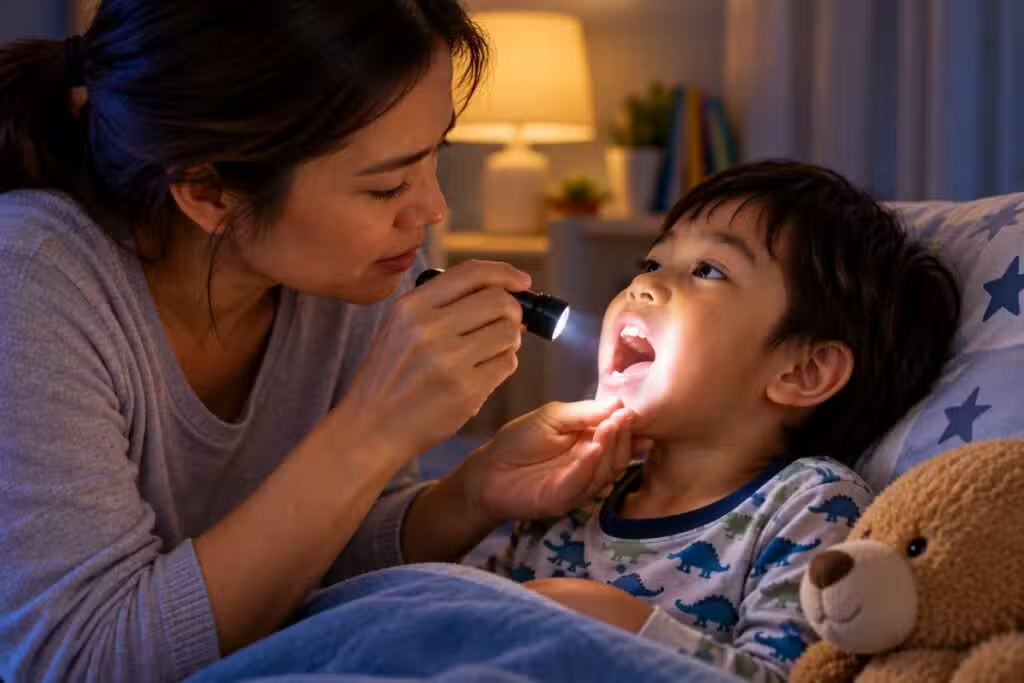
A child waking up in the middle of the night crying from tooth pain is an incredibly stressful experience. Parents suddenly have to make a medical decision while operating on zero sleep. Not every oral complaint requires a midnight trip to the clinic. Some symptoms demand immediate professional intervention to prevent a severe infection from spreading.
Our clinical team at Pedodontic Associates helps parents evaluate these exact situations over the phone every week. Knowing how to assess the severity of the pain saves you unnecessary panic. It ensures your child gets the correct level of care at the right time. You can read more about our foundational clinical expertise on our about us page.
The Parent’s At-Home Triage Process
Before you pick up the phone to call a dentist, you need to gather specific information. A young child cannot accurately describe their pain. They just know their mouth hurts. You must follow a brief triage process to help a dental professional determine the safest course of action.
Step 1: Conduct a Visual Inspection
Look inside their mouth directly with a bright flashlight. Check the gums surrounding the sore tooth for bright redness. Look for trapped food debris caught between the teeth. Press very gently on the outside of their cheek to check for external facial swelling.
Step 2: Administer the Temperature Test
Give your child a sip of cold ice water. Ask them to hold it near the sore tooth. If they feel a sharp pain that disappears the second they swallow, the enamel is likely weakened. If the pain lingers for several minutes after swallowing the water, the inner nerve is heavily inflamed.
Step 3: Categorize the Symptoms
Compare your visual findings and the temperature test against standard pediatric guidelines. The American Academy of Pediatric Dentistry recommends categorizing symptoms to determine your next move.
| Pain Level | Visible Symptoms | Recommended Parent Action |
|---|---|---|
| Green Light (Can Wait) | Visible food trapped between teeth. Dull ache. Normal gum color. | Floss the area thoroughly. Monitor the tooth. Schedule a standard evaluation. |
| Yellow Light (Prompt Care) | Lingering pain after drinking cold water. Waking up from sleep. | This points to a deep cavity. Call the clinic at opening for the next available slot. |
| Red Light (Emergency) | Visible pimple on the gums. Facial swelling. Accompanying fever. | Seek immediate pediatric dental care or visit a medical ER. |
Situations That Can Wait (Green Light)
A surprising amount of childhood tooth pain comes from simple food impaction. Popcorn hulls and tough meat fibers easily get wedged tightly beneath the gumline. This trapped debris creates intense localized pressure that perfectly mimics a severe cavity.
Use a floss pick to thoroughly clean the spaces around the aching tooth. Rinse the mouth heavily with warm saltwater. If the pain subsides within an hour of flossing, the immediate crisis is resolved. You should still book a standard evaluation through our pediatric dental services page to ensure hidden decay did not create the gap for the food trap.
Situations Requiring Prompt Attention (Yellow Light)
Some pain signals an active infection that is slowly growing worse. A tooth that suddenly becomes highly sensitive to hot or cold liquids usually has compromised enamel.
If your child wakes up crying from a dead sleep, the decay has likely breached the inner nerve chamber of the tooth. These scenarios are not life-threatening. They do require intervention before they escalate. Call your dental clinic as soon as they open to request the next available appointment. Knowing exactly what to expect during a pediatric dental visit beforehand helps calm an anxious child who is already dealing with discomfort.
True Pediatric Dental Emergencies (Red Light)
Dental infections can become systemic medical emergencies rapidly. Primary teeth sit very close to major facial spaces. An untreated dental abscess can spread aggressive bacteria directly into the jawbone.
You must seek immediate emergency care if your child presents with facial swelling that extends toward the eye or down into the neck. A fever accompanying a toothache is a major biological red flag indicating a systemic infection. A small blister or pimple on the gums above a tooth indicates a draining pocket of pus. These symptoms require acute medical intervention and immediate antibiotic treatment.
Tooth Pain Caused by Physical Trauma
Sometimes a toothache has absolutely nothing to do with tooth decay. Toddlers fall constantly while learning to run. Older children collide forcefully during sports.
If your child hits their mouth, the tooth may not break visually. The blunt impact can still traumatize the internal nerve. A tooth that turns gray or dark pink a few days after a physical fall indicates a dying nerve. The tissue inside the tooth is bruising. This internal trauma requires a professional evaluation to ensure the root remains stable.
How to Manage Symptoms at Home Safely
If your child is experiencing pain while you wait for your scheduled appointment, you can manage their symptoms safely using items in your medicine cabinet.
Over-the-counter pediatric pain relievers reduce tissue inflammation effectively. Always follow the exact weight-based dosing instructions printed on the package.
Never rub crushed aspirin directly on the gums. This is a popular old home remedy that is incredibly dangerous. Aspirin is highly acidic. Placing it directly on oral tissue causes severe chemical burns that create far more pain than the original toothache.
Apply a cold compress to the outside of the cheek for fifteen minutes at a time to numb the area. Keep the child's head elevated with an extra pillow when they lie down in bed. Lying completely flat increases blood pressure in the head and often makes a throbbing toothache feel much worse.
Hear From Other Hawaii Families
Managing a sudden childhood toothache is incredibly stressful. Knowing your child is in compassionate hands makes a significant difference during a crisis. Read how other local parents describe their emergency experiences with our clinical team below.
Read Lori W.‘s review of Pedodontic Associates – Pearlridge on Yelp
Read Celine C.‘s review of Pedodontic Associates – Pearlridge on Yelp
Read Maritess C.‘s review of Pedodontic Associates – Pearlridge on Yelp
Partnering with Your Hawaii Pediatric Dentist
Do not hesitate to reach out if you are ever unsure about your child's physical symptoms. A quick phone call provides peace of mind. Use our contact page to reach our scheduling team. We are always ready to help you handle a stressful dental situation safely.
We designed our clinics specifically to feel safe and engaging for nervous children in pain. You can explore our clinical environments beforehand by taking a virtual look at our Pearlridge office in Aiea or our Kahala office in Honolulu. Families on the neighbor islands can also check out our Maui office.
Medical & Legal Disclaimer: The content on this blog is provided for general informational purposes only and is not intended as medical advice, diagnosis, or treatment. Always seek the advice of a qualified pediatric dentist regarding your child’s specific oral health needs. If your child is experiencing a severe medical emergency, call 911 or proceed to the nearest emergency room immediately.