
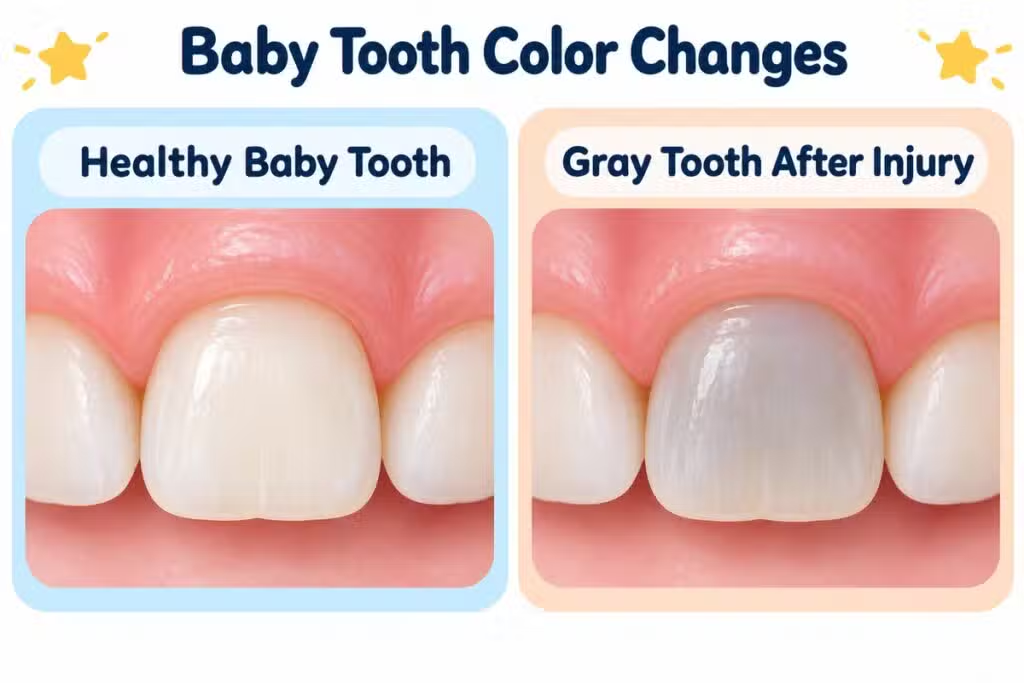
Your toddler fell at the playground a few weeks ago. There was some crying, maybe a little bleeding, but their tooth seemed fine afterward. Now you've noticed something different: one of their teeth is turning gray.
A child's tooth can darken after an injury because the impact affects blood vessels or tissues inside the tooth. Sometimes the discoloration fades. Other times, it can indicate damage that needs dental attention.
A gray tooth doesn't automatically mean it needs to be removed or treated. However, a tooth that changes color after an injury should be evaluated, even if your child isn't complaining of pain.
At Pedodontic Associates, we provide pediatric dental care for children who experience dental injuries. Here's what parents should know about tooth discoloration, possible complications, and when to schedule an examination.
Why Does a Baby Tooth Turn Gray After a Fall?
A baby tooth can change color when an impact affects the delicate blood vessels and tissues inside it.
Each tooth contains an inner area called the pulp, which includes nerves and blood vessels. When a child falls or bumps their mouth, the force of the injury can affect this tissue even when the tooth doesn't crack or move visibly.
Internal bleeding or changes in the pulp may cause the tooth to take on a pink, gray, or darker appearance.
The color change may not appear immediately. Parents sometimes notice it days or weeks after the original injury.
According to the International Association of Dental Traumatology (IADT), discoloration is a recognized complication of injuries to primary teeth.
Some injured baby teeth gradually return toward their original color. Others remain discolored without developing an infection.
Because appearance alone cannot establish the health of the tooth's pulp, a dental examination is important.
Does a Gray Baby Tooth Mean the Nerve Has Died?
Not necessarily.
A darkened tooth may have experienced changes to its internal blood supply, but discoloration alone does not confirm that the pulp has died.
Some teeth develop temporary changes in color as they recover from an injury.
Other teeth may experience pulp necrosis, which occurs when the living tissue inside the tooth dies. This can eventually lead to infection around the root.
The IADT guidelines explain that some persistently dark baby teeth remain free of clinical or radiographic signs of infection.
This distinction matters because a gray baby tooth does not automatically require root canal treatment or extraction.
The appropriate decision depends on the dental examination, your child's symptoms, and any additional findings.
When Is a Gray Tooth a Dental Emergency?
A tooth changing color after an injury should prompt a call to your pediatric dentist, but the urgency depends on what else is happening.
Use the following guide to recognize symptoms that need attention.
| What You Notice | Recommended Action |
|---|---|
| One baby tooth gradually turns gray, with no pain or swelling | Contact your dentist and arrange an examination within the next few days |
| The tooth becomes painful when biting | Arrange a prompt dental evaluation |
| A pimple-like bump appears on the gum near the tooth | Contact your dentist promptly, ideally the same day |
| The gum or face becomes swollen | Seek urgent dental or medical assessment |
| Swelling affects breathing or swallowing | Seek emergency medical care immediately |
| The injury involved loss of consciousness or significant head trauma | Seek emergency medical care immediately |
The American Academy of Pediatrics recommends dental evaluation when an injured baby tooth becomes discolored or a localized gum bump develops.
Facial swelling, fever, or worsening pain can suggest an infection that should not be ignored.
If your child has difficulty breathing or swallowing, call 911 or seek emergency medical care. Do not wait for a dental appointment.
What if the Tooth Turns Gray but Doesn’t Hurt?
A lack of pain is encouraging, but it doesn't establish that the tooth is healthy.
Young children may not describe discomfort clearly. Some dental complications can also develop without obvious pain.
A tooth may remain discolored while appearing otherwise normal.
That's why we recommend having an injured tooth evaluated instead of waiting for pain to appear.
During an examination, we can look for changes involving the tooth and surrounding gum tissue.
If the tooth has already been examined after the injury, let your dentist know about any new discoloration. A change in appearance may affect the follow-up plan.
What Happens During a Dental Examination?
When you bring your child in because a tooth has changed color, we start by understanding what happened.
We'll want to know when the injury occurred, whether the tooth moved or became loose, and when you first noticed the discoloration.
We may also ask about changes in eating, sensitivity, or swelling.
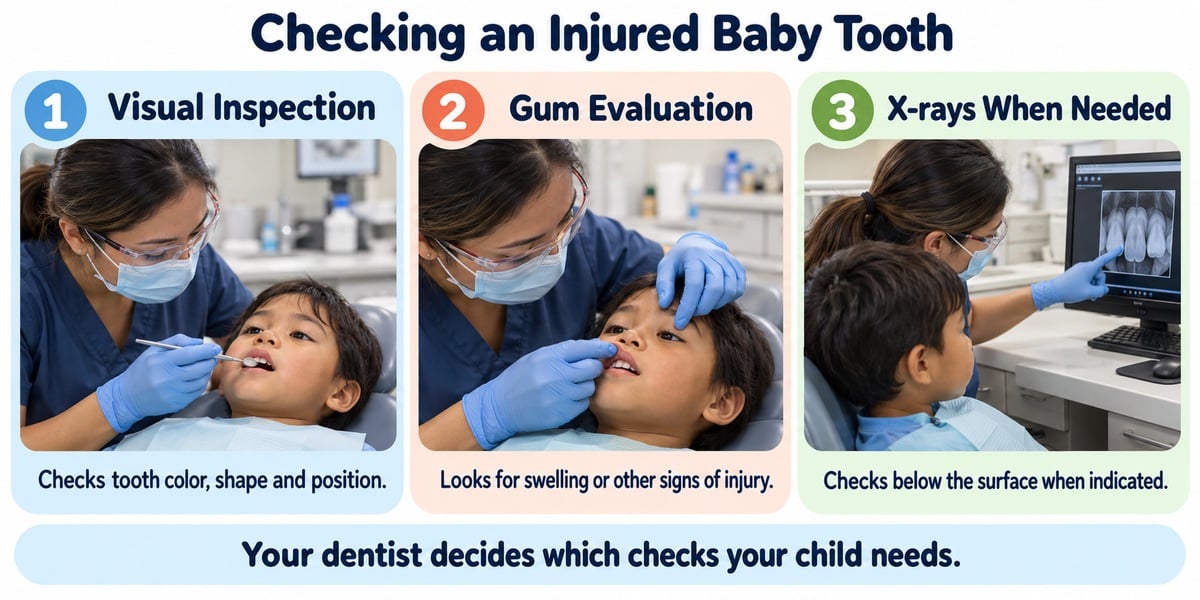
The examination may involve:
- Checking the color and position of the affected tooth
- Looking for swelling or other changes in the gums
- Assessing tooth mobility and signs of discomfort
- Examining nearby teeth that may have been affected
- Considering whether dental X-rays would provide useful information
Dental imaging is not automatically required for every discolored tooth. The decision depends on the injury and clinical findings.
Our pediatric dental services include dental X-rays when imaging is appropriate for evaluating a child's teeth.
After the assessment, we can explain the findings and discuss whether the tooth needs monitoring or further care.
Can a Gray Baby Tooth Turn White Again?
Sometimes, a baby tooth that darkens after an injury gradually becomes lighter.
The IADT reports that injured primary teeth may regain some or all of their original color over a period of weeks or months.
However, not every tooth returns to its previous shade.
Some remain gray or yellow while showing no other signs of problems.
The color alone cannot predict whether the tooth will recover or develop complications.
Avoid trying to whiten a discolored baby tooth at home. Whitening products do not address internal injury and should not be used as a substitute for dental evaluation.
If the tooth remains dark, your dentist can explain whether continued monitoring is appropriate.
Will an Injured Baby Tooth Affect the Permanent Tooth?
Baby teeth sit above the developing permanent teeth that will eventually replace them.
A significant injury to a baby tooth can sometimes affect the developing permanent tooth beneath it.
The likelihood depends on factors such as the child's age, the severity of the injury, and how the baby tooth was displaced.
However, a gray baby tooth does not automatically mean the permanent tooth has been damaged.
During an examination, we can assess the original injury and determine whether monitoring of the developing permanent tooth is appropriate.
This is one reason dental follow-up matters, even when the injured baby tooth is expected to fall out eventually.
Does a Gray Baby Tooth Need to Be Removed?
Not always.
Some discolored baby teeth can remain in place while being monitored.
Treatment may become necessary if an injury leads to infection, significant damage, or another complication.
Depending on the findings, options may include observation, treatment of the affected tooth, or extraction when clinically indicated.
Our pediatric dental team provides tooth extraction services when a tooth cannot appropriately be maintain