

The day the braces finally come off is a monumental milestone for every teenager and their parents. After years of monthly adjustments, dietary restrictions, and the diligent ritual of brushing around wires, your child is finally ready to reveal their straight, new smile to the world. However, for many families in Honolulu, Aiea, and Maui, that initial excitement is often dampened by a frustrating discovery: chalky, opaque white spots on the teeth exactly where the orthodontic brackets used to be.
These “white spot lesions” are not just a cosmetic nuisance; they are early, clinical signs of tooth decay and enamel demineralization. At Pedodontic Associates, we believe that after years of orthodontic work, your child’s hard work deserves a perfect, healthy finish. That is why we have pioneered the use of Curodont™ Repair Fluoride Plus by vVardis—a revolutionary, 3-minute treatment designed to repair these spots without the need for drills, needles, or traditional fillings.
The Science of Decalcification: Why White Spots Form
To effectively treat white spots, it is important to understand their biological origin. The technical term for these marks is white spot lesions (WSLs), or decalcification. They occur when sticky plaque biofilm and food particles remain trapped around orthodontic brackets and under archwires for extended periods. Despite a child’s best efforts, these metal areas are notorious plaque traps.
The bacteria within this plaque biofilm consume sugars and produce acidic byproducts. These acids slowly leach vital minerals—specifically calcium and phosphate—directly out of the enamel layer. As the enamel loses its mineral density, it becomes highly porous. These microscopic pores change the way light physically reflects off the tooth’s surface, resulting in that characteristic chalky, flat white appearance that stands out against healthy, translucent enamel.
Common Risk Factors During Orthodontics:
- Hygiene Hurdles: Extreme difficulty navigating standard floss and toothbrushes around complex orthodontic hardware and bands.
- Dietary Habits: Frequent consumption of acidic sports drinks, sodas, or local sugary treats that fuel acid-producing oral bacteria.
- Salivary Flow: Variations in saliva quality or a dry mouth environment that fails to naturally neutralize acids across the dental arches.
The Solution: How Curodont Erases White Spots from the Inside Out
In the past, pediatric dentists often adopted a “watch and wait” approach to white spots, hoping that high-concentration fluoride toothpastes might eventually re-harden the surface. If that failed, the only other options were invasive cosmetic bonding or veneers, which require drilling away healthy tooth structure.
Curodont™ Repair Fluoride Plus has completely changed the standard of care. Instead of merely covering up the lesion or waiting for it to worsen, our specialists use Guided Enamel Regeneration to literally “heal” the tooth.

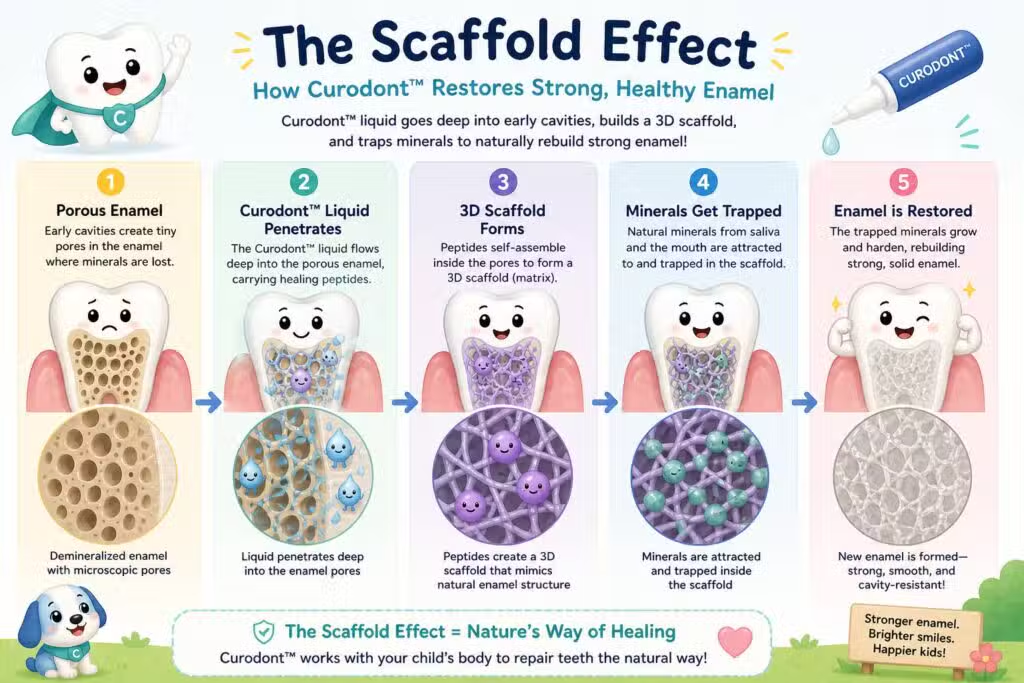
Curodont utilizes a proprietary smart peptide technology. When this clear liquid is applied to a white spot, it acts like a magnet for minerals. It penetrates deep into the pores of the decalcified enamel and creates a 3D biomimetic scaffold. This scaffold mimics the natural protein matrix found in developing teeth. Once the scaffold is established, it attracts calcium and phosphate ions from the child’s own saliva. Over the next few weeks, these minerals fill the scaffold, rebuilding the enamel density and restoring the tooth’s natural translucency.
Knowing the Differences: Curodont vs. Other Treatment Methods
When evaluating how to handle post-orthodontic white spots, parents should consider the long-term structural value and invasiveness of the available options.
Unlike standard composite resins, Curodont dries 100% clear and invisible, preserving the natural beauty of the smile. Because this is an advanced technology, not all of our pediatric dentists currently offer this treatment, and its use is typically reserved for permanent adult teeth rather than primary baby teeth.
| Feature of Care | Watch and Wait Protocol | Resin Infiltration / Bonding | Curodont™ Enamel Repair |
|---|---|---|---|
| Invasive Level | Non-invasive, but entirely passive. | Requires chemical acid etching or drilling. | 100% Non-invasive molecular action. |
| Enamel Preservation | High risk; decay may progress to a hole. | Removes or covers up healthy enamel structure. | Strengthens and actively regenerates enamel. |
| Aesthetic Result | Chalky white spots often remain visible. | May look bulky or stain along edges later. | Completely clear, natural, uniform finish. |
| Chair Time Required | N/A (Requires years of monitoring). | 45 to 60 minutes of intensive prep. | Only 3 minutes total application time. |
| Insurance Coverage | Covered under routine preventive exams. | Varies; often considered cosmetic. | Not covered by insurance; out-of-pocket. |
| Out-of-Pocket Cost | Minimal co-pay under standard plans. | Higher cost due to intensive chair time. | Out-of-pocket investment of $80 per tooth. |
The “Painless” 3-Minute Treatment Process
For families visiting our offices in Kahala, Pearlridge, or Kahului, we have streamlined the Curodont application to be the easiest, most stress-free part of your child’s visit:
- Zero Numbing Required: Because the treatment is non-invasive and does not involve removing tooth structure, there are no needles or shots. Your teen won’t have to deal with a “heavy” or numb face for hours afterward.
- No Drilling or Noise: We preserve 100% of the natural tooth. There is no scary “whirring” sound or vibration, making it ideal for teenagers with heightened dental anxiety or special needs.
- Fast and Flavorless: Our clinicians clean the area, apply the clear, tasteless liquid with a small applicator, and let it soak for just 5 seconds. It is so gentle that many kids don’t even realize a “procedure” happened.
- Immediate Activity:While there is no eating, drinking, or rinsing for 30 minutes afterwards, your child can return to school, sports, or play immediately. There is no downtime and no recovery period.
Proper Brushing Techniques to Support Regenerated Enamel
Once our clinical team has treated your child’s early decay with Curodont™, maintaining excellent oral hygiene habits at home is vital to protect the newly forming minerals. Our hygienists teach kids proper, age-appropriate movements:
- General Surfaces: Instruct your child to use a gentle back-and-forth scrubbing motion across the flat chewing surfaces and both the tongue facing surfaces and the cheek facing surfaces of their molars. Avoid harsh vertical sawing along the gums.
- Inside Front Surfaces: When cleaning the back (tongue-side) of the front teeth, tilt the toothbrush completely vertically and use short, vertical up-and-down strokes to sweep away plaque.
- Nighttime Flossing: Ensure that flossing is performed consistently at nighttime right before bed. Clearing away trapped food particles before sleep is critical because natural saliva flow drops significantly during the night, reducing the mouth’s organic defense against acid attacks.
Advanced Diagnostics: The Baseline Age 4 X-Ray Rule
While post-braces spots are highly visible on the front surfaces of the teeth, decay also forms silently in the tight spaces between the back molars. Catching demineralization when it is still in the early, un-cavitated stage requires meticulous diagnostic tracking.
To catch these hidden lesions before they break through the enamel shell, our specialists implement a strict diagnostic protocol: the baseline target age for a child’s first routine bitewing X-rays is set at age 4. This represents the precise developmental window where the primary back molars have shifted and locked tightly against one another, and when most kids are able to tolerate taking x-rays of the back teeth. Low-radiation digital dental X-rays allow our team to see between these touching teeth, identifying early demineralization while it can still be reversed with non-invasive therapies instead of traditional drilling.
Proper Home Care Techniques to Maintain a Bright Smile
Once our team has helped restore post-braces white spots with Curodont™, maintaining a proper home care routine is essential to keep the enamel strong. Our hygienists teach teenagers and kids exact, effective movements:
- Chewing and Smooth Surfaces: Instruct your child to use a gentle back-and-forth scrubbing motion across the flat chewing surfaces and both the tongue facing surfaces and the cheek facing surfaces of their molars. Avoid pressing down too forcefully, which can cause gum recession.
- Inside Front Surfaces: When cleaning the back (tongue-side) of the front teeth, tilt the toothbrush completely vertically and use short, vertical up-and-down strokes to sweep away plaque.
- Nighttime Flossing: Ensure that flossing is performed consistently at nighttime right before bed. Clearing away trapped food particles before sleep is critical because natural saliva flow drops significantly during the night, reducing the mouth’s organic defense against acid-producing bacteria.
Geographic Convenience and Insurance Transparency
At Pedodontic Associates, our team consists entirely of specialized pediatric dentists who have completed years of post-doctoral specialty training to protect growing smiles. We believe in providing clear, upfront operational transparency so local families can plan their care comfortably.
To help you navigate your family’s baseline benefits, our administrative team is always happy to verify your active insurance coverage before your appointment. While our office does not routinely submit formal pre-authorizations for specific dental services, we work closely with you to make utilizing your insurance plan as simple and straightforward as possible.
Our centralized locations are designed to fit seamlessly into your family’s routine:
- Aiea Office: Explore our Aiea dental office tour right by Pearlridge Center, providing a convenient hub for Central and West Oahu families.
- Honolulu Office: Visit our Honolulu dental office tour centrally positioned to serve busy parents across Metro Honolulu.
- Maui Office: See our Maui dental office tour located in Kahului, ensuring neighbor island families have direct access to cutting-edge pediatric care.
Patient Stories: Real Results in Hawaii
“Fantastic care! Dr. Teruya and staff have been wonderful to both my daughters for years. They’ve been very attentive to their needs from when they were toddlers through adolescence. I’ve always been very pleased with their care.”
— RK C. | Verified Google Review for Honolulu Office
“My two boys enjoy going to the dentist! 🦷 Everyone is so gentle, thorough and caring. The boys love Mario so the interior decor is a lot of fun and there is TV everywhere so they can watch the Disney Chanel”
— Aya U. | Verified Google Review for Aiea Office
Frequently Asked Questions: Post-Braces Enamel Care
1. How soon after braces are removed can we start treatment?
We recommend scheduling a Pediatric Dental Exam as soon as possible—ideally within the first 2 to 4 weeks. Early intervention is key; Curodont is most effective while the white spot lesion is still “active” and porous.
2. Does Curodont work on “old” white spots?
Yes. While the fastest results are seen on new lesions, Curodont can still provide significant mineral density improvements to older white spots that have been present for months or even years.
3. Is the treatment visible to others?
Not at all. The Curodont liquid is entirely clear and non-staining. Unlike older “silver” treatments that can darken the tooth, Curodont simply restores the natural translucency of the enamel. It doesn’t “paint” the tooth white; it helps the tooth become healthy again.
4. How many treatments are necessary?
For the majority of patients, a single, precision application is sufficient to trigger the Guided Enamel Regeneration process. We will monitor the progress during your child’s regular six-month Oral Hygiene visits.
5. What if the white spots have already turned into cavities?
If the decalcification has progressed to the point where there is a physical “dip” or hole in the tooth, a Tooth-Colored Filling or crown may be required. This is why we urge parents to be proactive with a Curodont evaluation immediately following orthodontic treatment.
Conclusion: Give Your Teen the Smile They Earned
Your child has put in years of time and effort to achieve a straight smile through orthodontics. Don’t let decalcification spots take the shine off that major achievement. With Curodont™ Repair Fluoride Plus, we can safely help restore the visual appearance of their smile and physically strengthen their enamel in one short, painless visit.
Don’t wait for a small “watch” to become a big, painful problem. If you’ve been told your teen has early signs of decay or post-orthodontic white spots on their permanent teeth, ask our team about Guided Enamel Regeneration.
Contact Us today to schedule a pediatric consultation at our Aiea, Honolulu, or Maui office!
Medical & Legal Disclaimer:The content on this blog is provided for general informational purposes only and is not intended as medical advice, diagnosis, or treatment. Curodont is highly effective for incipient (early) decay and orthodontic white spots but may not be suitable for deep or open cavitated lesions. Always seek the advice of a board-certified pediatric dentist regarding your child’s specific oral health needs. If your child is experiencing a medical emergency, call 911 or proceed to the nearest emergency room immediately.