
Finding the right dentist for your child means more than picking someone who “sees kids.” Pediatric dentists are specialists with years of additional training in child development, behavior management, and oral health from infancy through adolescence. With over 2 million pediatric dental emergency visits annually and 23% of children ages 2 to 5 already experiencing cavities, choosing a qualified specialist early sets the foundation for a lifetime of healthy smiles.
At Pedodontic Associates, we have been Hawaii’s leaders in tooth preservation since 1977. Our specialists are dedicated to ensuring your child keeps their natural teeth for a lifetime across our Aiea, Honolulu, and Maui communities. Here is how to evaluate your options and what separates exceptional pediatric care from the rest.
What Makes Pediatric Dentists Different from General Dentists
After completing four years of traditional dental school, pediatric dentists spend an additional 2 to 3 years in specialized, hospital-based residency training focused exclusively on treating infants, children, and adolescents. This isn’t just more time learning standard procedures—it’s intensive education in child psychology, advanced behavior guidance techniques, growth and development patterns, and treating patients with special health care needs.
Only 5% to 6% of all U.S. dentists are pediatric specialists. This matters because not every dentist who treats children has this specialized credential. General dentists often refer complex pediatric cases—severe dental anxiety, extensive decay requiring sedation, developmental abnormalities, or trauma injuries—to specialists equipped to handle them.
Pediatric dentists also understand the unique timeline of children’s oral development, from teething patterns in infants to the eruption of permanent molars. Pedodontic Associates has maintained this specialized focus since 1977, with our team of pediatric dentists on staff across three Hawaii locations.
When to Start and Why the First Visit Matters
The American Academy of Pediatric Dentistry (AAPD) recommends scheduling your child’s first dental visit by age one or within six months after the first tooth erupts. This isn’t about performing extensive dental work on a baby—it’s about establishing a permanent “dental home” where your child receives comprehensive, coordinated care as they grow.
That first visit typically includes a gentle exam, guidance on proper brushing techniques, advice on diet and cavity prevention, and answers to your questions about teething, pacifier use, or thumb-sucking. Research shows children who have their first dental visit by age one have lower dental costs over their first five years compared to those who delay visits, because problems are caught before they require expensive restorative work.
Specialized Pediatric Milestones
| Target Age | Clinical Development Milestone | Recommended Proactive Strategy |
|---|---|---|
| Birth to 6 Months | Gum pad preparation and primary bacteria tracking. | Wipe gums with a clean, damp cloth after every feeding. |
| Age 1 | First primary tooth eruption and dental home creation. | Schedule the baseline pediatric dentistry wellness and diagnostic exam. |
| Age 4 | Primary posterior molars shift and lock tightly flush. | Baseline clinical target age for a child’s first routinedental X-rays. |
| Ages 6 to 7 | Eruption of first permanent adult molars and mixed dentition. | Apply protective dental sealants to trap bacteria and prevent cavities. |
| Ages 12+ | Permanent bite stabilization and secondary molar alignment. | Evaluate for a custom night guard if severe bruxism is present. |
The next critical window arrives around age six or seven, when the first permanent molars erupt. These teeth are particularly vulnerable to decay because their deep grooves trap food and bacteria. Dental sealants prevent 80% of cavities in these molars, where nine out of ten cavities occur. Sealants applied during this window protect teeth for up to nine years, and every dollar spent on sealants saves $8.50 in future restorative treatment. Missing this preventive opportunity means your child faces higher odds of needing dental fillings, crowns, or more invasive procedures later.
Seven Criteria for Evaluating Pediatric Dentists
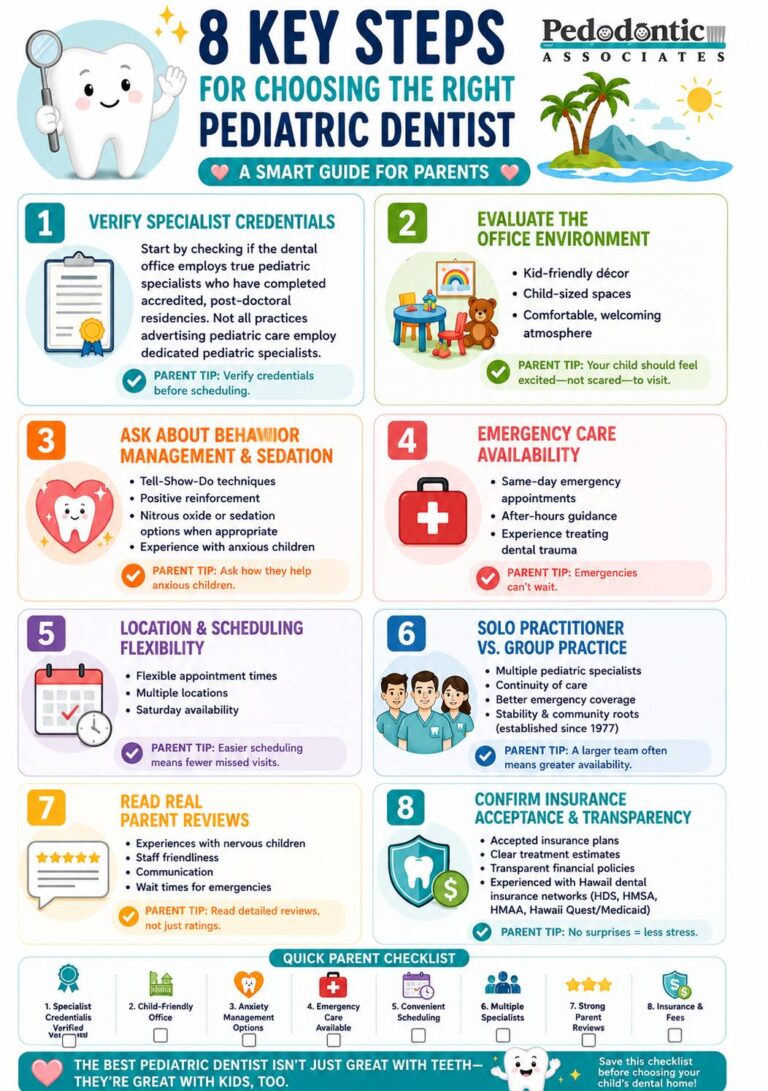
1. Verify Specialist Credentials
Start by checking if the dental office employs true pediatric specialists who have completed accredited, post-doctoral residencies. Not all practices advertising pediatric care employ dedicated pediatric specialists.
2. Evaluate the Office Environment
Pediatric practices should feel designed for children, with colorful décor, child-sized furniture, toys, and entertainment options that reduce anxiety. A general dental office that happens to see children won’t have the same atmosphere or specialized, child-sized equipment.
3. Emergency Care Availability
Dental emergencies like knocked-out teeth are time-sensitive—reimplantation within 30 minutes has a high success rate according to the American Dental Association (ADA), but after two hours, success drops significantly. Ask whether the practice sees emergency patients same-day and what their after-hours protocol involves.
4. Location and Scheduling Flexibility
Scheduling flexibility directly impacts whether you’ll actually keep appointments. Only 20% to 30% of pediatric dental practices offer weekend hours, yet many Hawaii families work in tourism and service industries with non-traditional schedules. Practices with multiple locations and Saturday availability remove common barriers to consistent care.
5. Solo Practitioner vs. Group Practice
Group practices with multiple specialists offer better appointment availability, coverage for emergencies, and continuity of care if your preferred dentist is unavailable. A practice established since 1977 also signals stability and deep community roots.
6. Read Real Parent Reviews
Focus on specifics: how staff handled a crying child, whether the dentist explained findings clearly, and how long families waited for emergency appointments. Generic five-star ratings matter less than detailed accounts of behavior management and communication.
7. Confirm Insurance Acceptance and Transparency
Practices should provide clear treatment estimates before beginning work, especially for restorative procedures. Our administrative team is highly experienced in the complex landscape of Hawaii dental insurance and works directly with major local networks to maximize your benefits while keeping out-of-pocket costs completely transparent. We proudly accept and process claims with Hawaii Dental Service (HDS)—the state’s largest standalone dental insurer—alongside HMSA, HMAA, and Hawaii Quest (Medicaid) community health programs.
What to Watch During Your First Visit
Green flags include staff who use child-friendly language without talking down to kids, dentists who get on your child’s eye level to build rapport, and office tours offered before any treatment begins. The dentist should explain findings to you clearly, outline a customized treatment plan without pressure for unnecessary procedures, and discuss their philosophy on behavior management upfront.
Red flags include rushed appointments, staff who show impatience with anxious or crying children, unclear explanations of what’s wrong or why treatment is needed, and outdated equipment. Trust your instincts about warmth and professionalism—if the environment feels clinical and intimidating rather than welcoming, your child will pick up on that tension.
Ask these questions during your consultation: What’s your approach to sedation, and when do you recommend it? How do you handle uncooperative children—do you force treatment or build trust over multiple visits? What happens if my child has a dental emergency after hours? The answers reveal whether the practice prioritizes your child’s emotional experience alongside their clinical care.
Comprehensive Care from Prevention to Emergencies
The best pediatric dentists provide the full spectrum of services your child needs from infancy through adolescence. Preventive care includes regular cleanings, fluoride treatments, sealants, oral hygiene education, and diet counseling. Restorative care covers fillings, crowns, pulp therapy (baby root canals), and tooth extraction when necessary.
Specialized services separate comprehensive practices from basic ones. Look for sedation dentistry options, hospital dentistry capabilities for complex cases requiring general anesthesia, accommodations for special needs patients, and emergency trauma care. One-stop care means you won’t need referrals to multiple clinics when complications arise.
In Hawaii’s island ohana, where healthcare access can be limited by geography, finding a practice that handles everything from routine cleanings to emergency trauma becomes even more important. Explore our full menu of pediatric services to see how we protect your child’s milestones.
Preparing Your Child for Success
Bring your insurance card, your child’s medical history, and a list of any medications or allergies to the first appointment. Prepare your child by reading books about visiting the dentist, playing pretend dentist at home, and using positive language—avoid words like “pain,” “shot,” or “hurt” that create unnecessary anxiety.
Proper Brushing and Home Care Habits
Once you return home, maintaining an excellent daily routine is essential. Our hygienists teach kids proper, age-appropriate movements to preserve their smiles:
- General Surfaces: Instruct your child to use a gentle back-and-forth scrubbing motion across the flat chewing surfaces and both the tongue facing surfaces and the cheek facing surfaces of their molars. Avoid harsh vertical sawing along the gums.
- Inside Front Surfaces: When cleaning the back (tongue-side) of the front teeth, tilt the toothbrush completely vertically and use short, vertical up-and-down strokes to sweep away plaque.
- Nighttime Flossing: Ensure that flossing is performed consistently at nighttime right before bed. Clearing away trapped food particles before sleep is critical because natural saliva flow drops significantly during the night, reducing the mouth’s natural defense against bacteria.
First visits typically last 30 to 45 minutes and may include a cleaning if your child cooperates, though some practices prefer to use the initial visit purely for building comfort and trust. Ask questions freely—good pediatric dentists welcome parent involvement and understand that educated parents raise kids with better oral health habits. Establishing a dental home early, ideally by age one, creates familiarity that reduces anxiety at future visits. Children who see the same practice consistently develop relationships with staff, understand what to expect, and cooperate more readily with care.
Hawaii Parent Testimonials
Our island families regularly share their experiences regarding how our preventive treatments and specialized pediatric approach keep appointments comfortable:
“I really like this place for my kids. They are so gentle and they take their time with them. My kids are always so excited to come back and they don’t have to be scared. The staff is amazing and very friendly.”
“The dentists and staff are amazing. They are patient and kind, and they make sure the children are comfortable throughout their visit. My children actually look forward to their dental appointments!”
Set Your Keiki Up for a Lifetime of Healthy Smiles
Our dedicated team of specialists is here to help your child step out with ultimate confidence. Whether your child requires an orthodontic post-braces evaluation, a cosmetic dental bonding consultation, an annual checkup, or a custom sports mouth guard, we provide the gentle guidance your family deserves.
Explore our locations and plan your family’s visit using our office tour links below:
- Aiea Office: Explore our Aiea dental office tour right by Pearlridge Center, providing a convenient hub for Central and West Oahu families.
- Honolulu Office: Visit our Honolulu dental office tour centrally positioned to serve busy parents across Metro Honolulu.
- Maui Office: See our Maui dental office tour located in Kahului, ensuring neighbor island families have direct access to cutting-edge pediatric care.
Ready to establish a permanent dental home for your child? Contact Us today to schedule a pediatric consultation at our Aiea, Honolulu, or Maui office!
Medical & Legal Disclaimer:The content on this blog is provided for general informational purposes only and is not intended as medical advice, diagnosis, or treatment. Always seek the advice of a qualified pediatric dentist regarding your child’s specific oral health needs. If your child is experiencing a medical emergency, including severe facial swelling, call 911 or proceed to the nearest emergency room immediately.