
Your mouth guard is a vital piece of protective equipment. Whether it is shielding your child’s teeth from high-impact sports injuries or acting as a nighttime protective barrier for teenagers managing teeth grinding (bruxism), it performs a heavy-duty job. However, without a consistent and proper cleaning routine, this protective tool can quickly transform into a breeding ground for harmful pathogens.
Clinical research indicates that a high percentage of mouth guards test positive for bacteria, yeasts, and molds after just a few weeks of regular use. A neglected mouth guard doesn’t just develop an unpleasant odor; it can lead to gum irritation, increased risk of cavities, and secondary oral issues. The good news? Establishing a simple daily routine and performing occasional deep cleans will keep your appliance fresh, safe, and effective. Here is the definitive guide on how to clean your mouth guard using methods recommended by the dental team at Pedodontic Associates.
Daily Cleaning: The Essential Morning Routine
Bacterial colonies are opportunistic; they can thrive in the warm, moist environment of an uncleaned dental appliance. To prevent biofilm—that sticky, invisible layer of bacteria—from hardening into difficult-to-remove buildup, follow these steps every single day:
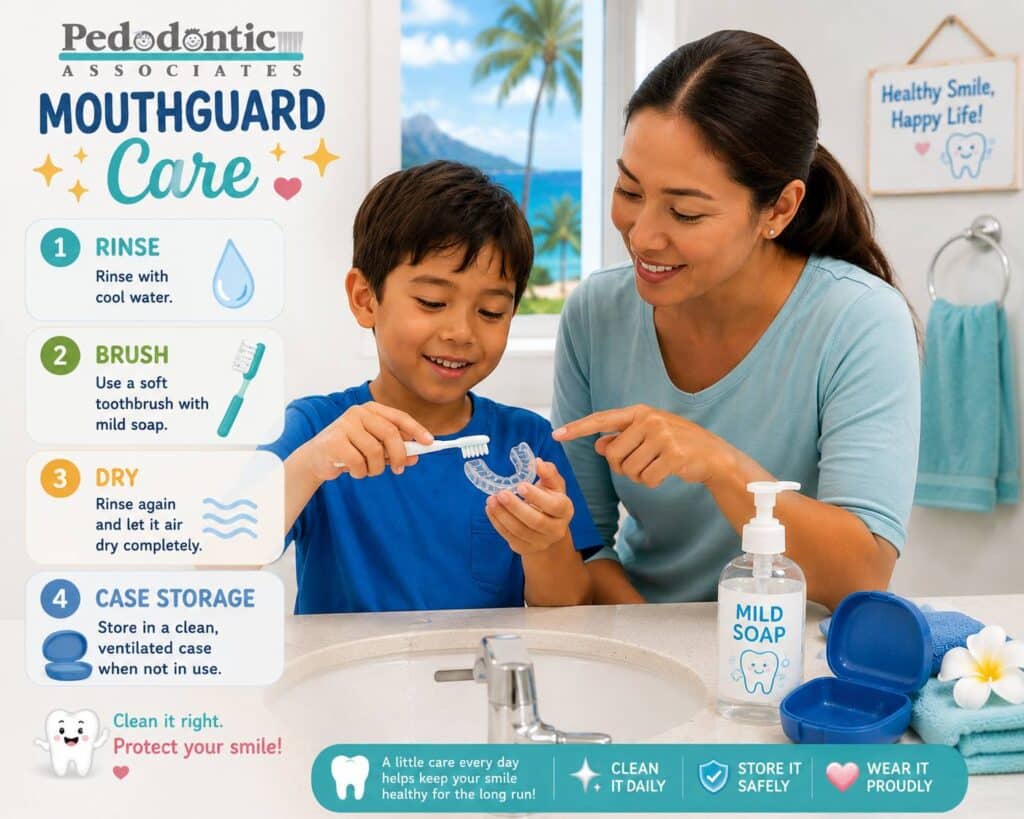
- The Immediate Rinse: As soon as the guard is removed from the mouth, hold it under cool, running tap water. This initial step is critical because it flushes away fresh saliva and loose food debris before they have the chance to dry into a crust on the material. Never use hot water, as high temperatures can warp the custom-molded shape of the guard.
- Brushing with Mild Soap: Use a soft-bristled toothbrush that is dedicated specifically to the mouth guard (not the same one used for teeth). Avoid most toothpastes! Standard toothpastes often contain abrasives like silica that are designed to scrub tooth enamel but will create microscopic scratches in the softer material of a mouth guard. These scratches become places where bacteria hide. Instead, use a few drops of mild, fragrance-free dish soap or liquid hand soap.
- Air Drying is Non-Negotiable: Moisture is the primary fuel for mold growth. After cleaning, place the guard on a clean, dry, lint-free towel in a well-ventilated area. Never seal a damp guard inside its plastic case immediately; doing so creates a trap where bacterial counts can jump rapidly overnight.
Deep Cleaning Methods: Weekly and Monthly Maintenance
Daily brushing handles the surface biofilm, but a deeper soak helps penetrate the microscopic pores of the material and reach the deep crevices of a custom-fitted appliance.
- The Weekly Soak: Once a week, submerge the mouth guard in a specialized cleaning solution. Using standard denture cleaning tablets or specialized appliance cleaners is an excellent, cost-effective method to help mechanically lift stains and eliminate odor-causing bacteria.
- Monthly Mineral Removal: Over time, calcium from saliva can bond to the guard, appearing as white, chalky spots. To help manage this, a brief soak in a mild, diluted white vinegar and water mixture can help loosen the spots. Follow this with a thorough rinse under cool water.
Mouth Guard Cleaning Method Comparison
| Method | Frequency | Best For | Safety Note |
|---|---|---|---|
| Cool Water Rinse | After every use | Removing fresh saliva | Avoid hot water (causes warping) |
| Mild Soap & Brush | Daily | Removing soft biofilm | Use soft bristles only to avoid scratches |
| Appliance Tablet Soak | Weekly | Deep disinfection | Rinse thoroughly before placing in mouth |
| Diluted Vinegar Soak | Monthly | Loosening calcium/tartar | Do not soak for prolonged periods |
Proper Storage and Case Maintenance: The Forgotten Step
A mouth guard is only as clean as the environment it lives in. Guard cases can easily accumulate bacteria if they are neglected.
- Scrub the Case: The plastic storage case needs to be scrubbed with hot water and soap at least once a week.
- Ventilation is Key: Always use a ventilated case with air holes to allow residual moisture to escape.
- Strategic Storage: Avoid storing the guard in the bathroom where humidity levels fluctuate. Store it in a dry bedroom drawer instead.
- The Hawaii Warning:Never, under any circumstances, leave a mouth guard in a car. In Hawaii’s tropical climate, temperatures inside a parked vehicle can quickly skyrocket. This intense heat will permanently warp a custom-fitted guard, rendering it completely useless and requiring a full replacement.
Signs Your Mouth Guard Needs Replacement
Even with a perfect cleaning regimen, the materials used in dental mouth guards eventually wear down. Because children are growing, their dental development can also change how a guard fits. You should schedule a replacement fitting at our Aiea, Honolulu, or Maui office if you notice:
- Cracks or Tears: These structural failures create internal pockets for bacteria that no amount of soaking can completely reach.
- Fit Changes: If a sports guard no longer stays in place with gentle suction or feels loose against the gums, it is no longer providing adequate protection.
- Severe Material Thinning: If an older teenager is a heavy nighttime grinder, they may eventually wear down certain spots of their guard. If the protective material becomes too thin, it needs to be replaced to prevent tooth damage. (Remember, custom night guards are strictly reserved for adolescents ages 12 and older who have outgrown the mixed dentition stage to avoid disrupting jaw growth).
Common Cleaning Mistakes That Damage Your Mouth Guard
Since 1977, the pediatric dentistry team at Pedodontic Associates has seen well-meaning parents accidentally ruin expensive custom guards with these common errors:
- The Dishwasher: The extreme heat and harsh detergents will warp a custom guard into a useless piece of shrunken plastic in a single cycle.
- Boiling Water: While it sounds like a good way to sanitize, boiling water completely destroys the molecular structure of the custom-fitted material.
- Alcohol-Based Mouthwash: Soaking a guard in mouthwash with high alcohol content can degrade the material over time, making it brittle and prone to cracking.
Professional Cleaning: When to See Your Dentist
Home maintenance is your first line of defense, but bringing your child’s or teenager’s mouth guard to our office during their routine six-month checkup allows our team to thoroughly inspect the appliance. We can verify that it still fits perfectly against their changing bite and clean away any stubborn, hardened mineral deposits that standard home cleaning can’t remove.
If your child’s sports guard or your teenager’s night guard has developed a persistent odor, or if you aren’t sure it still fits correctly, just bring it with you to your next visit. We offer convenient scheduling and dedicated pediatric care at all three of our Hawaii locations to ensure your family’s smiles are always shielded.
Hawaii Patient Stories
We take pride in helping families across the islands maintain their health through every stage of development.
Read Kawika K.‘s review of Pedodontic Associates – Kahala on Yelp
Read Krystal Y.‘s review of Pedodontic Associates – Kahala on Yelp
Keep Your Guard Clean, Keep Your Smile Protected
A clean mouth guard is an effective mouth guard. By investing just two minutes a day into a cleaning routine, you extend the life of the appliance and protect your child’s oral health. Remember the golden rule: Rinse, Brush, and Dry.
If you are concerned about your teenager’s teeth grinding or need a new custom sports guard for your child’s upcoming athletic season, our team is ready to help. We combine decades of experience with specialized care to serve the Hawaii community.
Ready for a professional evaluation of your child’s mouth guard?
Schedule an Appointment at our Aiea, Honolulu, or Maui Office today.
Medical & Legal Disclaimer: The content on this blog is provided for general informational purposes only and is not intended as medical advice, diagnosis, or treatment. Always seek the advice of a qualified pediatric dentist regarding your child’s specific oral health needs. If your child is experiencing a medical emergency, call 911 or proceed to the nearest emergency room immediately.