
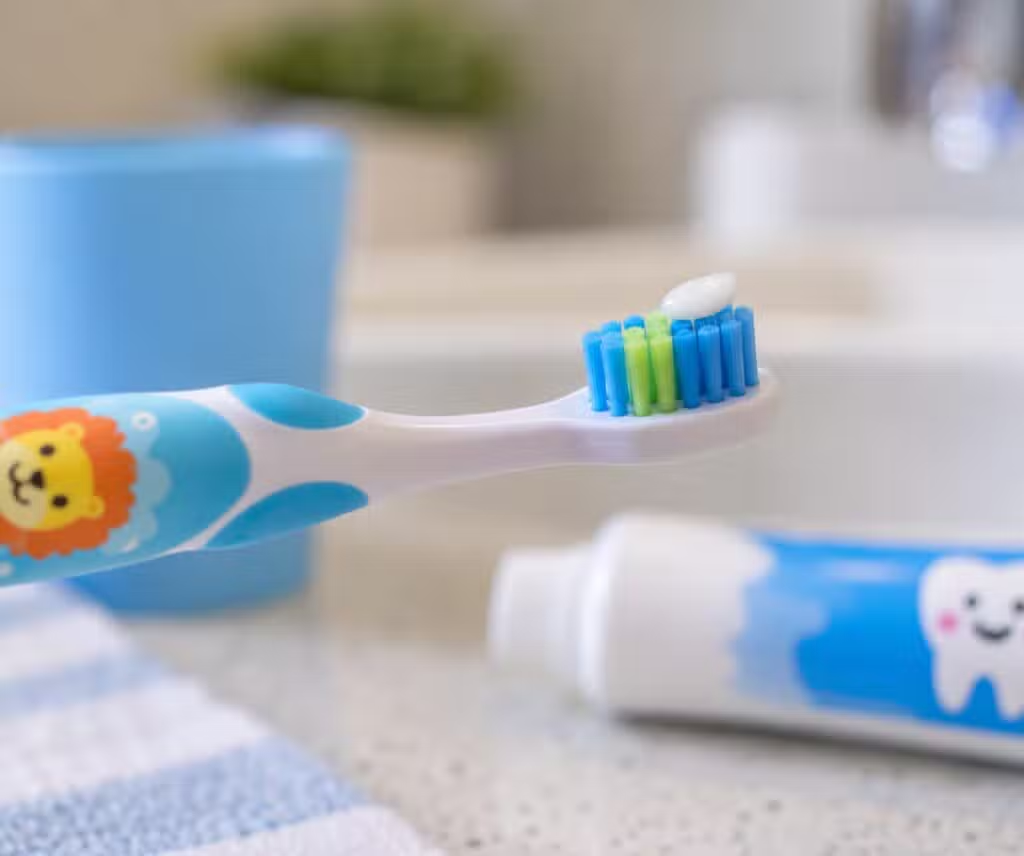
Standing in the oral care aisle can feel overwhelming for new parents. Toothpaste tubes line the shelves with various colorful labels, and the conflicting advice on packaging makes it difficult to know what is actually safe for a baby.
Parents often worry that using fluoride toothpaste too early will poison their child or cause permanent staining. Out of caution, many families skip fluoride entirely until their children reach school age.
Pediatric dental guidelines recommend using fluoride from the moment the very first tooth appears, provided you follow strict measurement rules. Our team at Pedodontic Associates helps Hawaii parents master these exact daily routines. You can learn more about our preventive philosophy by visiting our about page.
Why Fluoride Remains Essential for Babies
As soon as a primary tooth breaks through the gumline, it becomes vulnerable to plaque bacteria and dietary sugars. Enamel in newly erupted baby teeth is softer and more porous than adult enamel.
Fluoride strengthens that fresh enamel directly on contact. It remineralizes weak spots before microscopic decay can turn into a painful cavity.
Skipping fluoride in baby toothpaste leaves young teeth defenseless against early childhood caries. The key to safety is not avoiding fluoride altogether. The secret lies entirely in controlling the exact amount dispensed onto the brush.
The Rice-Grain vs. Pea-Sized Rules
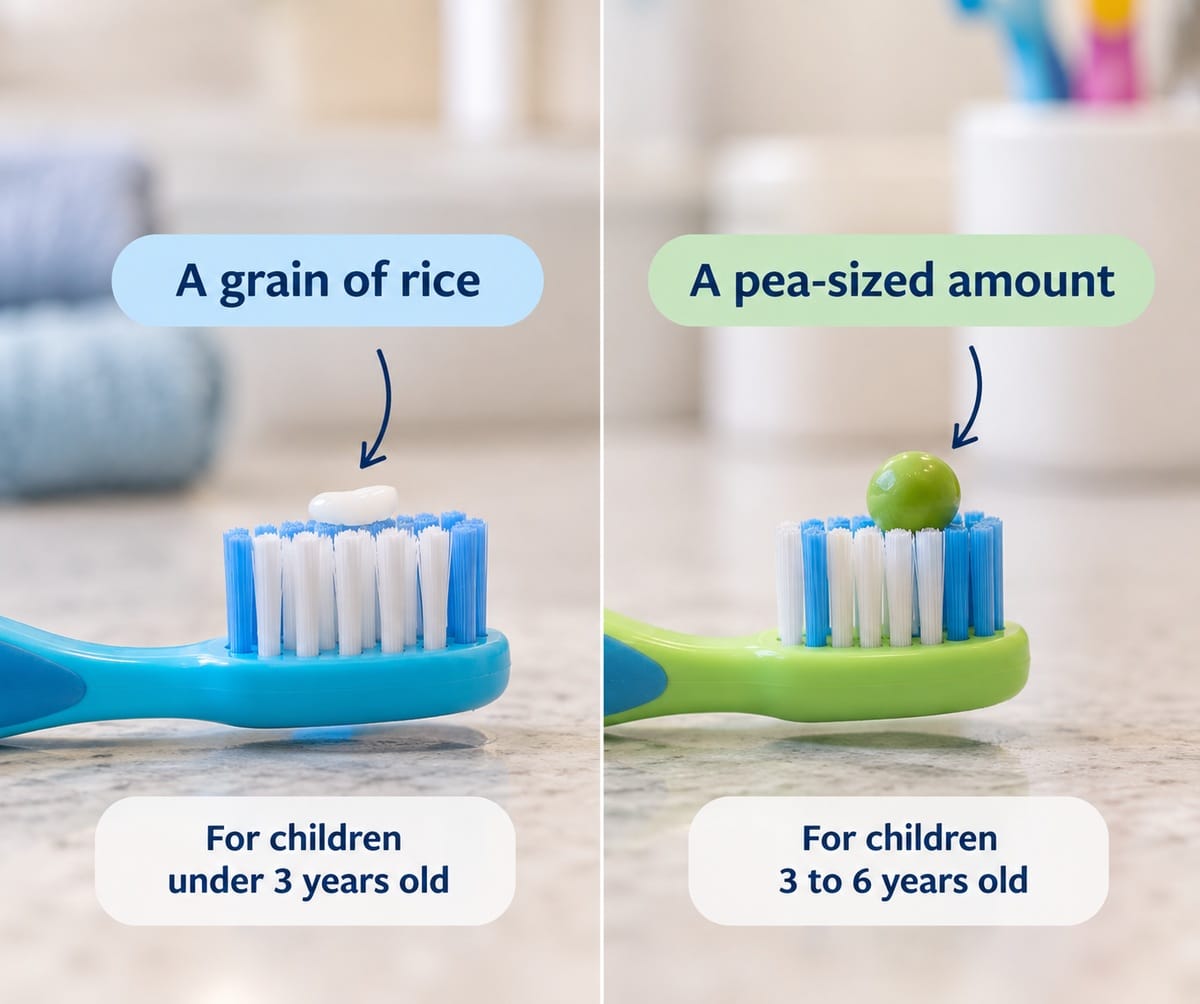
To prevent young children from swallowing excessive fluoride while still protecting their teeth, dental professionals follow a strict age-based measurement standard.
| Child's Age Group | Correct Toothpaste Amount | Visual Size Guide |
|---|---|---|
| Eruption to Age Three | A microscopic smear or tiny touch. | Exactly the size of a single grain of rice. |
| Ages Three to Six Years | A slightly larger dab for independent brushers. | Exactly the size of a small green pea. |
| Six Years and Older | A standard strip across the length of the brush head. | Covers the top third of the bristles. |
Understanding the Fear of Fluorosis
Parents often ask why measuring toothpaste matters so strictly. The primary concern during early childhood is a condition called dental fluorosis.
Fluorosis occurs when a young child ingests too much systemic fluoride while their permanent adult teeth are still forming deep within the jawbone. This temporary condition typically manifests as very faint white lines or streaks on the adult teeth once they erupt years later.
Mild fluorosis is strictly cosmetic and does not harm the health or strength of the tooth. However, adhering to the rice-grain rule keeps fluoride ingestion so low that it prevents fluorosis entirely while giving the outer enamel maximum topical protection.
Teaching Safe Spitting Habits
Infants and young toddlers lack the muscular coordination to spit out foamy toothpaste reliably. They naturally swallow whatever goes into their mouths.
That exact biological reality is why the rice-grain amount is so vital. If an infant swallows a smear the size of a grain of rice, the fluoride intake is negligible and completely safe.
As children approach age three and graduate to a pea-sized amount, parents can start teaching them how to spit out excess foam. Make it a fun bathroom game rather than a strict drill. Once your child masters spitting, you can transition safely to the pea-sized rule.
If you want to evaluate your child's brushing habits or check their enamel development, you can explore our pediatric dental services page to see how we guide families through preventive care.
Real Stories From Hawaii Families
Building great oral hygiene habits early sets your child up for a lifetime of healthy smiles. Here is what local parents have to say about our guidance, sourced directly from the Pedodontic Associates Testimonials Page:
"The staff and doctors are so patient with my toddler. They took the time to show us exactly how much toothpaste to use at home and answered every question we had about brushing routines." — Parent Review via Pedodontic Associates Testimonials
"We love taking our keiki here! Everyone is warm, professional, and genuinely cares about teaching kids how to take care of their teeth. The environment is stress-free for both parents and children." — K.W. via Pedodontic Associates Testimonials
Frequently Asked Questions About Toothpaste and Fluoride
What should I do if my toddler eats a glob of flavored toothpaste?
A single accidental ingestion of a large amount of flavored toothpaste is rarely a medical emergency, though it can cause mild stomach upset. Keep all toothpaste tubes stored safely out of reach when brushing time is finished.
Do toddler toothpastes without fluoride work just as well?
Fluoride-free training toothpastes do not protect against cavities. Dentists recommend switching to a fluoridated paste using the rice-grain rule as soon as the first tooth appears.
Should I rinse my child's mouth out with water after brushing?
For maximum cavity protection, it is actually best to have your child spit out the excess foam but avoid rinsing with a large cup of water immediately afterward. Leaving a thin film of fluoride on the teeth extends its protective benefits.
Partnering with Your Hawaii Pediatric Dentist
Establishing a safe and effective brushing routine at home is one of the best gifts you can give your child. Our team reviews brushing techniques and home care habits during every routine checkup.
Our team is ready to support your family with welcoming clinics across Oahu and Maui. Explore our Pearlridge office in Aiea or check out our Kahala office in Honolulu. We also serve our neighbor island patients at our Maui office. You can contact our scheduling team today to book your child's next preventive visit. You can also explore our pediatric dental services page to review our full scope of care.
Medical & Legal Disclaimer: The content on this blog is provided for general informational purposes only and is not intended as medical advice, diagnosis, or treatment. Always seek the advice of a qualified pediatric dentist regarding your child’s specific oral health needs. If your child is experiencing a severe medical emergency, call 911 or proceed to the nearest emergency room immediately.