
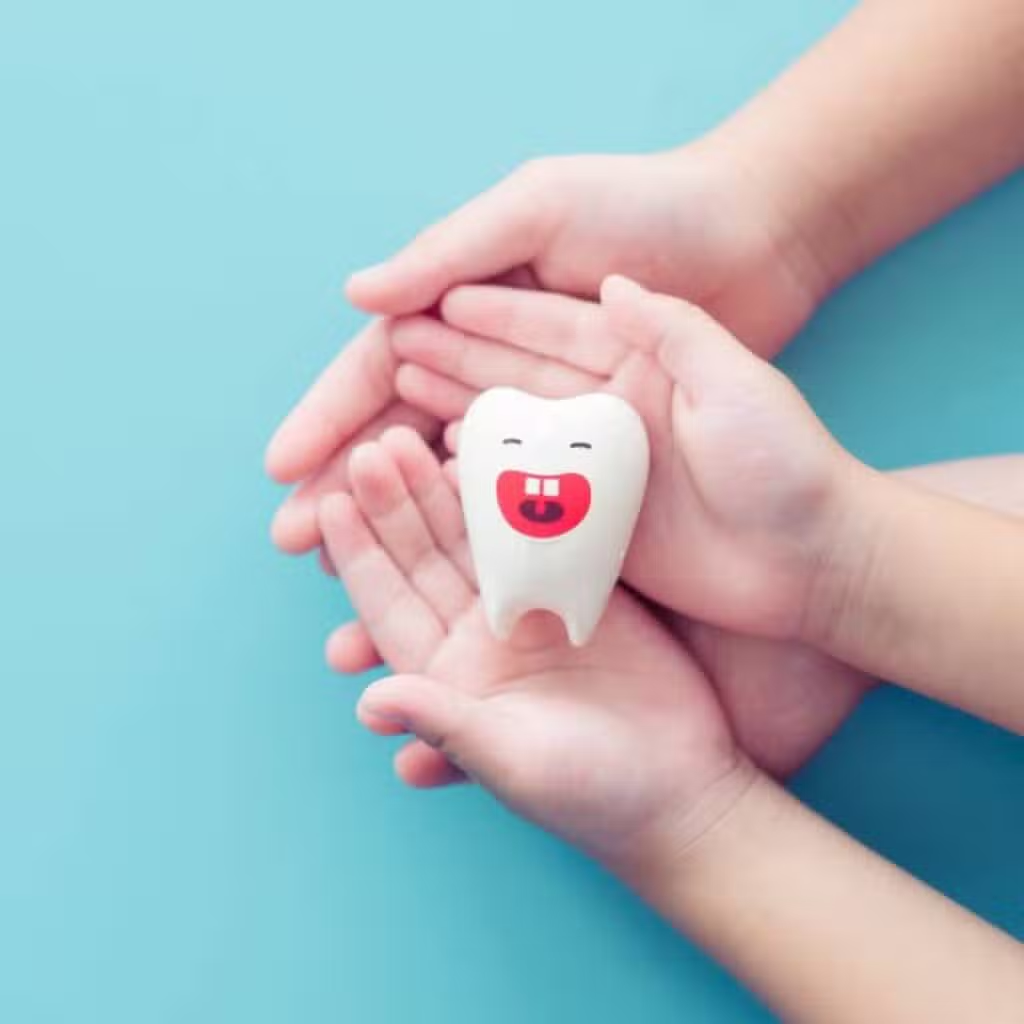
Getting your child to the dentist shouldn’t feel like preparing for battle. For many parents across Oahu and Maui, the memory of childhood dental care involves the sharp smell of old chemicals, the high-pitched whine of loud drills, and the uncomfortable, gag-inducing sensation of thick trays full of cold putty molds. Fortunately, modern pediatric dentistry has undergone a radical transformation. In the last decade alone, innovations in materials science, behavior management, and digital radiography have completely reshaped the patient experience for young children.
Today, pediatric specialists utilize advanced techniques designed specifically for the unique physical, anatomical, and emotional needs of young patients. These innovations are changing how Hawaii families approach lifelong oral health, turning what used to be anxiety-filled appointments into faster, highly comfortable experiences that kids actually tolerate—and often enjoy. At Pedodontic Associates, we stay at the forefront of these conservative, patient-centered advancements to ensure our Hawaii ohana receives the highest standard of care possible across our Aiea, Honolulu, and Maui locations.
Digital Tools That Cut Treatment Time and Anxiety
The most critical shift in modern pediatric care isn’t just about utilizing newer tools—it’s about drastically reducing chair time. For a squirming toddler, a school-aged child with sensory sensitivities, or an anxious teenager, every extra minute spent sitting in a dental treatment chair can feel like an hour. By leveraging streamlined digital workflows, pediatric specialists can complete routine diagnostic procedures with unprecedented speed, gentleness, and precision.
1. Low-Radiation Digital Radiography
Innovations in digital diagnostic imaging have revolutionized pediatric safety, tracking accuracy, and patient speed. Modern digital sensors require significantly less radiation than the traditional film-based dental systems used a generation ago.
Furthermore, digital imaging completely eliminates the need for chemical processing film, meaning high-resolution pictures of your child’s developing jaw structure appear instantly on an overhead monitor. This real-time visualization allows our doctors to immediately evaluate the teeth and spot hidden problems without making an anxious child sit completely still for minutes at a time waiting for film to develop.
2. Streamlined Same-Day Dental Care Workflows
In addition to faster imaging, modern dental diagnostic workflows help maximize the efficiency of restorative appointments. Catching developmental issues or localized decay early allows for immediate, interceptive planning. By optimizing how appointments are sequenced, we minimize the total number of visits a child requires. This specialized care approach saves Hawaii parents from burning additional vacation days and keeps busy keiki in the classroom where they belong.
Stopping Cavities Without the Drill: The Power of Silver Diamine Fluoride (SDF)
Perhaps the most significant clinical innovation in contemporary pediatric dental care isn’t a complex piece of heavy office machinery—it’s a simple, non-invasive FDA-approved liquid medicine called Silver Diamine Fluoride (SDF). For decades, the universal method utilized to treat a localized cavity was to physically “drill and fill.” SDF has completely flipped that clinical script for many young patients by offering a highly effective, alternative pathway that halts tooth decay in its tracks without invasive instrumentation.
SDF is an antimicrobial liquid that is painted directly onto the affected area of a tooth with a tiny brush. The silver ions in the liquid act as a powerful sanitizing agent that kills the cavity-causing bacteria, while the fluoride ions work concurrently to re-mineralize and harden the remaining enamel structure. This allows pediatric specialists to safely arrest the progression of active cavities without the need for local anesthesia injections (needles), vibrations, or traditional drilling noises.
When is SDF Most Advantageous?
- Young Toddlers: Littler children who cannot sit still safely or comfortably for a standard 30-minute restorative filling procedure.
- Special Healthcare Needs: Patients with developmental or sensory processing challenges who find the physical vibration and high-frequency sound of a dental drill completely overwhelming.
- Severe Dental Anxiety: Children who have experienced negative dental episodes in the past and require a simple, completely comfortable “win” to rebuild foundational trust with their dentist.
Clinical research highlights that a single, targeted application of Silver Diamine Fluoride successfully stops active tooth decay in a high percentage of cases when combined with routine follow-up care. While SDF does cause the decayed portion of the tooth structure to permanently turn a dark black color as it oxidizes and hardens the bacteria, for primary baby teeth that will eventually fall out naturally, many local families gladly choose this comfortable, “no-drill” function over traditional aesthetic tooth-colored appearances.
Comparing Treatment Pathways
| Clinical Feature | Traditional Composite Filling | Silver Diamine Fluoride (SDF) |
|---|---|---|
| Local Anesthesia (Needles) | Often required to ensure patient comfort. | Absolutely none needed; entirely non-invasive. |
| Drilling & Mechanical Vibrations | Required to clear away decayed tooth structure. | None; the liquid is gently painted on with a small brush. |
| Average Treatment Time | Typically 20 to 40 minutes in the chair. | Completed in just 1 to 2 minutes per tooth. |
| Aesthetic Result | Restores tooth with a natural, tooth-colored appearance. | The treated, decayed area oxidizes and turns a dark black color. |
| Primary Clinical Function | Replaces missing tooth structure structurally. | Chemically arrests active decay from spreading further. |
Sedation Options That Match Your Child’s Unique Needs
We understand that even with the integration of advanced materials and non-invasive techniques, some children require an extra layer of support to feel safe, calm, and cooperative during a dental procedure. This is where the specialized training of a pediatric dental team becomes essential. Our doctors are pediatric specialists who have completed a minimum of two to three years of intensive, hospital-based residency training beyond standard dental school. This rigorous post-doctoral training focuses extensively on advanced child psychology, pediatric pharmacology, facial growth, and medical sedation safety guidelines.
Nitrous Oxide (Laughing Gas)
This represents the conservative “gold standard” for managing mild dental anxiety in children. Administered through a small, comfortable, flavored nosepiece mask, nitrous oxide helps a child feel relaxed, warm, and slightly floating during their visit. The child remains fully awake and communicative. Within minutes of turning off the gas and administering pure oxygen, the effects are 100% flushed from their system, allowing keiki to return to school immediately.
Oral Conscious Sedation
This approach is often ideal for children with moderate levels of anxiety or very young pediatric patients who require a cluster of standard dental fillings completed in a single session. It helps the child drift into a deeply relaxed, calm state while still maintaining their natural protective reflexes.
Advanced Safety and Monitoring Protocol
Following the rigorous clinical guidelines established by the American Academy of Pediatric Dentistry (AAPD), our offices prioritize real-time patient monitoring and medical safety above all else. From capnography to pulse oximetry, our diagnostic safety protocols ensure your child’s breathing, heart rate, and oxygen levels are continuously tracked by highly trained pediatric specialists.
Behavioral Techniques: The “Psychology” of Comfort
The most impactful innovation in modern pediatric dental care doesn’t always come from a manufacturing laboratory—often, it is a deliberate shift in clinical communication styles and behavioral science. Our entire team is thoroughly trained in evidence-based psychological strategies designed to build a child’s confidence, demystify dental instruments, and eliminate the root causes of childhood dental phobia.
The Power of the “Tell-Show-Do” Methodology
This is the single most successful behavioral tool utilized in our practice. Our pediatric team never introduces an instrument or begins a step unexpectedly. Instead, we break down the process into three transparent phases:
- Tell: We explain exactly what we are going to do using imaginative, kid-friendly terminology. For instance, the standard dental water suction tool is introduced as a playful “Mr. Thirsty” straw that loves to drink up water.
- Show: We physically demonstrate how the tool functions in a completely non-threatening manner. We might let the child feel the gentle air pressure of the water syringe on their fingernail or demonstrate how a slow-speed brush spins on a model tooth.
- Do: Once the child understands the physical sensation and recognizes there is no surprise element, we smoothly perform that specific step of the procedure.
By removing the scary element of surprise, which behavioral psychologists identify as the primary trigger for childhood fear, we empower children to feel safe, informed, and in control of their dental environment. We pair this with positive reinforcement, celebrating a child’s specific acts of “bravery” and “cooperation” to help them leave their appointment feeling a profound sense of personal pride and accomplishment.
When to Start: The Age One Dental Visit Milestone
Modern, innovative pediatric care is deeply rooted in early prevention rather than reactive treatment. Both the AAPD and the American Dental Association (ADA) urge parents to establish a permanent “dental home” for their child by age one, or within six months of the very first primary tooth breaking through the gums.
These milestone infant visits are rarely about performing physical treatments; rather, they are designed to build positive sensory familiarity with the office environment and allow our doctors to catch microscopic issues, like early enamel demineralization, while they can still be successfully reversed with basic, non-invasive preventive fluoride varnishes.
During these foundational early visits, our team works closely with parents to review home care habits, discuss proper nutritional pathways, and evaluate changing oral anatomy. For infants, we teach parents how to gently use a soft silicone finger toothbrush to wipe down delicate gum pads after feedings. As more teeth erupt into toddlerhood, we transition families into proper manual care, instructing them to brush using a gentle back-and-forth scrubbing motion across the flat chewing surfaces and both the tongue facing surfaces and the cheek facing surfaces of their molars to clear out stubborn biofilm long before their primary back teeth begin to crowd.
Hawaii Patient Stories & Reviews
Our commitment to innovation and child comfort is why Hawaii families have trusted us for nearly 50 years.
Read R L.‘s review of Pedodontic Associates – Pearlridge on Yelp
Read Loren A.‘s review of Pedodontic Associates – Pearlridge on Yelp
Making Modern Care Accessible for Hawaii Families
At Pedodontic Associates, we firmly believe that the most advanced dental material or innovative clinical technique is only truly valuable if it is accessible to the local families who need it most. To accommodate the demanding schedules of working parents and school-aged children, we provide convenient Saturday appointment blocks across our locations.
Furthermore, our dedicated administrative teams work directly with major island insurance networks to maximize your family’s coverage and minimize out-of-pocket costs. We proudly accept and file claims with leading providers, including Hawaii Dental Service (HDS)—the state’s largest standalone dental insurer—alongside HMSA, HMAA, and Hawaii Quest (Medicaid) community programs.
Choosing a specialized pediatric practice ensures your child’s path to a lifelong healthy smile is built on a foundation of safety, advanced materials, and positive memories. Whether your child requires specialized diagnostic dental X-rays, routine preventive care, conservative decay therapies like SDF, or an evaluation for an advanced sports mouth guard, our team is here to provide gentle guidance every step of the way.
Explore our locations and plan your family’s visit using our office tour links below:
- Aiea Office: Explore our Aiea dental office tour right by Pearlridge Center, providing a convenient hub for Central and West Oahu families.
- Honolulu Office: Visit our Honolulu dental office tour centrally positioned to serve busy parents across Metro Honolulu.
- Maui Office: See our Maui dental office tour located in Kahului, ensuring neighbor island families have direct access to cutting-edge pediatric care.
Are you ready to experience a modern, stress-free approach to pediatric dental care? Contact Us today to schedule your child’s comprehensive exam at our Aiea, Honolulu, or Maui office!
Medical & Legal Disclaimer: The content on this blog is provided for general informational purposes only and is not intended as medical advice, diagnosis, or treatment. Always seek the advice of a qualified pediatric dentist regarding your child’s specific oral health needs. If your child is experiencing a dental emergency, call 911 or proceed to the nearest emergency room immediately.