

When parents prepare for a new baby, the nursery list quickly fills up with swaddles, pacifiers, and infant monitors. Dental care rarely comes to mind during those early newborn weeks, especially since a baby’s first tooth usually does not break through the gums until around six months of age.
However, establishing an oral hygiene routine long before that first tooth emerges is one of the most effective steps you can take for your infant’s health. Cleaning your baby’s gums clears away milk residue, keeps harmful bacteria in check, and helps your baby adjust to daily mouth care. Building this daily habit early makes transitioning to a real toothbrush smooth, natural, and stress-free.
Why Care for Gums Before Teeth Arrive?
It is easy to assume that oral hygiene begins only when teeth are visible, but healthy gums create the environment necessary for strong baby teeth.
1. Removing Milk Sugar and Bacteria
Whether your baby feeds on breast milk or infant formula, natural sugars linger in their mouth after every feeding. Oral bacteria naturally feed on these lingering sugars, producing mild acids that can irritate delicate gum tissue. Cleaning your baby’s mouth reduces plaque accumulation on the gums, helping protect the oral environment before teeth break through the surface.
2. Acclimating Your Infant to Oral Hygiene
Babies are naturally protective of their mouths. Introducing gentle oral wiping during the newborn stage normalizes the feeling of having their lips touched and their mouth cleaned. When you introduce a small infant toothbrush around six months, your baby will already be familiar with a daily mouth cleaning routine, drastically reducing toddler toothbrush battles later on.
3. Relief During Early Teething
Long before a tooth pierces the gumline, the emerging tooth begins moving through the underlying bone. This early movement can make gums feel tender, swollen, or itchy. The light, firm pressure applied during daily gum wiping provides natural massage relief for sore gums without relying on unproven topical gels.
Step-by-Step Guide: How to Clean Infant Gums
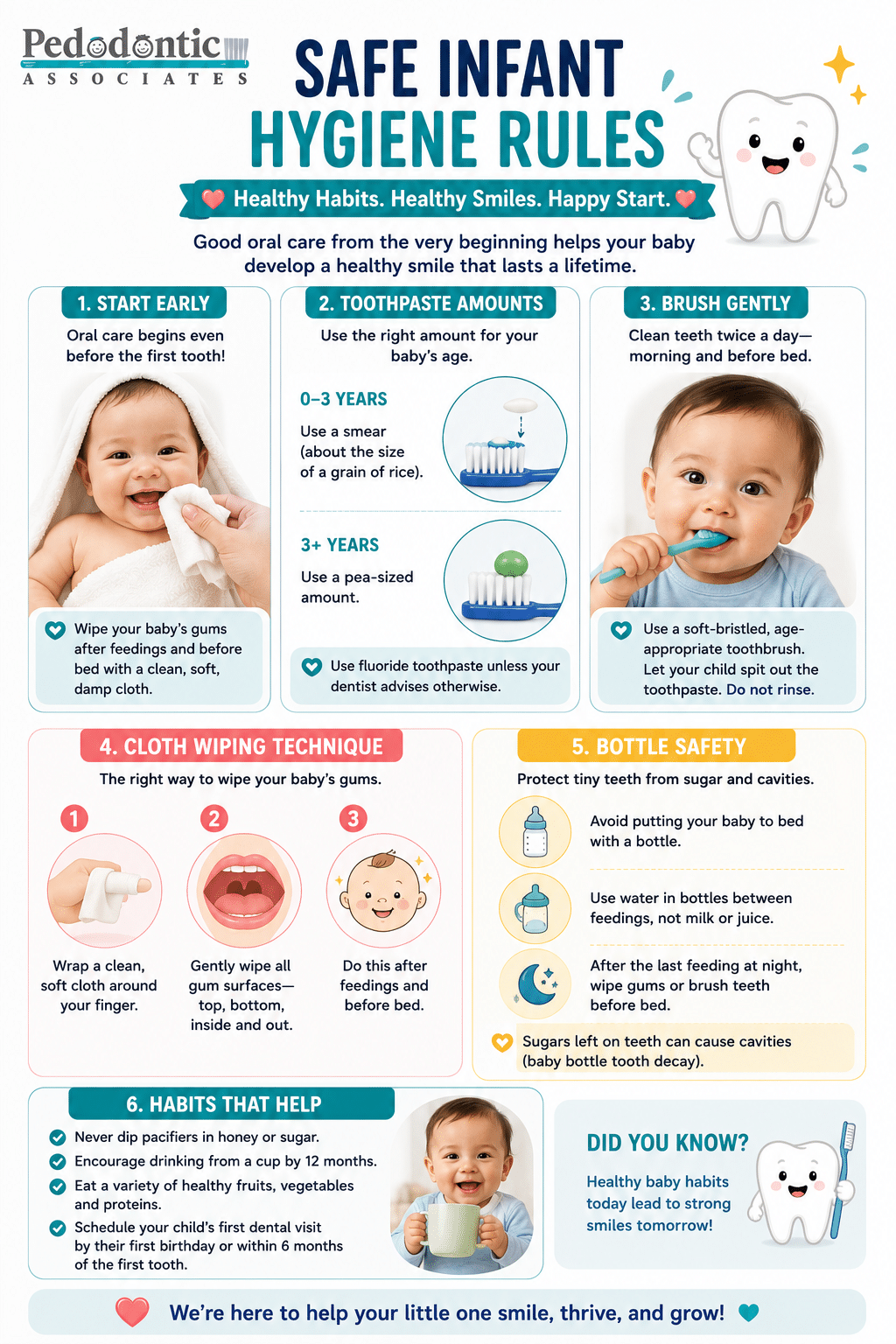
Cleaning an infant’s gums requires no fancy tools or complicated steps. The process takes less than two minutes and integrates easily into your feeding or bedtime routines.
| Step | Action | Focus Area |
|---|---|---|
| Step 1: Preparation | Wash your hands thoroughly with warm soap and water | Clean hands prevent introducing outside bacteria |
| Step 2: Tool Selection | Dampen a clean cloth or silicone finger brush with warm water | Avoid dry fabrics that can chafe soft tissue |
| Step 3: Position Baby | Cradle your baby securely in your arm or place them on your lap | Keep your baby’s head stable with eye contact |
| Step 4: Wipe Gums | Gently rub along the upper and lower gum ridges | Wipe front to back, cleaning the tongue and inside cheeks |
| Step 5: Daily Cadence | Repeat twice daily, ideally after morning and night feedings | Establishes a predictable daily care routine |
Detailed Wiping Technique
Wrap the damp cloth around your index finger. Gently part your baby’s lips and slip your finger inside their cheek. Using light pressure, massage along the top gum ridge from back to front, then repeat along the lower gum ridge. Gently wipe the roof of the mouth and the top surface of the tongue to remove white milk coatings.
Evolving Oral Care: From Pre-Tooth to First Eruption
As your baby grows, their oral care routine evolves alongside their physical milestones. Knowing when to switch tools ensures their mouth stays clean without causing discomfort to tender tissues.
| Baby’s Age & Stage | Recommended Tool | Cleaning Product | Daily Frequency |
|---|---|---|---|
| 0 to 6 Months (Pre-Tooth) | Clean, damp washcloth or gauze pad | Plain warm water only | 1 to 2 times daily |
| 6 to 12 Months (First Tooth) | Extra-soft, small-head infant toothbrush | Tiny smear of fluoride toothpaste (grain of rice size) | Twice daily (morning and before bed) |
| 12 to 24 Months (Toddler Stage) | Soft toddler toothbrush with wide grip | Tiny smear of fluoride toothpaste (grain of rice size) | Twice daily for two full minutes |
Making the Switch to a Toothbrush
The moment you see the very first tooth tip break through the gum surface, transition from a cloth to a specialized infant toothbrush. Select a brush with an ultra-small head and extra-soft bristles designed for infant mouths.
Apply a tiny smear of fluoride toothpaste no larger than a single grain of raw rice. Brush softly around all surfaces of the new tooth, paying close attention to the area where the tooth meets the gumline.
Best Practices and Common Pitfalls to Avoid
Maintaining infant oral health involves daily wiping techniques along with smart feeding habits that protect delicate oral tissues.
1. Avoid Bedtime Bottles with Milk or Formula
Allowing a baby to sleep with a bottle of milk, formula, or juice allows liquid sugars to pool around the gums and emerging teeth for hours. This constant sugar exposure is the primary cause of Early Childhood Caries, commonly called baby bottle tooth decay. If your baby needs a bottle for comfort at night, offer only plain water once cleared by your pediatrician.
2. Never Clean Pacifiers with Your Own Mouth
It is common for parents to pop a dropped pacifier into their own mouth to clean it off before handing it back to their baby. However, adult saliva contains cavity-causing bacteria like Streptococcus mutans. Transferring your saliva to your baby introduces these bacteria into their mouth before their immune system and teeth fully develop. Clean dropped pacifiers using warm water and mild soap instead.
3. Keep Cloths and Finger Brushes Sterile
Always use a freshly laundered cloth for each cleaning session. If you use silicone finger brushes, wash them thoroughly with warm water after every use and allow them to air dry completely. Replace silicone brushes immediately if you notice tears or signs of wear.
What Parents Say About Our Pediatric Care
We know that choosing a pediatric dentist comes down to trust, comfort, and how your child feels in the chair. Here is what local parents have shared about their family’s experience with our specialized care across Hawaii:
Read Kelly G.‘s review of Pedodontic Associates – Kahala on Yelp
Read Mia N.‘s review of Pedodontic Associates – Kahala on Yelp
Read Jon D.‘s review of Pedodontic Associates – Kahala on Yelp
Partnering with a Pediatric Specialist Early
Taking care of your baby’s gums at home lays a foundation for healthy habits, but professional guidance ensures their oral development stays on track. Both theAmerican Academy of Pediatric Dentistry and theAmerican Academy of Pediatrics recommend scheduling your child’s first dental checkup by their first birthday, or within six months of their first tooth appearing.
During an initial visit, a pediatric specialist checks gum health, monitors tooth eruption patterns, and provides hands-on demonstrations for cleaning tiny teeth at home.
If you have questions about caring for your baby’s gums or are ready to set up their first checkup, our friendly team is here to help. Explore our preventive options on ourPediatric Dental Services page or visit us to book an appointment!
Medical & Legal Disclaimer: The content on this blog is provided for general informational purposes only and is not intended as medical advice, diagnosis, or treatment. Always seek the advice of a qualified pediatric dentist regarding your child’s specific oral health needs. If your child is experiencing a dental emergency, call 911 or proceed to the nearest emergency room immediately.