
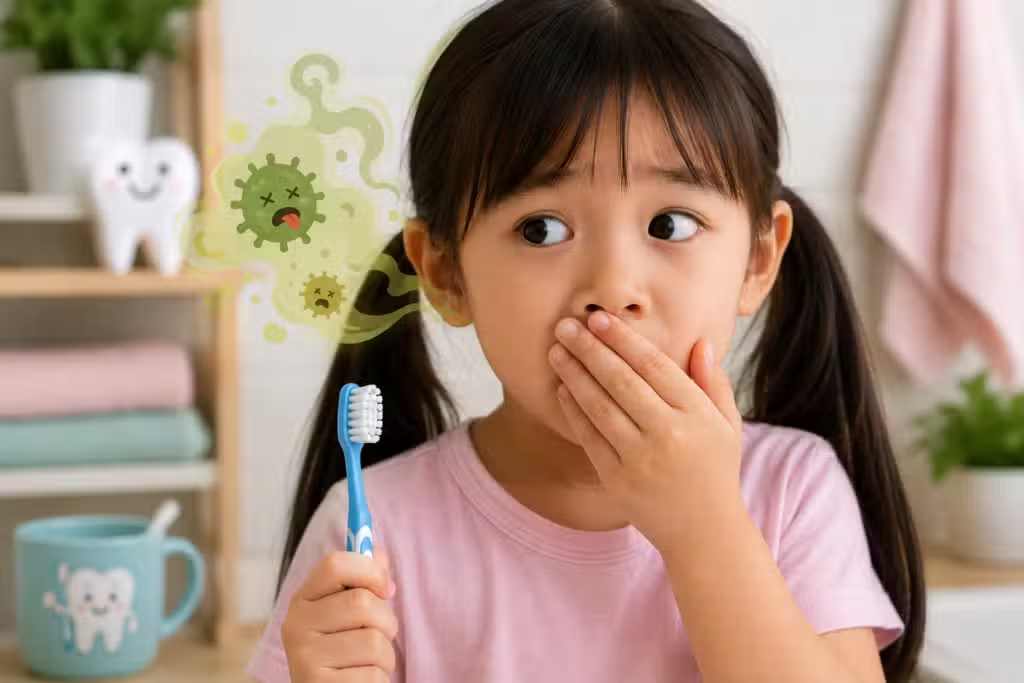
It happens to almost every parent at some point: you lean in to give your child a sweet bedtime kiss, only to be met with a wave of surprisingly strong, unpleasant breath. Clinically known as halitosis, bad breath in children can be startling. Because we naturally associate chronic bad breath with adults who smoke, drink coffee, or neglect oral hygiene, noticing it in a young child often sparks immediate concern.
The reassuring news is that in the vast majority of cases, childhood bad breath is usually harmless and easy to resolve. Understanding what triggers halitosis allows you to address the root cause and restore your child’s fresh, clean smile with simple home habits.
Common Causes of Bad Breath in Children
Bad breath is rarely caused by a mystery. Almost always, it stems from the buildup of sulfur-producing bacteria breaking down proteins, food particles, and plaque inside the mouth.
1. Inadequate Brushing and Flossing
The most frequent culprit behind halitosis is missed plaque. Young children lack the fine motor skills required to brush and floss thoroughly on their own. When soft plaque and microscopic food particles remain trapped between tight molar contacts or along the gumline for hours, bacteria feed on them and release foul-smelling sulfur compounds as a byproduct.
2. Tongue Buildup
The top surface of a child’s tongue is covered in tiny, microscopic projections (papillae) that easily trap dead skin cells, bacteria, and residual milk or food particles. If tongue cleaning is skipped during daily brushing, a white or yellowish coating forms on the tongue, becoming a primary generator of persistent bad breath.
3. Mouth Breathing and Dry Mouth
Saliva is the mouth’s natural cleansing agent. It washes away food debris, neutralizes acids, and controls bacterial growth. When a child breathes through their mouth—often due to enlarged tonsils, adenoids, allergies, or a stuffy nose—their oral tissues dry out. Without an adequate flow of saliva, bacteria multiply rapidly, leading to classic “morning breath” or ongoing dry-mouth odor.
4. Trapped Foreign Objects in the Nose
If a toddler experiences sudden, exceptionally foul-smelling breath accompanied by nasal discharge from only one nostril, a foreign object may be the cause. Curious toddlers frequently push small items like beads, foam pieces, or food bits up their noses. The trapped object causes localized irritation and bacterial growth, producing an odor distinct from oral halitosis.
5. Underlying Dental Issues or Infections
Untreated cavities, leaky dental fillings, or developing gum inflammation (gingivitis) create microscopic pockets where bacteria thrive. Additionally, an infected tooth or a lingering abscess can produce a foul smell that standard brushing cannot eliminate.
How to Fix Bad Breath at Home: 5 Simple Steps
Eliminating halitosis requires upgrading your family’s daily hygiene routine to target hidden bacterial traps.
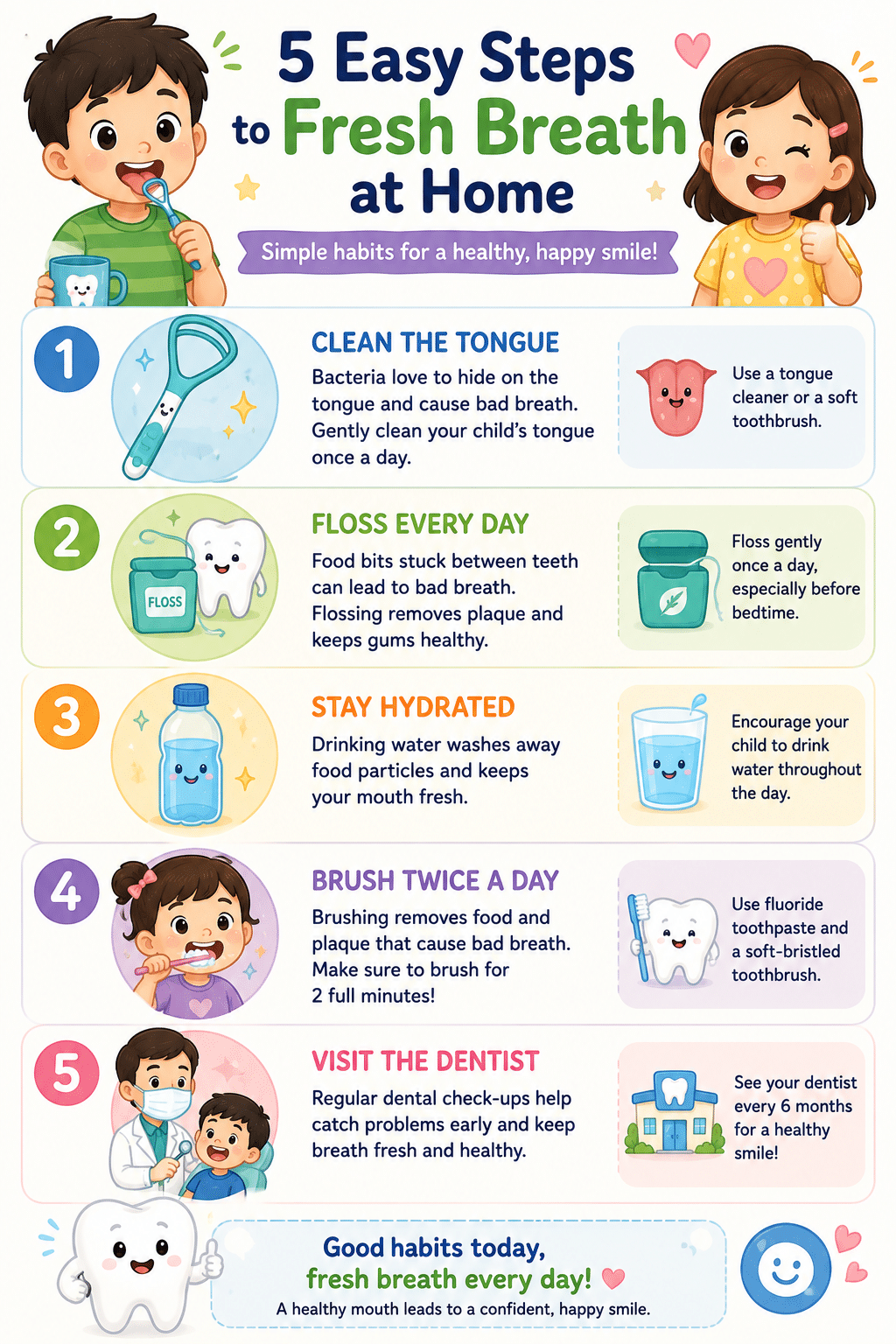
1. Master the “Brush, Floss, and Tongue” Routine
Upgrade your twice-daily brushing sessions into a complete three-step process:
- Brush for Two Minutes: Ensure your child brushes all tooth surfaces using a fluoride toothpaste for a full 120 seconds.
- Add Daily Flossing: Clean between touching teeth every evening to remove trapped food debris that toothbrushes miss.
- Clean the Tongue: Gently brush your child’s tongue from back to front using a soft toothbrush bristles or a child-safe tongue scraper to clear away bacteria.
2. Boost Daily Water Intake
Keep your child hydrated throughout the day with plenty of plain water. Sipping water stimulates continuous saliva production, washing away loose food particles and preventing the dry-mouth conditions that breed odor-causing bacteria.
3. Address Mouth Breathing and Nasal Congestion
If your child is a chronic mouth breather, consult your pediatrician or an ear, nose, and throat (ENT) specialist to evaluate allergies, sinus issues, or enlarged tonsils. Clearing nasal passages restores normal breathing and keeps oral tissues naturally moisturized.
4. Limit Sticky Sugars and Processed Snacks
Cavity-causing bacteria feed on sugary carbohydrates. Reducing sticky fruit snacks, fruit juices, and processed crackers starves those bacteria of the fuel they need to produce foul-smelling sulfur compounds.
5. Schedule Regular Dental Checkups
Routine professional cleanings remove hardened tartar and plaque that home brushing cannot eliminate, while allowing a pediatric dentist to check for hidden cavities or gum irritation.
When Is Bad Breath a Sign of a Bigger Medical Issue?
If your child practices excellent daily oral hygiene, drinks plenty of water, and has healthy teeth—yet severe bad breath persists—it may signal an underlying systemic or respiratory condition. Consult your pediatrician if bad breath is accompanied by:
- Chronic fever, sore throat, or difficulty swallowing (possible tonsillitis or strep throat)
- Persistent nasal discharge from one nostril (possible foreign body obstruction)
- Frequent heartburn, acid reflux, or gastrointestinal discomfort
- A distinct sweet, fruity scent (which can occasionally indicate underlying medical concerns like diabetes)
What Parents Say About Our Pediatric Care
We know that choosing a pediatric dentist comes down to trust, comfort, and how your child feels in the chair. Here is what local parents have shared about their family’s experience with our specialized care across Hawaii:
Read Jon D.‘s review of Pedodontic Associates – Kahala on Yelp
Read Di S.‘s review of Pedodontic Associates – Kahala on Yelp
Read Mia N.‘s review of Pedodontic Associates – Kahala on Yelp
Partner with a Pediatric Specialist
While most cases of childhood bad breath are easily resolved with better brushing and hydration, persistent halitosis deserves a professional evaluation to rule out hidden dental issues.
Both the American Academy of Pediatric Dentistry and the American Academy of Pediatrics recommend preventative dental checkups every six months.
During a routine visit, a pediatric specialist evaluates your child’s oral hygiene, checks for early decay, and provides personalized coaching to keep their breath fresh and clean.
If you have concerns about your child’s oral health or want to schedule their next checkup, our experienced team is here to support your family. Explore our full range of preventative options on our Pediatric Dental Services page or Visit Us to schedule an appointment today!
Medical & Legal Disclaimer: The content on this blog is provided for general informational purposes only and is not intended as medical advice, diagnosis, or treatment. Always seek the advice of a qualified pediatric dentist regarding your child’s specific oral health needs. If your child is experiencing a dental emergency, call 911 or proceed to the nearest emergency room immediately.