
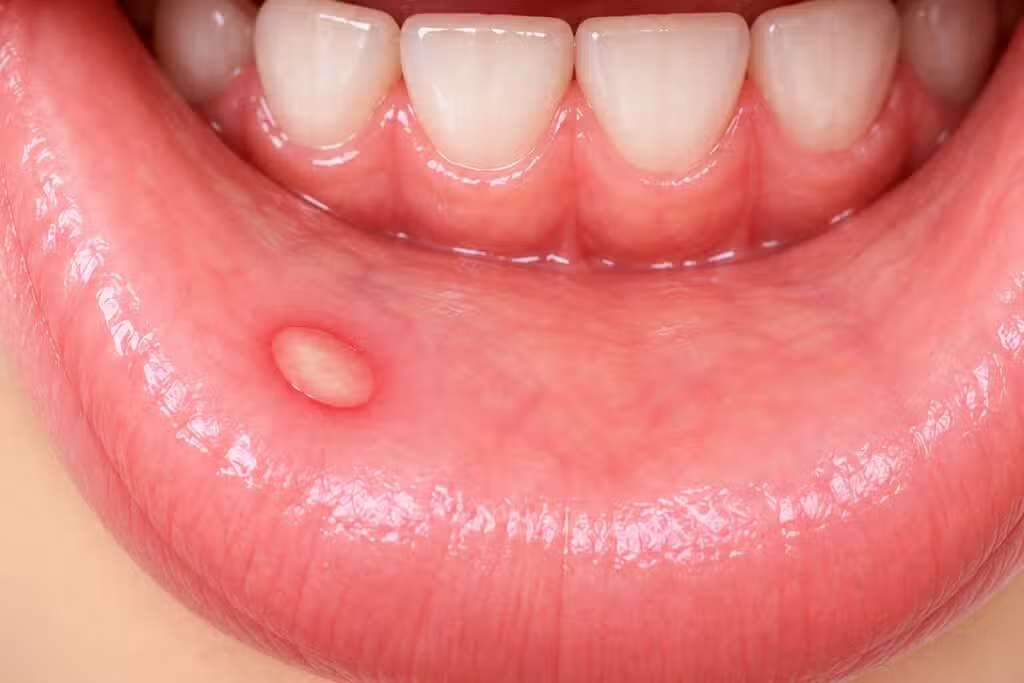
Your child says their mouth hurts, but you can't see anything wrong with their teeth. When you look closer, there's a small white sore inside their cheek or along their lip.
It might be a canker sore.
Canker sores are small, painful ulcers that develop inside the mouth. They can make eating, drinking and brushing uncomfortable, even when the sore looks minor.
Most uncomplicated canker sores heal on their own within one to two weeks. But not every mouth sore is a canker sore, and certain symptoms may indicate an infection or another condition that needs medical or dental attention.
Here's how to recognize common signs, help your child manage discomfort and know when to seek an examination.
What Does a Canker Sore Look Like?
A typical canker sore, also called an aphthous ulcer, is a shallow, round or oval sore that forms on the soft tissues inside the mouth.
It often has a white or yellowish center with a red border.
Canker sores can appear on the inside of the lips, inside the cheeks, beneath the tongue or on other soft tissues in the mouth.
Your child might complain of a stinging or burning sensation, especially when eating acidic or salty foods.
Unlike cavities, canker sores affect the soft tissues of the mouth rather than the hard surfaces of the teeth.
And unlike cold sores caused by the herpes simplex virus, ordinary canker sores are not contagious.
Still, a sore's appearance alone cannot establish its cause. If you are unsure what you're seeing, a pediatric dental or medical examination can help.
Why Do Children Get Canker Sores?
There isn't always a clear explanation for why a canker sore develops.
Some children experience a single sore occasionally, while others have recurring episodes.
Possible contributing factors include:
Minor mouth injuries. Accidentally biting the inside of a cheek, brushing too aggressively or eating rough foods may irritate delicate mouth tissues.
Food irritation. Acidic or spicy foods may aggravate an existing sore, and certain foods may trigger episodes in susceptible children.
Family history. Some children are more likely to develop recurrent canker sores when family members experience them.
Nutritional deficiencies. In certain cases, recurring oral ulcers may be associated with deficiencies involving iron, vitamin B12 or folate.
Underlying health conditions. Repeated or unusually severe mouth ulcers can occasionally be associated with medical conditions that require additional evaluation.
The American Academy of Pediatric Dentistry recognizes recurrent aphthous ulcerations as a common oral condition in children and emphasizes the importance of evaluating the history, symptoms and appearance of oral lesions.
Having a canker sore doesn't automatically mean your child has a nutritional deficiency or another medical condition.
For a child with recurring sores, though, it's worth discussing the pattern with a healthcare professional rather than assuming every episode is unrelated.
Is It a Canker Sore, Cold Sore, or Something Else?
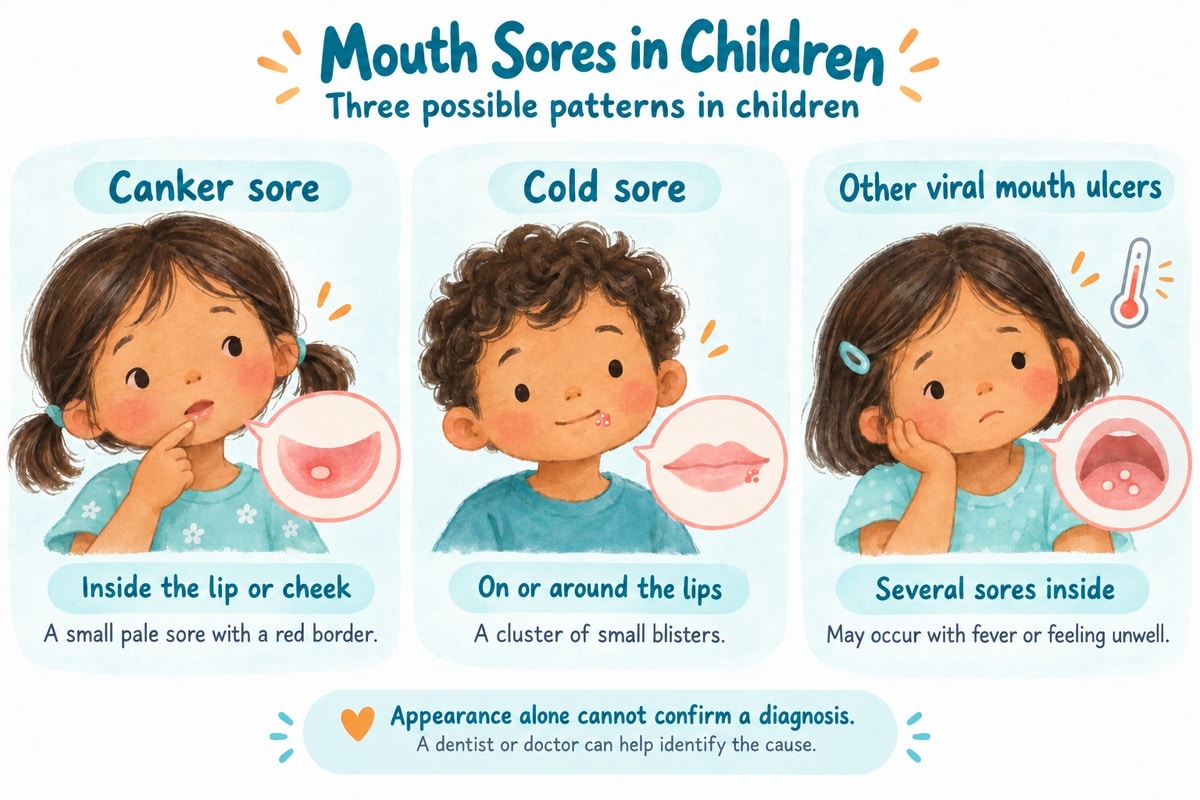
Several childhood conditions can produce sores in or around the mouth.
Knowing a few differences may help you describe your child's symptoms when contacting a healthcare professional.
| Condition | Common features | What parents should know |
|---|---|---|
| Canker sore | One or a few shallow sores inside the mouth, often with a pale center and red border | Not contagious; many uncomplicated cases heal without specific treatment |
| Cold sore | Blisters or sores on or around the lips, sometimes with irritation inside the mouth | Associated with herpes simplex virus and can spread to others |
| Hand, foot and mouth disease | Mouth sores, often with fever and a rash or blisters on the hands and feet | Viral illness that may require pediatric medical assessment |
| Mouth injury | A sore developing after biting, scraping or burning the mouth | May improve as the tissue heals, but persistent or significant injuries need evaluation |
| Dental infection | Swelling or a pimple-like area near a tooth, sometimes with tooth pain or drainage | Requires prompt dental assessment |
These are typical patterns, not a reliable way to diagnose your child at home.
For example, a child with several painful mouth ulcers and fever may have a viral illness rather than ordinary canker sores.
If your child has widespread mouth sores, a rash, swollen gums or other symptoms of illness, contact their pediatrician.
How to Help Your Child With a Painful Canker Sore
Most uncomplicated canker sores improve as the tissue heals. During that time, the main goal is to reduce irritation and help your child continue eating and drinking comfortably.
Choose Foods That Don’t Irritate the Sore
Acidic and spicy foods can sting when they come into contact with an ulcer.
For a child with a painful canker sore, try offering softer, milder foods such as yogurt, oatmeal, scrambled eggs or mashed potatoes.
Cool drinks may also be more comfortable than hot beverages.
Avoid forcing your child to eat foods that cause discomfort. Maintaining adequate fluid intake is particularly important.
Continue Brushing, but Be Gentle
A canker sore can make brushing uncomfortable, especially when it's close to the gums or inside the cheek.
Help your child clean their teeth with a soft-bristled toothbrush, taking care not to scrape the sore.
Skipping oral hygiene entirely may allow plaque to build up, so it's better to adapt the brushing technique rather than abandon the routine.
If you're having trouble brushing around a painful area, our children's oral hygiene guidance may help you maintain appropriate daily care.
Ask About Age-Appropriate Pain Relief
If discomfort is interfering with your child's usual activities, ask their pediatrician or pharmacist about appropriate pain relief.
Children's acetaminophen or ibuprofen may be options depending on age, medical history and product instructions.
Avoid applying adult mouth-ulcer products or numbing gels without professional guidance.
Some products contain ingredients that are unsuitable for young children, especially when swallowed or applied in excessive amounts.
Do not use aspirin directly on a canker sore. It can irritate or burn the delicate tissue.
How Long Do Canker Sores Last?
Most minor canker sores heal within approximately one to two weeks.
A typical sore may initially be uncomfortable, then gradually become less painful as the tissue recovers.
However, some ulcers are larger or deeper and can take longer to heal.
The important thing is to watch whether your child's symptoms are improving.
If a mouth sore lasts longer than two weeks, keeps returning or becomes more painful, arrange an evaluation with a dentist or pediatrician.
A sore that isn't healing should not automatically be treated as an ordinary canker sore.
When Should You Be Concerned About a Child’s Mouth Sore?
A single small canker sore in an otherwise well child is usually less concerning than a mouth sore accompanied by symptoms of illness.
Contact a healthcare professional promptly if your child has:
- Multiple mouth sores accompanied by fever
- Red, swollen or tender gums
- Difficulty eating or drinking because of pain
- Repeated episodes of mouth ulcers
- A sore that persists longer than two weeks
- A sore near a tooth that also hurts
- Facial swelling or other signs of possible infection
Seek urgent medical care if your child shows signs of dehydration, such as markedly reduced urination, unusual lethargy or an inability to drink enough fluids.
Difficulty breathing or swallowing requires emergency medical attention.
If your child has sores alongside a rash or other signs of a viral infection, their pediatrician can assess whether additional medical care is needed.
The American Academy of Pediatrics' guidance on children's mouth ulcers provides further information on symptoms that warrant medical attention.
Why Does My Child Keep Getting Canker Sores?
An occasional canker sore isn't unusual. But if your child develops ulcers repeatedly, the pattern deserves attention.
It may help to keep a short record of each episode, including:
- How often sores appear
- Where they develop
- How long they last
- Whether your child experiences fever or other symptoms
- Any recurring food, injury or illness triggers
This information may help a healthcare professional decide whether further investigation is appropriate.
Recurring mouth ulcers do not always have an identifiable cause. Depending on the history and examination, your child's pediatrician may consider whether nutritional or other medical factors need evaluation.
Avoid starting vitamin supplements or restrictive diets solely because your child has canker sores without appropriate medical guidance.
Can a Pediatric Dentist Help With Canker Sores?
A pediatric dentist can help evaluate unusual findings in your child's mouth and determine whether they appear related to the teeth, gums or other oral tissues.
At Pedodontic Associates, our pediatric dentists provide oral examinations for infants, children and teens. Our scope of care includes recognizing oral conditions that may require further investigation or referral.
If your child has a persistent or unusual mouth sore, we can examine the affected area and discuss whether additional evaluation is appropriate.
If the findings suggest a medical condition or a problem outside our scope of dental treatment, we may recommend follow-up with your child's pediatrician or another specialist.
Our approach focuses on explaining what we find and helping parents understand the next appropriate step.
You can learn more about our pediatric dental care.
Have Concerns About a Sore Inside Your Child’s Mouth?
A canker sore can be surprisingly uncomfortable for a child, but many uncomplicated cases improve without specific treatment.
What matters most is recognizing when the symptoms don't fit the usual pattern, especially when sores are persistent, recurrent or accompanied by other signs of illness.
If you're concerned about an unusual sore in your child's mouth, our pediatric dental team can help evaluate oral findings and determine whether dental assessment or referral is appropriate.
We serve families through our Pearlridge Office in Aiea, Kahala Office in Honolulu and Maui Office in Kahului.
For an appointment, call the office most convenient for your family:
- Pearlridge: 808-487-7933
- Kahala: 808-735-1733
- Maui: 808-877-0066
You can also find office details on our contact page.
If your child has a mouth sore that isn't healing or keeps returning, contact us to arrange an oral examination.
Medical disclaimer: This article is for general educational purposes only. It does not replace professional medical or dental advice, diagnosis or treatment. Seek medical attention for signs of serious illness or dehydration, and emergency care for difficulty breathing or swallowing.