

Parents hear fluoride mentioned constantly during routine pediatric dental visits. It is easy to view it as just another standard checklist item. Many families wonder if topical varnish treatments are truly necessary or if daily brushing with standard toothpaste is enough.
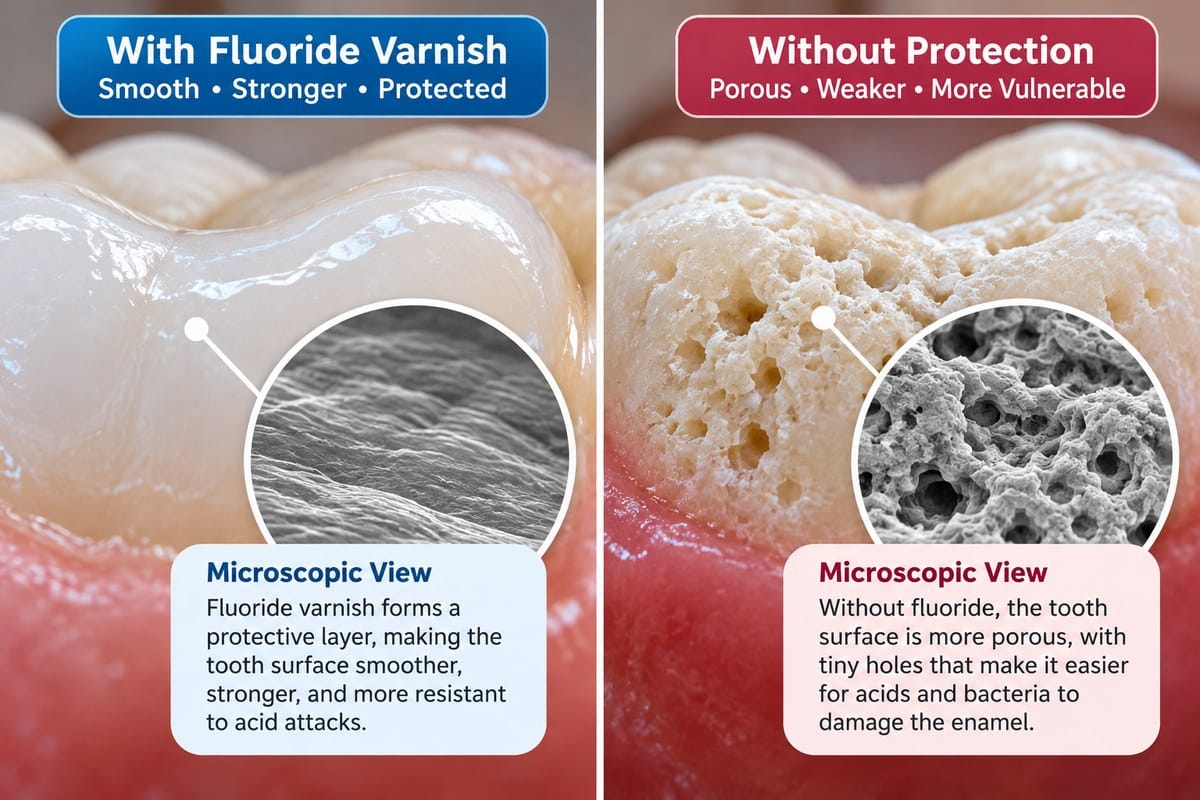
Fluoride varnish acts as a powerful shield for developing enamel. It provides a concentrated layer of protection that strengthens teeth against everyday sugar and acid attacks.
Our team at Pedodontic Associates applies fluoride treatments safely during routine checkups. Understanding how this mineral reinforcement works helps parents appreciate its role in cavity prevention. You can learn more about our clinical philosophy by visiting our about page.
The Science of Enamel Remineralization
Tooth enamel is the hardest substance in the human body, but it is not completely invincible. Every time your child eats or drinks, oral bacteria feed on the leftover sugars. They produce a mild acid as a byproduct.
This acid strips essential minerals away from the outer enamel surface in a process called demineralization. If the cycle continues without intervention, those microscopic mineral losses turn into permanent cavities.
Fluoride interrupts this destructive cycle through remineralization. When painted onto the teeth, fluoride bonds directly with the weakened calcium and phosphate structures. It creates a brand-new mineral compound that is significantly harder and more acid-resistant than the original tooth structure.
Why Varnish Outperforms Other Methods
Dentists use several delivery systems for topical fluoride, including rinses, foams, and gels. Varnish remains the gold standard for infants, toddlers, and young children for a few distinct reasons.
Instant Setting: The varnish sets on contact with saliva within seconds, meaning there is zero risk of the child accidentally swallowing a glob of excess product.
Prolonged Contact: The sticky resin formulation clings tightly to the tooth surfaces for hours, allowing the enamel to absorb the maximum amount of mineral ions.
Speed of Application: The brush-on process takes less than a minute, keeping young, wiggly patients completely comfortable and stress-free.
Comparing Preventive Protection Layers
The American Academy of Pediatric Dentistry (AAPD) and dental specialists combine multiple preventive tools to keep growing mouths safe. Varnish works hand-in-hand with other office treatments.
| Preventive Treatment | What It Does | When It Is Applied |
|---|---|---|
| Topical Fluoride Varnish | Remineralizes overall enamel and hardens weak spots across all teeth. | Every six months during routine preventive checkups. |
| Dental Sealants | Flows into the deep grooves of back molars to physically block food and plaque. | Right as permanent six-year and twelve-year molars erupt. |
| Daily Fluoride Toothpaste | Provides a baseline daily dose of mineral protection during morning and night brushing. | Twice daily starting as soon as the first tooth appears. |
What to Expect After an Application
Because fluoride varnish sets instantly, parents often wonder about post-treatment care at home. Your child can eat and drink immediately after leaving the clinic, but a few simple guidelines maximize the benefits.
We recommend sticking to soft foods and cool liquids for the remainder of the day. Avoid hot beverages, crunchy snacks, or scrubbing the teeth with heavy brushing until the following morning.
You may notice a slight yellowish tint or a slick feeling on your child's teeth right after the application. This is completely normal. The residue brushes away effortlessly the next morning, leaving cleaner, stronger enamel underneath.
Frequently Asked Questions About Fluoride Varnish
Is systemic fluoride (like tap water) enough, or do kids need varnish too?
Systemic fluoride ingested through public water supplies strengthens adult teeth forming beneath the gums. Topical fluoride varnish protects the outer surfaces of teeth that are already exposed and working hard inside the mouth. Kids benefit greatly from both.
Can too much fluoride cause health issues in toddlers?
When applied professionally by a pediatric dentist in small varnish doses, the risk of systemic toxicity is virtually nonexistent because the child swallows almost nothing. Always supervise home brushing to ensure young children use only a rice-sized or pea-sized amount of toothpaste.
Does getting fluoride varnish applied hurt?
Not at all. The process involves a quick paint-on application using a tiny soft brush. There are no loud tools, no needles, and no pain involved whatsoever.
Partnering with Your Hawaii Pediatric Dentist
Protecting your child's smile from early decay is a team effort between home habits and regular professional care. Our team evaluates your child's unique cavity risk during every visit to ensure they receive the optimal level of preventive protection.
Our team is ready to support your family with welcoming clinics across Oahu and Maui. Explore our Pearlridge office in Aiea or check out our Kahala office in Honolulu. We also serve our neighbor island patients at our Maui office. You can contact our scheduling team today to book your child's next preventive visit. You can also explore our pediatric dental services page to review our full scope of care.
Medical & Legal Disclaimer: The content on this blog is provided for general informational purposes only and is not intended as medical advice, diagnosis, or treatment. Always seek the advice of a qualified pediatric dentist regarding your child’s specific oral health needs. If your child is experiencing a severe medical emergency, call 911 or proceed to the nearest emergency room immediately.