
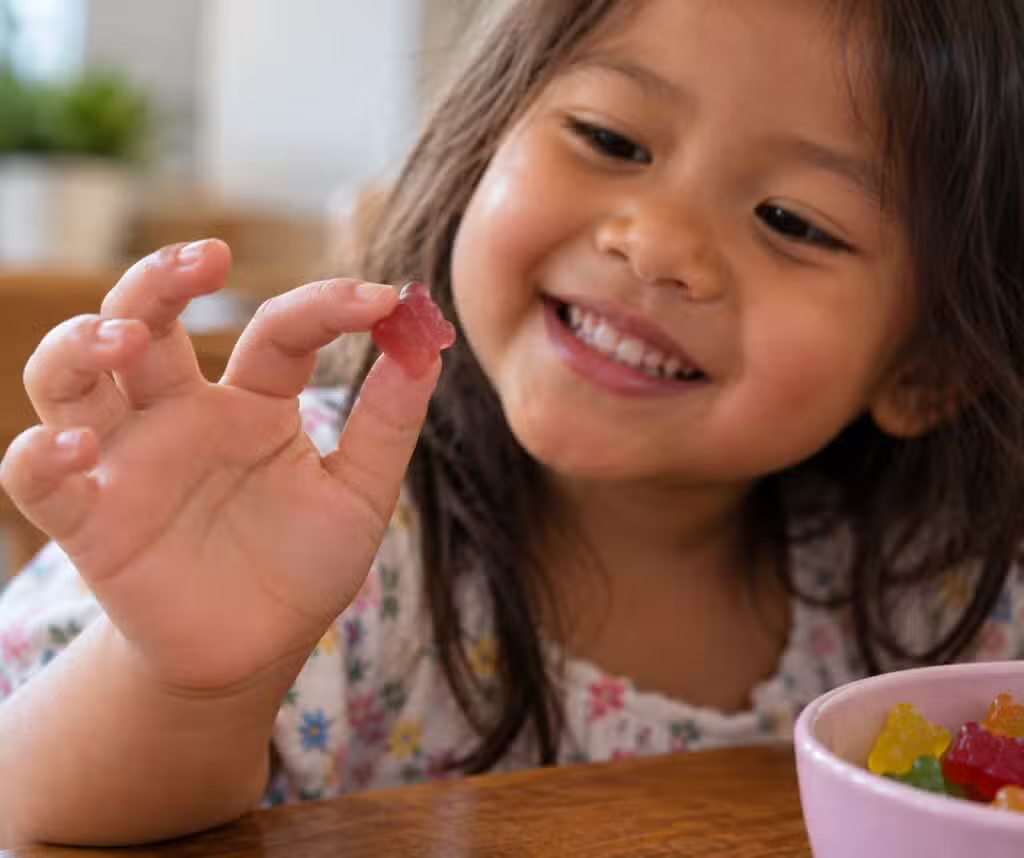
When parents pack a school lunch or hand out an afternoon treat, they often reach for snacks labeled as organic, fruit-based, or vitamin-fortified. Gummy snacks, fruit leather, and chewable multivitamins feel like a healthier alternative to a candy bar.
When it comes to dental health, those chewy, sticky snacks are actually far more destructive than traditional chocolate.
Our team at Pedodontic Associates sees the dental fallout from sticky snacks during routine checkups every single week. Understanding how different sugars interact with tooth enamel helps parents make smarter pantry choices. You can learn more about our preventive philosophy on our about page.
The Physics of Sticky Sugar
The primary danger of a cavity is not just the amount of sugar your child consumes. The true enemy is the duration of time that sugar remains in direct contact with the tooth surface.
When a child eats a piece of milk chocolate, the cocoa butter and sugar dissolve rapidly in saliva. The food washes away naturally within minutes, leaving the teeth relatively clean.
Fruit snacks and gummy vitamins possess a completely different physical consistency. They are engineered to be chewy, elastic, and adhesive. When chewed, they flatten out and wedge tightly into the deep pits, fissures, and interdental spaces of the teeth.
The Gummy Trap on Young Enamel
Once a gummy snack wedges into those tight crevices, normal saliva flow cannot wash it away. The sticky residue acts like a slow-release sugar packet glued directly to the enamel.
Oral bacteria feed on that trapped sugar for hours after snack time ends. They produce a continuous stream of acid that strips minerals away from the tooth surface.
Because primary children often have tight spaces where teeth touch or deep molar grooves, these gummy traps become breeding grounds for decay. Parents are frequently shocked to discover cavities developing between back teeth, unaware that a daily fruit snack was the root cause.
Comparing Everyday Snack Hazards
The American Academy of Pediatric Dentistry (AAPD) emphasizes that snack frequency and texture matter more than total sugar volume.
| Snack Type | Physical Behavior in the Mouth | Cavity Risk Level |
|---|---|---|
| Gummy Vitamins & Fruit Snacks | Clings tightly to tooth grooves and between teeth for hours. | High: Prolonged acid attack on enamel. |
| Sticky Dried Fruit (Raisins) | Packs into deep molar pits with high concentrated fructose. | High: Combines high sugar density with high adhesion. |
| Smooth Milk Chocolate | Melts quickly and washes away easily with normal saliva flow. | Low to Moderate: Clears the mouth rapidly. |
| Fresh Crunchy Apples | Stimulates saliva production and acts as a natural mechanical cleaner. | Low: Promotes healthy saliva flow and gum stimulation. |
Smarter Swaps for Healthy Smiles
You do not need to ban all treats from your child's life, but you can swap high-risk sticky items for teeth-friendly alternatives.
Swap fruit leather and sticky gummies for fresh cheese cubes, crunchy apple slices, or raw carrots. Cheese helps neutralize oral acids and provides calcium. Crunchy fruits stimulate saliva production, which naturally rinses food particles away.
If your child does eat a sticky treat, have them drink a large glass of plain water immediately afterward. Encourage them to swish the water around their mouth to help dislodge trapped particles before they set like glue.
If you want to evaluate your child's current cavity risk or check for early signs of decay from diet habits, you can explore our pediatric dental services page to see how we manage preventive care.
Real Stories From Hawaii Families
Making the right nutrition and snack choices can feel overwhelming, but having a supportive dental team makes all the difference. Here is what local parents have to say about their experiences, sourced directly from the Pedodontic Associates Testimonials Page:
"At Pedodontic Associates, everyone in the office is so friendly and treats everyone like extended family. The way they treat patients and parents makes the visit go smoothly. They give you all education possible to help in understanding treatment plans and to better your child's oral health!" — Parent Review via Pedodontic Associates Testimonials
"The staff is super friendly and they communicate well with our keiki. Also the way they keep us informed about our appointments is hands down the best. We appreciate Dr. Teruya and all the staff at Pedodontic Associates." — C.I. via Pedodontic Associates Testimonials
Frequently Asked Questions About Snacks and Cavities
Are sugar-free fruit snacks safer for my child's teeth?
While sugar-free snacks lack traditional sucrose, many still rely on sticky starches and acidic flavorings that lower pH levels in the mouth. Furthermore, the adhesive texture alone can still trap food debris, making proper brushing essential.
What is the best time of day for a sugary treat?
If your child is going to enjoy a sweet treat, offer it immediately following a meal rather than as a standalone snack between meals. Saliva production peaks during meals, providing natural dilution and protection against acid.
Do gummy vitamins cause cavities even if they are organic?
Yes. Bacteria do not care whether sugar comes from an organic source or a conventional one. Organic cane juice, honey, and tapioca syrup still break down into the exact same cavity-causing acids in the mouth.
Partnering with Your Hawaii Pediatric Dentist
Navigating nutrition and protecting growing smiles can feel like a constant balancing act for busy parents. Our team evaluates your child's enamel health and diet habits during every routine checkup to keep their teeth strong.
Our team is ready to support your family with welcoming clinics across Oahu and Maui. Explore our Pearlridge office in Aiea or check out our Kahala office in Honolulu. We also serve our neighbor island patients at our Maui office. You can contact our scheduling team today to book your child's next preventive visit. You can also explore our pediatric dental services page to review our full scope of care.
Medical & Legal Disclaimer: The content on this blog is provided for general informational purposes only and is not intended as medical advice, diagnosis, or treatment. Always seek the advice of a qualified pediatric dentist regarding your child’s specific oral health needs. If your child is experiencing a severe medical emergency, call 911 or proceed to the nearest emergency room immediately.