

Watching your baby reach new milestones is one of the most rewarding parts of parenthood. However, when those first tiny teeth begin working their way through delicate gums, it often brings sleepless nights, extra fussiness, and plenty of questions. Understanding the teething process helps you support your baby comfortably while protecting their newly emerging smile.
Teething is a natural developmental milestone, but the symptoms can vary significantly from one infant to another. While some babies welcome new teeth with hardly any fuss, others experience noticeable gum tenderness and irritability. Knowing what to expect during this stage empowers you to provide safe, effective relief and establish healthy oral care habits right from the start.
The Baby Tooth Eruption Timeline
Every child develops at their own pace, but primary teeth generally follow a predictable schedule. Most infants get their first tooth around six months of age, though starting as early as four months or as late as twelve months is is typical and within a normal developmental range.
| Tooth Type | Average Age of Eruption | Total Number | Primary Function |
|---|---|---|---|
| Lower Central Incisors | 6 to 10 months | 2 | Cutting and biting soft foods |
| Upper Central Incisors | 8 to 12 months | 2 | Cutting foods, guiding bite alignment |
| Upper & Lower Lateral Incisors | 9 to 13 months | 4 | Assisting with biting, supporting speech sound formation |
| First Molars | 13 to 19 months | 4 | Chewing and grinding solid foods |
| Canines (Cuspids) | 16 to 23 months | 4 | Tearing foods, holding jaw position |
| Second Molars | 23 to 33 months | 4 | Heavy chewing, holding space for adult molars |
By the time your child turns three, they will usually have a complete set of 20 primary teeth. These primary teeth play an indispensable role in helping your child chew solid foods efficiently, speak clearly, and hold physical space in the jaw for their future permanent teeth.
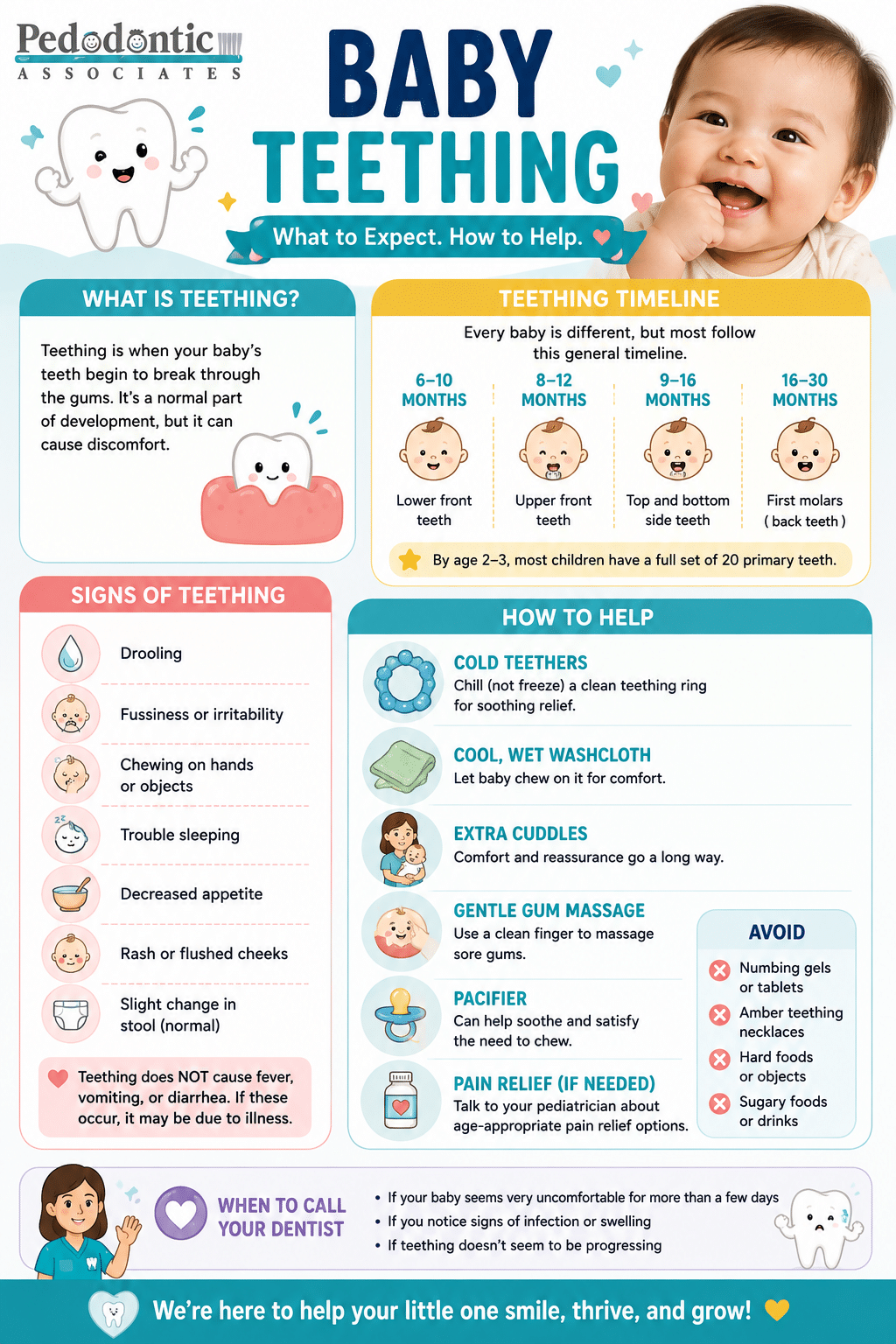
Common Signs Your Baby Is Teething
Teething symptoms typically begin a few days before a tooth breaks through the gumline and fade once the tooth emerges. Recognizing these cues makes it easier to respond with the right comfort measures.
Primary Symptoms of Teething
- Increased Drooling: Teething stimulates excess saliva production, which often starts weeks before the first tooth actually appears.
- Chewing on Hard Objects: Babies instinctively press their gums against solid objects to apply counter-pressure against the emerging tooth.
- Swollen, Tender Gums: The area where a tooth is breaking through may look slightly red, puffy, or raised.
- Mild Irritability and Fussiness: Gum discomfort often peaks right before a tooth breaks through the surface, making babies extra clingy or restless.
- Changes in Sleeping or Feeding Patterns: Sore gums can make sucking on a bottle or nursing uncomfortable, leading to temporary hunger strikes or frequent night waking.
Symptoms That Are NOT Caused by Teething
It is easy to blame every infant ailment on teething, but certain symptoms require medical attention from your pediatrician rather than simple teething remedies.
- High Fever (Over 100.4°F): While teething may cause a microscopic bump in body temperature due to mild inflammation, a true fever indicates an underlying viral or bacterial infection.
- Diarrhea or Vomiting: Increased drooling does not cause loose stools or stomach upset.
- Widespread Body Rash: Drool can cause a mild redness around the chin and neck, but rashes on the body are unrelated to tooth eruption.
- Lethargy or Refusal of Liquids: Prolonged refusal to drink can lead to dehydration and requires prompt medical evaluation.
How to Safely Soothe Tender Teething Gums
When sore gums strike, parents want safe, practical remedies that offer genuine relief. Pediatric dentists emphasize simple, non-invasive methods that relieve pressure without introducing chemical hazards.
Safe and Effective Relief Methods
- Gentle Gum Massage: Wash your hands thoroughly and use a clean finger or a damp, soft washcloth to rub your baby’s gums firmly. The light counter-pressure disrupts pain signals and comforts sore tissue.
- Chilled (Not Frozen) Teething Rings: Cold temperatures naturally numb sore gums and reduce local inflammation. Choose solid rubber or silicone teething rings cooled in the refrigerator. Avoid liquid-filled rings, which can break or leak under sharp pressure.
- Chilled Washcloths: Soak a clean cotton washcloth in water, wring it out completely, and place it in the refrigerator for 20 minutes. The textured fabric allows your baby to chew safely while the chill soothes inflamed gums.
- Cold Soft Foods: If your baby has already transitioned to solid foods, offering chilled sugar-free applesauce, cold yogurt, or chilled mashed bananas provides both nutrition and relief. Always supervise your baby while they eat to prevent choking.
- Managing Drool Rash: Keep a soft cloth handy to gently dab away excess drool from your baby’s chin, cheeks, and neck. Applying a simple, pediatrician-approved barrier ointment protects delicate skin from moisture irritation.
Dangerous Remedies to Avoid
Certain popular teething products carry severe health risks and should never be used on infants.
- Topical Numbing Gels Containing Benzocaine: Benzocaine can cause a rare but life-threatening condition called methemoglobinemia, which severely reduces the amount of oxygen carried in your baby’s bloodstream. The Food and Drug Administration (FDA) explicitly warns against using benzocaine products for children under two.
- Amber Teething Necklaces: These products present a serious strangulation and choking hazard. There is zero scientific evidence supporting the claim that amber releases pain-relieving substances into the skin.
- Homeopathic Teething Tablets: Unregulated homeopathic products have been linked to inconsistent amounts of toxic ingredients, including belladonna, which can harm an infant’s nervous system.
- Frozen Teething Toys: Extremely hard, frozen objects can bruise tender oral tissue or cause cold-induced damage to delicate gums. Stick to chilled items instead.
Caring for Newly Erupted Baby Teeth
Protecting your child’s teeth begins the moment that very first white specks appear above the gumline. Establishing a consistent daily oral hygiene routine shields baby teeth from decay and builds lifelong habits.
| Child’s Stage | Daily Hygiene Routine | Recommended Toothpaste Amount |
|---|---|---|
| Before First Tooth | Wipe gums with a soft, clean, damp washcloth after feedings | No toothpaste needed |
| First Tooth to Age 3 | Brush twice daily with an extra-soft infant toothbrush | Tiny smear (size of a grain of raw rice) |
| Ages 3 to 6 | Brush twice daily for two full minutes with parental assistance | Pea-sized amount of fluoride toothpaste |
Preventing Tooth Decay from Day One
Baby teeth have thinner enamel than permanent teeth, making them particularly vulnerable to decay caused by lingering sugars.
- Avoid letting your baby fall asleep with a bottle containing milk, formula, fruit juice, or sweetened liquids.
- Wipe your baby’s teeth and gums immediately after evening feedings before putting them down to sleep.
- Encourage your child to start drinking from a open training cup around their first birthday to minimize prolonged bottle exposure.
- Offer plain water between meals once your pediatrician clears your baby for water intake.
When to Schedule Your Baby’s First Dental Visit
Both the American Academy of Pediatric Dentistry and our team recommend scheduling your child’s first dental checkup by their first birthday, or within six months of their first tooth emerging.
Early visits focus on preventing problems before they start. During a gentle initial checkup, the pediatric dentist inspects early jaw growth, checks for signs of demineralization, and demonstrates proper brushing techniques for small mouths. Starting early ensures your child builds a positive, anxiety-free relationship with their dental care team.
If your baby is showing signs of teething, or if you are ready to establish a comfortable dental home for your child, contact our friendly team today. Explore our specialized care options on our Pediatric Dental Services page or visit our Kahala Location page to book an appointment!
Medical & Legal Disclaimer: The content on this blog is provided for general informational purposes only and is not intended as medical advice, diagnosis, or treatment. Always seek the advice of a qualified pediatric dentist regarding your child’s specific oral health needs. If your child is experiencing a dental emergency, call 911 or proceed to the nearest emergency room immediately.