
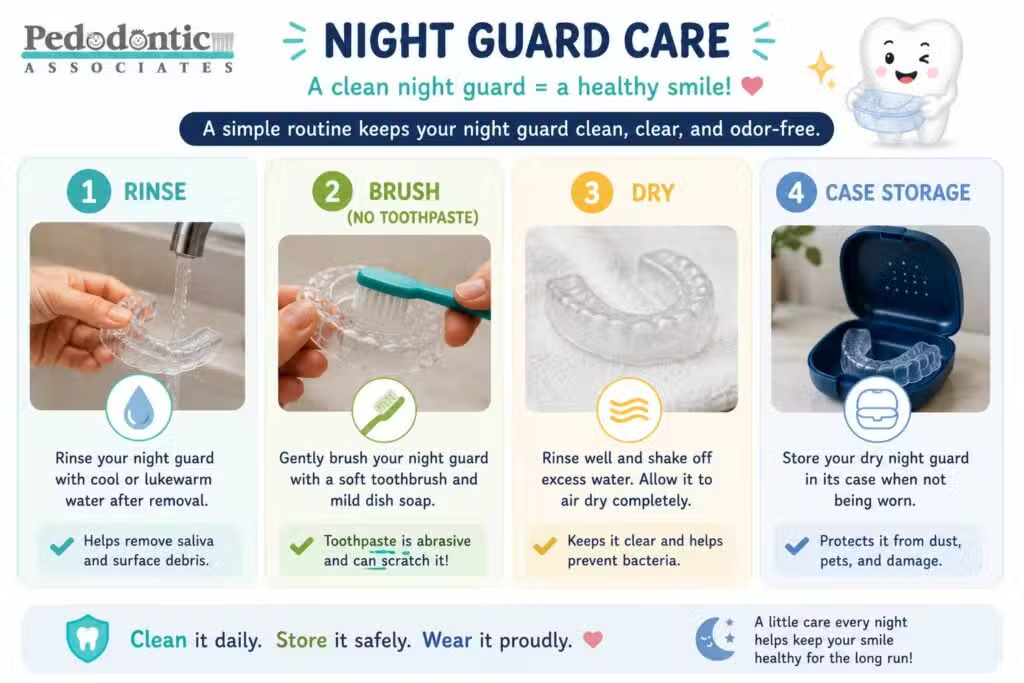

You hear it at night—that unmistakable, scraping sound coming from your child’s bedroom. Or perhaps you’ve noticed their teeth looking unusually flat during their morning brush, or they wake up complaining about a “sore jaw.” This phenomenon is highly common, but managing it requires a careful, age-appropriate clinical approach.
Teeth grinding, clinically known as bruxism, affects many growing keiki across Hawaii. While it can be alarming to hear in the quiet of the night, most children outgrow this habit naturally as their permanent teeth emerge and their jaw structure matures. At Pedodontic Associates, we specialize in tracking this development to know when to practice “watchful waiting” and when a child has reached the appropriate dental age for a protective appliance.
Understanding Pediatric Teeth Grinding
The challenge for many Hawaii parents is figuring out whether their child’s grinding is a temporary developmental phase or something requiring intervention.
Developmental Grinding in Younger Keiki (Ages 6–10)
Peak grinding typically occurs between the ages of 2–7. This is the exact window when there are a lot of dental changes occurring in your child’s mouth. Initially the primary baby teeth are growing in, then around 6 year of age they begin to fall out and permanent adult teeth begin to grow in. Children often instinctively grind as a way to “find” a comfortable position for their changing bite.
For children in this mixed dentition stage (having a mix of baby and adult teeth), we do not recommend custom mouth guards. Because a child’s jawbone is growing rapidly and adult teeth are breaking through the gums almost constantly, placing a rigid plastic guard over the arch can block natural jaw development and trap erupting teeth. Instead, our primary strategy for this age group is regular clinical observation during six-month checkups.
When Intervention Matters (Ages 12 and Older)
Once a child reaches adolescence—typically around age 12 or older—and their permanent adult teeth are fully established, persistent bruxism changes from a temporary phase to a habit that requires protection. We evaluate teenagers for a custom night guard if they exhibit:
- Visible Wear Facets: The chewing surfaces of their permanent adult teeth look flattened or have jagged, chipped edges.
- Physical Discomfort: Your teenager complains of frequent morning headaches, facial soreness, or jaw joint clicking (TMJ strain).
- Disrupted Rest: The grinding is severe enough to impact the quality of their sleep, leaving them feeling fatigued during the day.
How Night Guards Protect the Permanent Adolescent Bite
For teenagers whose permanent teeth are fully erupted, an untreated, heavy grinding habit can cause cumulative damage. A custom-fitted night guard acts as a comfortable, physical barrier worn during sleep to absorb the pressure generated by the jaw muscles.
- Enamel Preservation: Adult tooth enamel does not regenerate. A custom guard prevents the top and bottom arches from rubbing together, stopping permanent enamel attrition.
- Muscle and Joint Relief: By absorbing clenching forces, a guard reduces tension in the temporomandibular joint (TMJ) and the masseter (jaw) muscles, helping eliminate morning jaw soreness.
- Protecting Existing Restorations: If your teenager has dental fillings or bonding, a custom night guard safeguards these investments from fracturing under intense nighttime pressure.
Custom-Fitted vs. Store-Bought: Making the Right Choice
If a night guard is clinically indicated for your teenager, an over-the-counter “boil-and-bite” drugstore guard is rarely appropriate. Ill-fitting, bulky guards can alter a teenager’s bite alignment and often increase clenching by overstimulating the jaw muscles.
Custom Teen Guards vs. Over-the-Counter (OTC) Options
| Feature | Custom Night Guard (Ages 12+) | Store-Bought OTC Guard |
|---|---|---|
| Age Eligibility | Strictly restricted to ages 12+ to protect growing jaw arches. | Widely sold, but need to be changed often for younger children with changing bites. |
| Bite Alignment | Custom-molded from impressions to safely balance the stable bite. | Cannot be adjusted to accommodate side to side jaw movement during sleep. |
| Comfort & Fit | Slim, low-profile design that minimizes the gag reflex. | Bulky and loose; often triggers gagging or gets spit out during the night. |
| Material Quality | High-quality, durable, medical-grade materials. | Porous, softer plastic that can easily be chewed through. |
The Custom Fitting Process for Teenagers
Fabricating a custom night guard is a straightforward process that we have refined over decades of serving Hawaii’s families. It involves two short appointments:
- The Evaluation and Impression: Once your child has reached the appropriate dental age, we examine their permanent teeth and jaw alignment. To catch hidden decay or structure challenges before molding, we rely on baseline digital mapping. As a rule, a child’s first routine bitewing X-rays are targeted at age 4, precisely when the primary back molars have shifted and locked tightly against one another, and when most kids are able to tolerate taking x-rays of the back teeth. If your teen is clear, we take a precise, comfortable dental impression of their teeth to create an exact mold.
- The Delivery and Adjustment: About one to two weeks later, the custom guard is ready. We place it in your teenager’s mouth, checking that it sits securely with gentle suction and making micro-adjustments to ensure their bite is perfectly balanced.
Beyond the Guard: Addressing Root Causes
A night guard treats the symptoms and protects the teeth, but our team also looks at the daily lifestyle factors that can aggravate nighttime tension.
- Bedtime Sleep Hygiene: The blue light from smartphones and tablets right before bed stimulates the central nervous system, which is closely linked to increased nighttime clenching. We recommend a screen-free wind-down hour before sleep.
- Dietary Habits: Highly caffeinated or sugary beverages in the afternoon and evening can overstimulate jaw muscles. Encouraging water or caffeine-free alternatives helps the jaw relax.
- Airway and Pediatrician Coordination: Sometimes, teeth grinding can correlate with how a child positions their jaw at night to breathe comfortably. If we observe signs of restricted oral airways or enlarged tonsils during a checkup, we will recommend a follow-up with your pediatrician or an Ear, Nose, and Throat (ENT) specialist.

Proper Brushing Techniques to Maintain Strong Teeth
Whether your child wears an appliance or is transitioning through mixed dentition stages, maintaining excellent home care is vital to prevent plaque acids from building up around wear facets:
- General Surfaces: Instruct your child to use a gentle back-and-forth scrubbing motion across the flat chewing surfaces and both the tongue facing surfaces and the cheek facing surfaces of their molars. Avoid harsh vertical sawing along the gums.
- Inside Front Surfaces: When cleaning the back (tongue-side) of the front teeth, tilt the toothbrush completely vertically and use short, vertical up-and-down strokes to sweep away plaque.
- Nighttime Flossing: Ensure that flossing is performed consistently at nighttime right before bed. Clearing away trapped food particles before your child goes to sleep is critical, as saliva flow drops during the night, reducing the mouth’s natural defense against acid attacks.
Cost and Insurance Considerations in Hawaii
We understand that local families must balance many household expenses. Investing in preventive care and monitoring is always the most cost-effective path.
- Insurance Coverage: Most major dental insurance networks in Hawaii—including HDS, HMSA, and Hawaii Quest—do not provide coverage for custom night guards.
- HSA and FSA Eligibility: Fortunately, custom dental appliances are fully eligible expenses under Health Savings Accounts (HSA) and Flexible Spending Accounts (FSA).
Protecting Your Keiki’s Smile as They Grow
Whether your younger child needs consistent, watchful monitoring of their mixed dentition, or your teenager is ready for a custom night guard, your family is in expert hands. Since 1977, Pedodontic Associates has been guiding Hawaii smiles with a gentle, conservative philosophy.
Explore our centralized locations and plan your family’s visit using our office tour links below:
- Aiea Office: Explore our Aiea dental office tour right by Pearlridge Center, providing a convenient hub for Central and West Oahu families.
- Honolulu Office: Visit our Honolulu dental office tour centrally positioned to serve busy parents across Metro Honolulu.
- Maui Office: See our Maui dental office tour located in Kahului, ensuring neighbor island families have direct access to cutting-edge pediatric care.
Don’t wait for your teenager’s permanent enamel to wear down or your child’s jaw to become sore. Let our specialized team track their dental health and keep their smile protected. Contact Us today to schedule a routine dental exam and evaluation!
Medical & Legal Disclaimer: The content on this blog is provided for general informational purposes only and is not intended as medical advice, diagnosis, or treatment. Always seek the advice of a qualified pediatric dentist regarding your child’s specific oral health needs. If your child is experiencing a medical emergency, call 911 or proceed to the nearest emergency room immediately.