
When a parent hears the word “cavity” during a routine checkup at one of our Hawaii dental offices, the immediate reaction is often a mix of guilt and anxiety. You might wonder, “How did this happen?” or “Is a drill and a needle the only way forward?” Fortunately, modern pediatric dentistry has made incredible strides. If your child’s dentist mentions “early decay” or “incipient caries,” there is a window of opportunity that didn’t exist a generation ago.
The answer to whether a cavity can be reversed depends entirely on timing, depth, and structural stage. Cavities caught at the initial demineralization stage can often be stopped, stabilized, and even reversed through specific, evidence-based clinical interventions. However, once the enamel surface breaks and a physical hole forms, natural remineralization can no longer rebuild that lost structure. At that point, a standard restorative filling becomes medically necessary to protect the tooth. Understanding this critical window of opportunity is the difference between proactive prevention and reactive treatment. At Pedodontic Associates, we provide our Hawaii ohana with the education and conservative care pathways needed to manage early decay.
What Hawaii Parents are Saying About Our Preventive Care
Before we dive into the science, see why parents across the islands trust our specialists to manage their children’s oral health:
Read Tianne R.‘s review of Pedodontic Associates – Maui on YelpRead James Y.‘s review of Pedodontic Associates – Maui on Yelp
What Actually Happens When a Cavity Forms
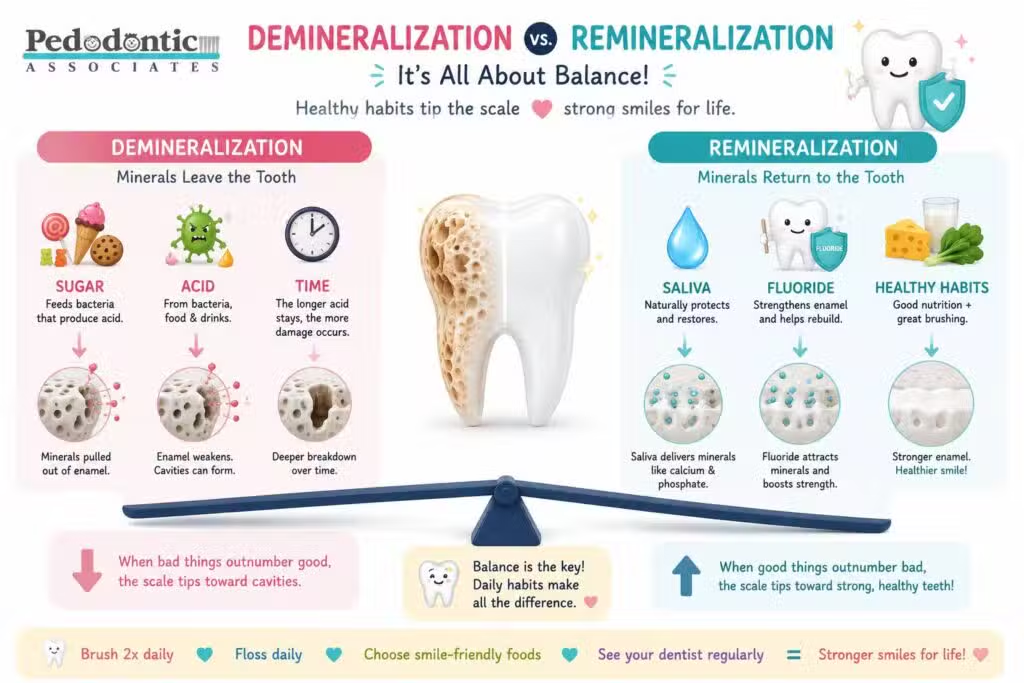
Your child’s mouth is a constant chemical battleground. Every time they consume sugar, simple starches, or acidic beverages, the bacteria residing within oral plaque convert those sugars into active acids. These acids act like a solvent, stripping essential minerals—primarily calcium and phosphate—directly from the structural enamel matrix. This biological process is known as demineralization.
In Hawaii, this chemical battle is particularly intense. Our year-round warm climate and active lifestyle mean that keiki frequently have access to tropical fruit juices, fruit punch, local shave ice, and sticky fruit snacks. Frequent exposure to these items means teeth are under a prolonged acid attack. Fortunately, the human body has a built-in defense mechanism: saliva. Saliva is a mineral-rich fluid that works continuously to repair early enamel damage through remineralization, essentially redepositing calcium and phosphate back into the weakened areas of the tooth.
The Critical Distinction: White Spot Lesions
Early-stage, completely reversible decay typically appears as a “white spot lesion.” These look like chalky, opaque, matte-white patches on the smooth surfaces of the teeth or right along the gumline. At this specific stage, the outer enamel surface is still closed and physically intact, but the mineral structure beneath it has become porous and structurally weak. If the oral environment is optimized to favor remineralization, these white spots can re-harden and return to a healthy translucent state.
Can Cavities Actually Be Reversed? The Science-Backed Answer
Yes, but only if the enamel “shell” hasn’t cracked. The American Dental Association (ADA) confirms that fluoride acts as a powerful catalyst in this process. When fluoride is introduced to a demineralized area, it speeds up the rate at which calcium and phosphate are absorbed.
Even more impressively, the new mineral surface created—called fluorapatite—is actually more resistant to future acid attacks than the original tooth enamel. This is why we often refer to remineralization as “super-charging” the tooth. However, once a “hole” (cavitation) is present, no amount of fluoride can “regrow” that missing structure.

5 Dentist-Approved Ways to Reverse Early-Stage Cavities
If our pediatric dental team identifies a reversible, incipient lesion during your child’s routine dental exam, we implement a targeted, multi-pronged conservative strategy to reverse the process without invasive drilling:
- High-Concentration Professional Fluoride Treatment: Applied directly at our Aiea, Honolulu, or Maui offices, professional fluoride varnish delivers a highly concentrated, safe dose of active minerals directly to the target site. This therapeutic coating bonds instantly to the tooth, working to freeze the white spot lesions and force rapid remineralization over the following days.
- Correct Brushing Mechanics at Home: Reversing early demineralization requires removing the sticky bacterial biofilm that produces acid in the first place. Our clinical team instructs parents and children to use a simple, highly effective back-and-forth scrubbing motion across the flat chewing surfaces and both the tongue facing surfaces and the cheek facing surfaces of their molars. When cleaning the inside surfaces of the front teeth, tilt the toothbrush completely vertically and use short, vertical up-and-down strokes to clear away plaque.
- Strategic Eating and Snacking Patterns: It is not just about the total amount of sugar your child consumes; it is about the frequency of exposure. Every time your child snacks, their oral pH drops into an acidic state for roughly twenty minutes. By encouraging structured meal times and reducing constant grazing on crackers or sticky snacks, parents create vital remineralization windows that allow saliva to do its natural repair work.
- Saliva Stimulation Techniques: Saliva is the ultimate natural defense against cavities. For older children and teenagers, chewing sugar-free gum containing Xylitol after meals helps stimulate saliva flow. This action physically washes away loose food debris, Pizza crumbs, and acids, flooding the mouth with mineral ions needed to re-harden porous enamel.
- Advanced Non-Invasive Curodont™ Repair: This represents one of the most exciting advancements in modern pediatric dentistry. Curodont™ Repair Fluoride Plus is a non-invasive, painless liquid treatment that we paint onto an early, un-cavitated lesion. The liquid contains a specialized peptide that flows into the microscopic pores of the demineralized enamel, forming a matrix that guides calcium and phosphate to rebuild and regenerate the tooth structure from the inside out. There are no needles and no drilling required.
The Progression of Decay: From Reversible to Restorative
Managing pediatric tooth decay requires understanding how a spot transitions from a reversible condition into an irreversible structural problem.
Tracking Tooth Decay Stages and Treatments
| Stage of Tooth Decay | Visible & Clinical Signs | Reversible? | Recommended Treatment Approach |
|---|---|---|---|
| Demineralization | Chalky white, opaque, or matte patches along enamel. | Yes | Professional Fluoride Varnish, Curodont™ Therapy, and Dietary Modifications. |
| Enamel Decay | Small brown, tan, or black surface pits; enamel is broken. | No | Conservative Aesthetic Composite Dental Fillings. |
| Dentin Decay | Visible hole; localized sensitivity to cold water or sweet treats. | No | Larger Dental Fillings or a Protective Pediatric Crown. |
| Pulp Infection | Chronic throbbing pain, facial swelling, or gum abscesses. | No | Pediatric Pulp Therapy (Pulpotomy) or a Therapeutic Tooth Extraction. |
Why Early Dental Visits Are Essential for Reversal
Parents frequently ask why pediatric specialists emphasize scheduling checkups and diagnostic dental X-rays every six months. The biological reasoning is simple: high-resolution digital imaging allows our doctors to identify interproximal decay (decay forming between tight tooth spaces) six to eighteen months before it breaks through the outer enamel shell and becomes a physical hole.
Because primary baby teeth have incredibly thin enamel layers (just 1mm thick), decay travels through a child’s tooth much faster than an adult’s. By the time a parent can physically see a dark spot between the molars with the naked eye, or by the time a child complains of an active toothache, the window for non-invasive reversal has almost always closed. Maintaining a consistent dental home and staying on track with routine professional oral hygiene care ensures these incipient spots are caught and managed while they are still entirely reversible.
Protecting Your Keiki’s Smile for the Future
The environmental reversal window for early enamel decay is narrow. While a white spot lesion can remain completely stable for months under optimal conditions, frequent exposure to sugars and lack of proper home care can cause it to progress into an irreversible hole in just a few short weeks.
Taking a proactive approach to your child’s dental health is the best way to avoid the need for advanced dental restorations down the road. Our pediatric dentists undergo years of additional hospital-based residency training to evaluate child development, bite symmetry, and structural enamel density safely. To ensure this specialized, high-quality care is accessible to families across our islands, our practice provides convenient Saturday appointment blocks.
We also work directly with leading local insurance networks to keep out-of-pocket care transparent and manageable. We proudly accept and file claims with Hawaii Dental Service (HDS)—the state’s largest standalone dental insurer—alongside HMSA, HMAA, and Hawaii Quest (Medicaid) community health programs. Whether your younger child requires a routine preventive exam, or your teenager needs an evaluation for a protective athletic mouth guard, our team is here to support your ohana.
Explore our locations and plan your family’s visit using our office tour links below:
- Aiea Office: Explore our Aiea dental office tour right by Pearlridge Center, providing a convenient hub for Central and West Oahu families.
- Honolulu Office: Visit our Honolulu dental office tour centrally positioned to serve busy parents across Metro Honolulu.
- Maui Office: See our Maui dental office tour located in Kahului, ensuring neighbor island families have direct access to cutting-edge pediatric care.
Don’t wait for a simple “watch” area to turn into a deep cavity that requires a filling. Contact Us today to schedule a comprehensive pediatric appointment at our Aiea, Honolulu, or Maui office!
Medical & Legal Disclaimer:The content on this blog is provided for general informational purposes only and is not intended as medical advice, diagnosis, or treatment. Cavity reversal is only clinically possible in the earliest stages of closed enamel demineralization. Always seek the advice of a pediatric dentist regarding your child’s specific oral health needs. If your child is experiencing a medical emergency, including severe facial swelling, call 911 or proceed to the nearest emergency room immediately.