
Your child’s oral health routine shouldn’t be based on guesswork or trial and error. The right products, brushing techniques, and timing change dramatically as a child grows from infancy through the turbulent teen years. Getting these crucial steps wrong often leads to entirely preventable cavities, painful dental emergencies, and dental care bills that can add up quickly. National statistics show that 23% of children aged 2 to 5 already have active cavities, making tooth decay one of the most common chronic childhood diseases in the United States.
At Pedodontic Associates, we have spent nearly 50 years serving local families across Oahu and Maui. We know that a single, one-size-fits-all approach does not work for dental care. This comprehensive checklist walks you through exactly what your child needs at each developmental stage, backed by clinical research and the expertise of our pediatric dentists.
Essential Oral Hygiene Products Every Child Needs
The toothbrush aisle at the local Hawaii drugstore can easily overwhelm any parent, but the baseline essentials for a healthy mouth are actually quite straightforward. The key to long-term success is matching the design of the tool to the child’s age, oral anatomy, and current manual hand dexterity.
Choosing the Right Toothbrush
For infants through toddlers, always select an extra-soft-bristled brush with a small, rounded head that is no larger than the physical width of two primary teeth. As children grow into the toddler and preschool stages (ages 3 to 5), the design of the handle becomes the most important feature—look for bulky, rubberized, or textured grips engineered for small hands. By age 8, most kids have developed enough grip strength to transition into youth or small adult-sized brushes.
Fluoride: The Non-Negotiable Mineral
Therapeutic fluoride toothpaste is an essential component from the very first primary tooth eruption. The American Dental Association (ADA) establishes clear guidelines for proper daily dosage to maximize protection:
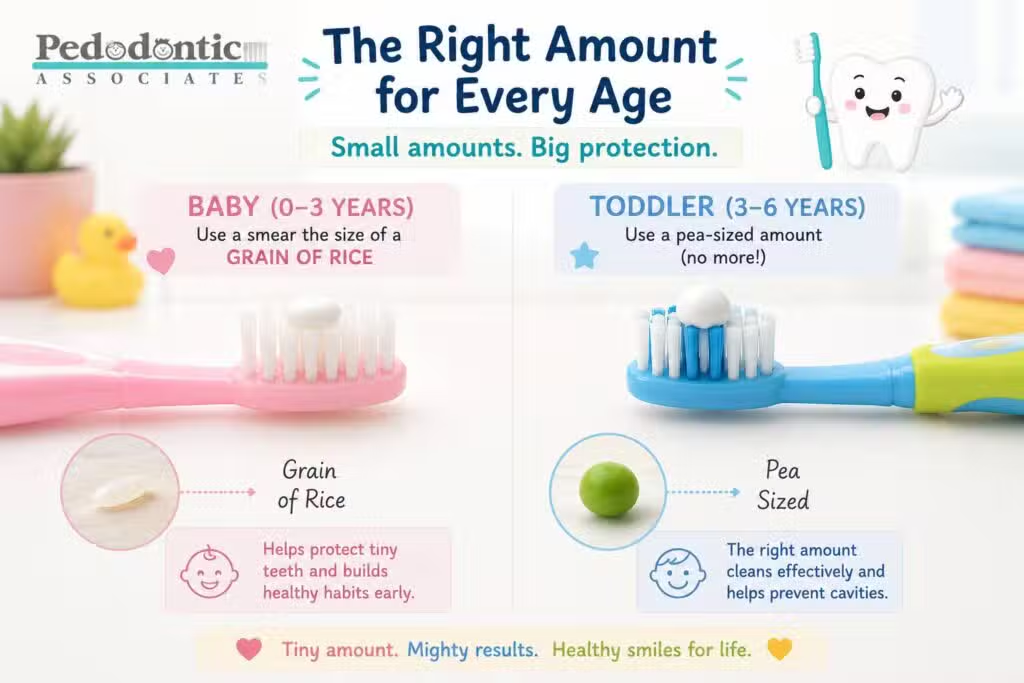
- Under Age 3: A tiny, “rice grain-sized” smear of fluoride toothpaste pressed flat into the bristles.
- Ages 3 to 6: A standard, “pea-sized” amount of toothpaste.
This small, precisely calibrated amount of fluoride is fully sufficient to strengthen developing enamel without introducing the risk of cosmetic fluorosis if a portion is accidentally swallowed during training. Utilizing fluoride toothpaste from the absolute start can dramatically reduce the incidence of early childhood caries.
Starting Strong: Infant Through Preschool Care (Ages 0–5)
Specialized oral care begins long before the first primary tooth peeps through the gums. At this early stage, you are not just cleaning oral tissues; you are actively desensitizing your child to having their mouth handled by a caregiver.
Infancy (Birth to 6 Months)
Wipe your baby’s delicate gum pads with a clean, damp, lint-free washcloth after every feeding. This simple step clears away residual bacteria and milk sugars that can linger in the oral cavity, while preparing the child for the sensory feeling of a toothbrush later on.
The Target Age One Milestone
Once that very first tooth breaks through the gums—usually around 6 months of age—switch immediately to an extra-soft-bristled infant toothbrush. This milestone is also the exact visual cue to establish a permanent dental home. Bringing your child in for their first pediatric dental exam by age one ensures that their jaw growth is monitored safely and allows our doctors to intercept demineralization while it can still be reversed with non-invasive varnishes.
The Preschool Years
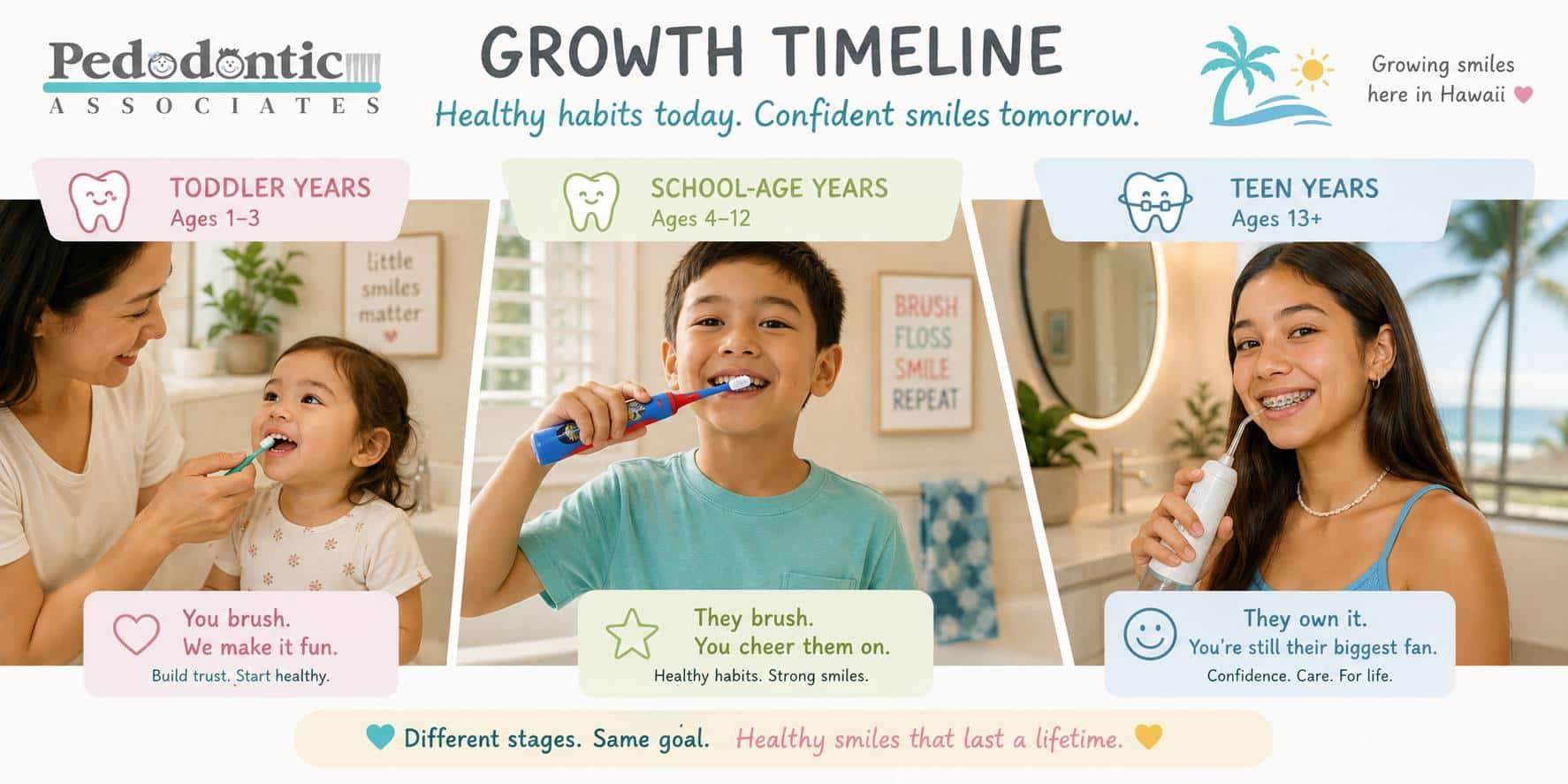
Consistency always beats perfection in the early years. Brush twice daily for two full minutes. Most children under the age of 8 lack the fine motor control and wrist coordination to brush effectively on their own. Parents must handle the primary brushing or provide exceptionally close, hands-on supervision in the bathroom to ensure the hard-to-reach back molars are actually clean.

School-Age Independence and New Challenges (Ages 6–12)
This developmental stage represents the transition zone. Kids naturally crave independence and want to brush without parental oversight, but their permanent adult teeth are just beginning to emerge and are highly vulnerable to aggressive decay.
Managing the Mixed Dentition Phase
During this phase, primary baby teeth and newly erupting permanent molars coexist side-by-side in the mouth. This creates uneven heights, deep chewing grooves, and tight new gaps that act as intense hiding spots for bacterial plaque. Flossing is no longer an optional step; it must be performed consistently at nighttime before bed to clear food traps that toothbrushes cannot reach. Parents can consider adding an alcohol-free fluoride mouth rinse around age 6, provided the child can reliably swish and spit without swallowing the liquid.
Hydration and Active Sports Safety
In Hawaii’s warm, humid climate, active keiki reach for refreshing beverages frequently during outdoor play. Parents should encourage plain water over highly acidic, sugary sports drinks, sodas, or local juice blends.
Furthermore, if your child participates in school sports or local leagues—such as basketball, soccer, baseball, or surfing—an athletic mouth guard is a vital piece of hygiene equipment. Physical impact remains a leading cause of childhood tooth loss. Protecting the smile with a proper guard shields the teeth and jawbone from sudden trauma.
Teen Years: Braces, Diet, and Ownership (Ages 13–18)
Adolescents face unique oral hygiene challenges as their daily schedules become busier and dietary choices change. Compliance can frequently drop during these years, making structural monitoring highly critical.
Adolescent Oral Health Obstacles
| Hygiene Challenge | Direct Impact on the Smile | Recommended Solution Pathway |
|---|---|---|
| Orthodontic Brackets | Braces create dozens of plaque traps, multiplying cavity risks. | Utilize specialized interdental brushes and water flossers daily. |
| Dietary Independence | Increased intake of acidic coffees, energy drinks, and sodas. | Instruct teens to rinse their mouth with plain water after drinking. |
| Wisdom Teeth Eruption | Emerging third molars can cause localized crowding or infection. | Schedule a full panoramic clinical evaluation around ages 16 to 17. |
| Lack of Compliance | Teens often rush their routine or skip brushing entirely. | Reframe hygiene around social benefits like white teeth and fresh breath. |
Fixed orthodontic appliances trap food particles against enamel constantly. For teens undergoing orthodontic care, incorporating specialized flossing tools ensures the margins around their brackets remain clean. Our specialists work closely with adolescents across our Aiea, Honolulu, and Maui locations to help them take personal ownership of their adult smiles.
The Correct Sequence: A Daily Routine That Works
The specific order of operations in your morning and evening home care routine matters. To maximize the protective properties of your toothpaste’s active ingredients, our team recommends following this exact sequence:
- Floss First: Always floss before you brush. Flossing dislodges trapped food particles and breaks up the plaque layer between tight tooth spaces. This clears the paths so that the fluoride in your toothpaste can actually reach those hidden interproximal surfaces.
- Gentle Horizontal and Vertical Brushing: Brush for two full minutes. Instruct your child to use a gentle back-and-forth scrubbing motion across the flat chewing surfaces and both the tongue facing surfaces and the cheek facing surfaces of their molars. When cleaning the inside surfaces of the front teeth, have them tilt the brush completely vertically and use short, vertical up-and-down strokes to clear away buildup. Clean the surface of the tongue gently to remove odor-causing bacteria.
- Spit, Don’t Rinse: This is the most common home care mistake. Rinsing the mouth thoroughly with water immediately after brushing completely washes away the concentrated layer of fluoride that the teeth need to re-mineralize. Have your child spit out the excess foam, but let the remaining mineral film sit undisturbed on the enamel surfaces.
When to Call Your Pediatric Dentist Between Checkups
While maintaining specialized professional cleanings and examinations every six months is essential, certain structural modifications or symptoms require prompt attention. Catching issues early allows our team to utilize conservative, non-invasive therapies like Curodont™ enamel regeneration or silver diamine fluoride (SDF), completely avoiding the need for traditional drilling or dental fillings.
Contact Our Team Immediately If You Notice:
- Bleeding Gums: Consistent bleeding or localized swelling during brushing or flossing is a primary indicator of early gingivitis.
- Temperature Sensitivity: Active pain or sharp twinges when eating hot meals, drinking cold water, or enjoying sweet tropical treats usually indicates a deep cavity or compromised enamel seal.
- Structural Discoloration: The appearance of matte-white lines, dark brown spots, or black pits in the grooves of the molars that do not brush away.
- Nocturnal Teeth Grinding: Severe nighttime clenching or audible scraping. While we practice watchful monitoring for younger kids, if an adolescent aged 12 or older exhibits severe wear, our doctors can evaluate them for a custom bruxism night guard to protect their permanent bite.
Protecting Accessible Care for Local Families
Since 1977, Pedodontic Associates has been Hawaii’s trusted resource for both preventive and emergency dental care. Our doctors are hospital-trained pediatric specialists who completed years of post-doctoral residency training focused entirely on child development, pediatric pharmacology, and behavior management.
To ensure that premier, specialized dental care remains fully accessible to working families across our islands, our practices provide convenient Saturday appointment slots. We also work directly with major island insurance networks to streamline your benefits and keep out-of-pocket costs completely transparent. Our offices proudly accept and process claims with Hawaii Dental Service (HDS)—the state’s largest standalone dental insurer—alongside HMSA, HMAA, and Hawaii Quest (Medicaid) community health programs.
Explore our locations and plan your child’s next visit using our office tour links below:
- Aiea Office: Explore our Aiea dental office tour right by Pearlridge Center, providing a convenient hub for Central and West Oahu families.
- Honolulu Office: Visit our Honolulu dental office tour centrally positioned to serve busy parents across Metro Honolulu.
- Maui Office: See our Maui dental office tour located in Kahului, ensuring neighbor island families have direct access to cutting-edge pediatric care.
Are you ready to eliminate the guesswork and optimize your child’s developmental oral health? Contact Us today to schedule a comprehensive pediatric exam at our Aiea, Honolulu, or Maui office!
Medical & Legal Disclaimer:The content on this blog is provided for general informational purposes only and is not intended as medical advice, diagnosis, or treatment. Always seek the advice of a qualified pediatric dentist regarding your child’s specific oral health needs. If your child is experiencing a medical emergency, call 911 or proceed to the nearest emergency room immediately.