
You brush twice daily, use the most expensive toothpaste, and still find yourself hearing the dreaded news of a cavity during your checkup. You floss whenever you remember and wonder why your gums still bleed or feel tender during your professional dental cleaning. The frustrating reality is that for many families in Honolulu, Aiea, and Maui, the problem isn’t a lack of effort—it is a lack of sequence.
A truly effective oral health routine is not just about doing the right things; it is about doing them in the specific, clinically backed order that maximizes their efficacy. Those five to seven minutes you spend each morning and night in front of the mirror are an investment. When performed correctly, they prevent thousands of dollars in future restorative dental costs; when performed incorrectly, they can be an exercise in futility. At Pedodontic Associates, we have been the foundation for Hawaii’s dental health since 1977. We believe that educating parents and children on the “how” and “when” is just as important as the clinical care we provide in our offices.
The Domino Effect: What Happens When You Get the Order Wrong?
Think of your oral hygiene routine as a coordinated system where each step is designed to prepare the mouth for the next. In most households, the standard habit is to brush first and then, if time permits, follow up with a quick floss. From a biological standpoint, this is actually counterproductive. By brushing first, you apply protective fluoride to the surfaces of your teeth. If you floss immediately afterward, you are physically scraping that fresh fluoride away and breaking the seal in the very areas—the tight spaces between teeth—that need protection the most.
Furthermore, many people focus entirely on the teeth and skip the tongue entirely. Your tongue is a carpet-like surface that harbors 50–60% of all oral bacteria. If you don’t address the tongue, those bacteria will simply recolonize the teeth you just spent two minutes cleaning within a few hours. The stakes of a poor routine extend far beyond just bad breath:
- Cardiovascular Health: Research indicates that adults with untreated periodontal disease face a 2–3 times higher risk of heart attack or stroke due to systemic inflammation.
- Healthy Pregnancies: Periodontal disease has been linked to a sevenfold increase in the risk of premature delivery and low birth weight.
- The Reality of Decay: Currently, 47.2% of American adults over 30 have some form of periodontal disease. Much of this is entirely preventable with a sequenced routine that takes less time than checking your email.
The Financial Value of Prevention in Hawaii
Investing time in a structured, daily oral care order saves your family from the stress and expense of advanced dental treatments down the road.
The Cost of Treatment vs. Prevention
| Dental Service | Estimated Cost in Hawaii | Long-Term Benefit & Impact |
|---|---|---|
| Preventive Cleaning | $75 to $200 | Saves $8–$50 for every $1 spent on timely care. |
| Periodontal Treatment | $500 to $10,000 | Essential for preventing irreversible tooth and bone loss. |
| Dental Filling | $150 to $400 | Restores immediate structure but requires future upkeep. |
| Pediatric Crown | $300 to $800 | Necessary to save a heavily decayed tooth from extraction. |
Why Hawaii Parents Trust Our Guidance
Our commitment to teaching these foundational routines has earned the trust of families across the islands for generations. We don’t just “fix” teeth; we build healthy habits. Here is what our patients say about our focus on education and preventive care:
The 5-Step Sequence That Actually Works
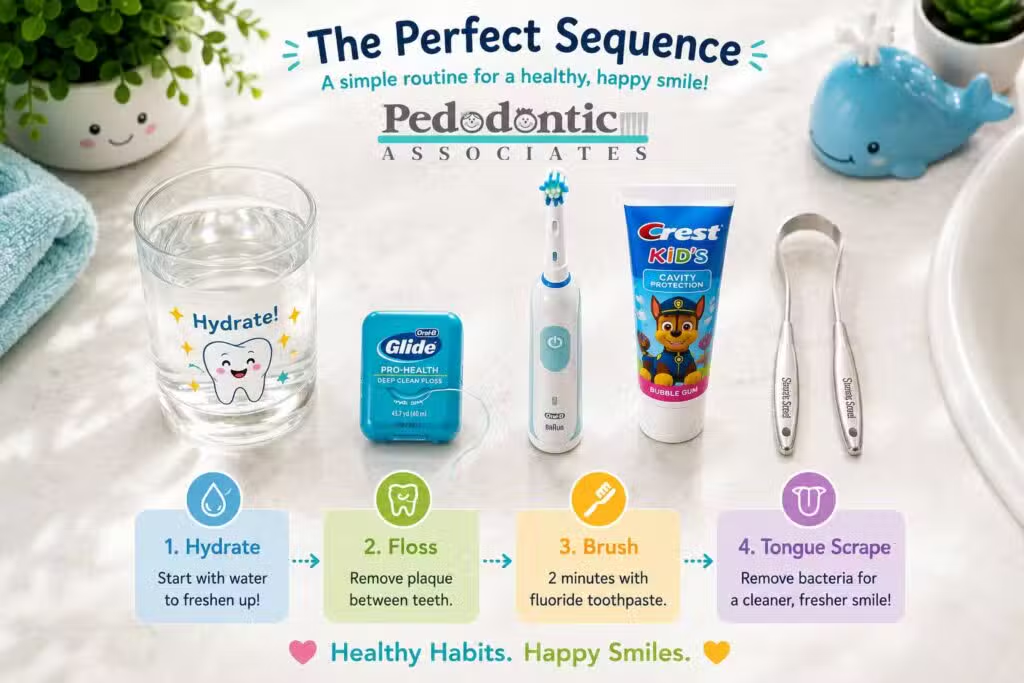
To achieve professional-level results at home, our pediatric dentists recommend following this 5-step clinical sequence twice a day: Pre-brush rinse, Floss, Brush, Tongue Scrape, and the Final Spit.
1. The Pre-Brush Rinse
Start your routine with a quick water swish, especially if you have eaten in the last hour. This helps loosen large food particles and neutralizes lingering dietary acids. Taking this quick initial step ensures your floss and toothbrush can focus entirely on removing stubborn bacterial biofilm rather than yesterday’s lunch.
2. Flossing: The Essential First Move
You must floss before you brush. A landmark 2018 study in the Journal of Periodontology confirmed that flossing first dislodges sticky plaque and trapped food from between the teeth, allowing the toothbrush to efficiently sweep it away in the next step. Most importantly, flossing first allows the fluoride in your toothpaste to actually reach those tight interproximal (between-tooth) spaces, resulting in significantly higher fluoride retention.
3. Brushing for Two Full Minutes
Use an extra-soft-bristled toothbrush positioned at a 45-degree angle to the gumline. Spend 30 seconds cleaning each quadrant of your mouth. For children, our clinical team instructs parents and kids to use a simple, highly effective back-and-forth scrubbing motion across the flat chewing surfaces and both the tongue facing surfaces and the cheek facing surfaces of their molars. When cleaning the inside surfaces of the front teeth, tilt the toothbrush completely vertically and use short, vertical up-and-down strokes to clear away plaque. While power toothbrushes are proven to remove notably more plaque over time, your daily technique and consistency are what matter most.
4. Tongue Scraping
Your tongue is a major biological reservoir for oral bacteria that cause volatile sulfur compounds (VSCs)—the primary cause of bad breath. Using a dedicated stainless steel tongue scraper from back to front is up to 30% more effective than using a standard toothbrush alone, helping dramatically reduce halitosis within a single week.
5. Spit, Don’t Rinse
This is the hardest home care habit to break. After brushing, simply spit out the excess toothpaste foam, but do not rinse your mouth with water. Rinsing immediately washes away the concentrated layer of protective fluoride your teeth just received, reducing its effectiveness by up to 95%. Leaving that thin mineral layer undisturbed on your teeth increases cavity prevention significantly.
Why Flossing First Changes the Game for Your Enamel
Only a small percentage of Americans floss on a daily basis, and those who do often view it as a secondary chore. However, brushing alone only reaches about 60% of your total tooth surfaces. The remaining 40%—the tight, hidden spaces where teeth touch—is where the majority of hidden cavities form.
For children whose permanent teeth are just starting to emerge, flossing is vital for guiding healthy gum development. If your child is new to flossing, wrap roughly 18 inches of dental floss around your fingers and gently curve the floss into a C-shape around the side of each tooth. Slide it gently beneath the gumline and move it up and down. Always advance to a fresh section of floss for every gap to avoid moving bacteria from one side of the mouth to the other.
Strict Appliance Guardrail
While discussing nighttime habits like flossing before bed, it is vital to remember proper guardrails for teeth grinding. If an older child or adolescent aged 12 or older has an established permanent bite and exhibits severe enamel wear, our doctors can evaluate them for a custom bruxism night guard to protect their teeth. However, we never provide or recommend mouth guards or oral appliances for younger children in the primary or mixed dentition stages, as they are a choking hazard and can block natural jaw growth.
Building the Ultimate Toolkit: What to Use and What to Avoid
Your daily routine is only as good as the tools you use. You don’t need a drawer full of gadgets; you just need four high-quality essentials:
- The Brush: We strongly recommend an extra-soft-bristled toothbrush. Many children and adults brush far too forcefully, leading to irreversible gum recession and enamel wear.
- The Paste: Always use a therapeutic fluoride toothpaste. For children under the age of 3, use a tiny smear the size of a single grain of rice. For children over 3, increase this to a standard pea-sized amount.
- The Scraper: Medical-grade metal tongue scrapers are inherently more hygienic and effective at removing volatile sulfur compounds than plastic ones or standard toothbrush bristles.
- What to Avoid: Stay away from charcoal or harsh whitening toothpastes for children. These formulas are highly abrasive and can thin out a child’s relatively thin primary enamel structure. Avoid hard-bristled brushes, which can damage delicate gum tissue.
When Home Care Needs Professional Intervention
No matter how perfect your home routine is, you still need professional backup. Saliva naturally contains minerals that can harden plaque into “calculus” (tartar) within 24 to 48 hours. Once plaque has calcified into tartar, no amount of brushing or flossing at home can remove it. Only a professional dental cleaning can safely debride the teeth.
Signs You Need to Call Pedodontic Associates Today:
- Gums that bleed consistently for more than 10 days after starting a flossing routine.
- Chronic bad breath that does not improve with tongue scraping.
- Sudden sensitivity to temperature (hot or cold).
- Any loose “permanent” teeth or persistent jaw clicking.
Special health considerations such as pregnancy, diabetes, or orthodontic treatment require even more vigilant monitoring. For instance, the hormonal shifts in pregnancy can lead to “pregnancy gingivitis,” and diabetes creates a bi-directional risk where gum disease can actually make it harder to regulate blood sugar levels.
The Conclusion: Five Minutes Now or Five Thousand Dollars Later
A complete, high-impact oral hygiene routine—rinse, floss, brush, scrape, spit—takes less than seven minutes of your day. When performed twice daily in the correct order, you are effectively neutralizing the bacteria that lead to 90% of all major dental procedures.
At Pedodontic Associates, we recognize the busy lives of Hawaii’s working families. That is why we offer Saturday appointments and three convenient locations to ensure your family’s routine is supported by the best clinical care in the islands. Whether it is your child’s very first checkup or a routine visit for a teenager, we are dedicated to making sure their smile stays healthy, strong, and beautiful for life.
Explore our locations and plan your family’s visit using our office tour links below:
- Aiea Office: Explore our Aiea dental office tour right by Pearlridge Center, providing a convenient hub for Central and West Oahu families.
- Honolulu Office: Visit our Honolulu dental office tour centrally positioned to serve busy parents across Metro Honolulu.
- Maui Office: See our Maui dental office tour located in Kahului, ensuring neighbor island families have direct access to cutting-edge pediatric care.
Ready to prioritize your family’s preventive routine? Contact Us today to schedule an appointment at our Aiea, Honolulu, or Maui office!
Medical & Legal Disclaimer:The content on this blog is provided for general informational purposes only and is not intended as medical advice, diagnosis, or treatment. Always seek the advice of a qualified pediatric dentist regarding your child’s specific oral health needs. If your child is experiencing a medical emergency, including severe facial swelling, call 911 or proceed to the nearest emergency room immediately.