
Walking into a dental office with your child for the first time can feel overwhelming for both the parent and the keiki. Whether you are searching for the best pediatric dentist in Honolulu or a gentle kids’ dentist in Maui, understanding the clinical process turns uncertainty into confidence. At Pedodontic Associates, we have spent decades refining the “first visit” experience to ensure it is informative, stress-free, and foundation-building.
A routine visit is more than just a quick check; it is a comprehensive evaluation of your child’s growth and development. Understanding the complete process—from the initial oral examination through professional cleaning and low-radiation digital X-rays—helps you prepare your child for a lifetime of healthy smiles. Here is an in-depth look at exactly what happens during a routine pediatric dental appointment and why each step is a vital investment in your child’s long-term oral health across our Aiea, Honolulu, and Maui locations.
What Happens During a Pediatric Dental Examination
A comprehensive pediatric dental exam goes far beyond simply checking for “sugar bugs.” It is a developmental assessment of your child’s entire oral-facial structure, designed to catch potential issues before they become painful emergencies.
1. The Visual Inspection and Tissue Health
The dentist starts with a meticulous visual inspection of your child’s teeth, gums, tongue, and the soft tissues inside the mouth. For infants and toddlers, this involves counting emerging primary teeth and checking for early childhood caries, a condition affecting approximately 23% of children aged 2–5. We look for signs of demineralization—those chalky white spots that indicate the very beginning of a cavity. By identifying these early, we can often utilize non-invasive treatments like Curodont™ Repair Fluoride Plus to heal the tooth without a drill.
2. Bite Alignment and Jaw Growth
We also assess bite alignment, jaw development, and the relationship between the upper and lower teeth. Catching structural anomalies like crossbites or crowding early—often around age 7—can reduce the need for extensive orthodontic treatment later by nearly 40%. Because a child’s jaw is still growing, early intervention can guide permanent teeth into their proper positions, often meaning simpler and shorter braces or aligner treatments in the teenage years.
3. Comprehensive Health Screening
You might notice the dentist gently feeling along your child’s neck and under the jawline. This lymph node check screens for swelling or abnormalities that could indicate systemic infection. While pediatric oral tumors are extremely uncommon, this extra-oral screening is a standard part of our high-quality pediatric care protocol.
The “Tell-Show-Do” Approach
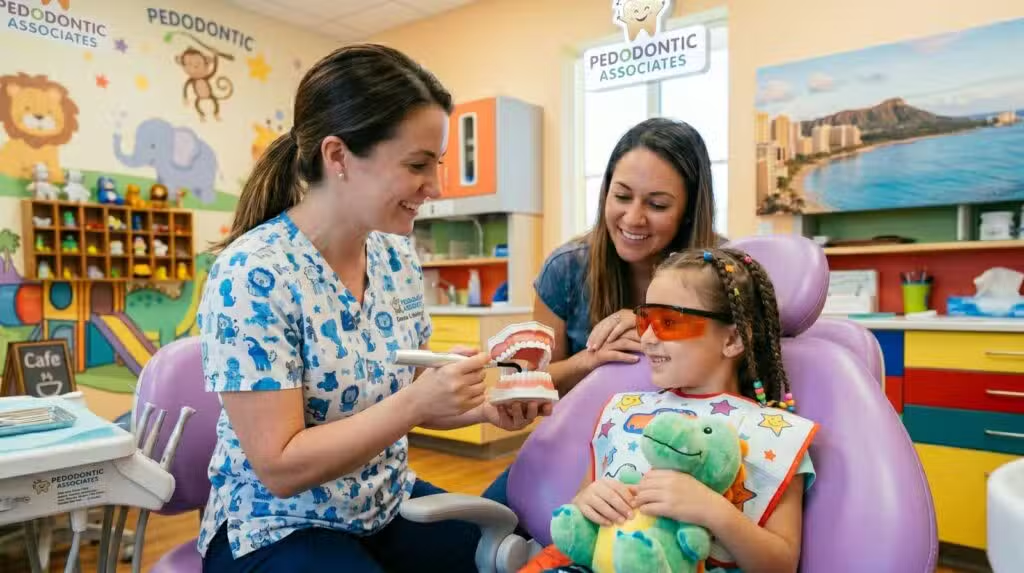
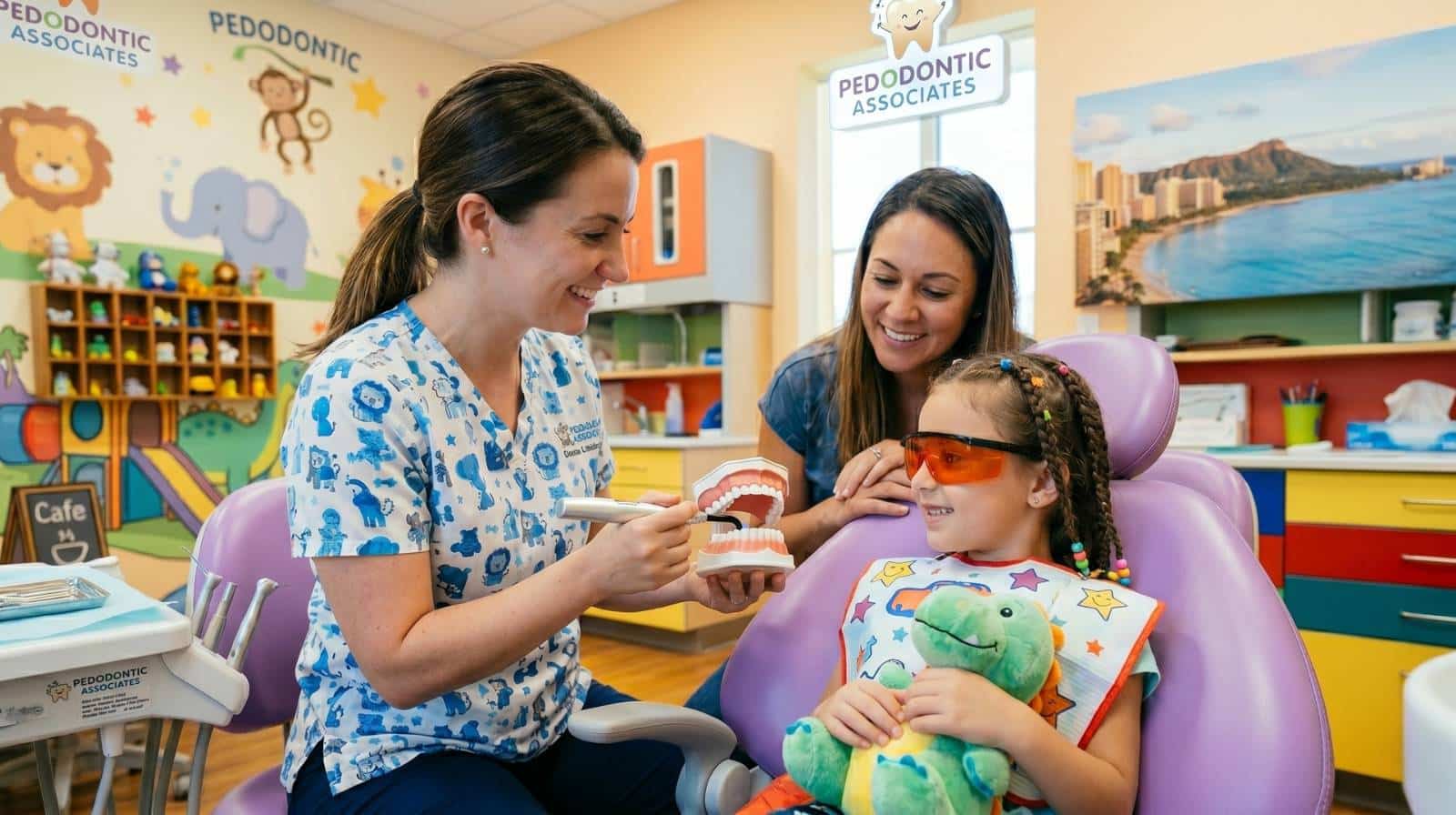
Our pediatric dentists use age-appropriate communication to eliminate fear. We break down the process into three transparent phases:
- Tell: We explain the “magic camera” or dental instruments in kid-friendly, non-threatening terms. For instance, we might call the dental mirror a “tooth counter.”
- Show: We let the child touch the plastic sensor or see the tool move on their fingernail so they know it isn’t sharp or scary.
- Do: Once the child is comfortable and laughing, our team works efficiently to complete the procedure. Research shows children exposed to positive, non-threatening language show 60% less dental anxiety than those exposed to clinical jargon.
Professional Dental Cleaning: What Your Child Will Experience
Pediatric dental cleanings, often called a “prophy,” are specialized to be significantly gentler than adult versions, yet they accomplish the same critical task: removing stubborn plaque and tartar (calculus) that home brushing cannot eliminate.
- Scaling and Debridement: The hygienist uses specialized manual instruments to carefully remove calcified plaque, especially along the gumline and between tight teeth. Even with excellent home care, these deposits form over time due to minerals in saliva, and only professional dental tools can safely remove them without damaging the enamel.
- Prophylaxis Polishing: After scaling, we polish the teeth with a slightly gritty, kid-approved paste. Your child can often choose fun flavors like bubblegum, strawberry, or mint! This step smooths the tooth surface, making it much harder for new plaque bacteria to stick to the enamel.
- Fluoride Varnish Application: The final step is a high-concentration fluoride varnish. This has been clinically proven to reduce cavities in permanent teeth by 43%. The varnish is painted on with a small brush and hardens instantly in contact with saliva, providing months of sub-surface protection.
Routine Cleaning vs. Deep Cleaning (Scaling and Root Planing)
| Feature | Routine Pediatric Cleaning | Deep Cleaning (Periodontal) |
|---|---|---|
| Primary Goal | Prevention, biofilm removal, and habit building. | Treating active gum disease, bone loss, or infection. |
| Target Area | Visible tooth surfaces and along the immediate gumline. | Deep pockets hidden below the gumline. |
| Anesthesia | Absolutely not required. | Often requires local numbing or topical gels. |
| Standard Frequency | Once every 6 months (Standard protocol). | Based strictly on clinical necessity and disease progression. |
| Patient Feeling | Tickling, vibrating, or smooth polishing sensation. | Pressure; requires careful behavioral management. |
Dental X-Rays for Children: When and Why They’re Needed
Digital dental X-rays for kids are a vital diagnostic tool that reveal what the naked eye cannot: cavities forming between teeth, infections hiding under the gumline, and the positioning of permanent teeth developing beneath the primary (baby) teeth.
Common Types of Pediatric X-Rays:
- Bitewing X-Rays: These show the crowns of upper and lower teeth in one view, which is the gold standard for detecting “interproximal” decay between molars. Our specialists implement a strict diagnostic protocol: the baseline target age for a child’s first routine bitewing X-rays is set at age 4. This represents the precise developmental window where the primary back molars have shifted and locked tightly against one another, and when most kids are able to tolerate taking x-rays of the back teeth. Low-radiation digital dental X-rays allow our team to see between these touching teeth, identifying early demineralization while it can still be reversed with non-invasive therapies instead of traditional drilling.
- Panoramic X-Rays: These capture the entire mouth in one sweep, revealing the jaw structure, sinus cavities, and the exact path of unemerged permanent teeth or developing wisdom teeth.
Safety and Modern Technology
We understand that radiation concerns are a priority for Hawaii parents. However, modern technology has made this process incredibly safe. A single digital bitewing X-ray exposes your child to approximately 0.005 mSv—less than a single day of natural background radiation from the sun. Digital X-rays at our offices use up to 80% less radiation than traditional film. Furthermore, our strict use of lead aprons with thyroid collars ensures the highest safety standards are met for every keiki.
How Often Should Children Visit the Dentist?
The American Academy of Pediatric Dentistry (AAPD) recommends establishing a “dental home” by your child’s first birthday or within six months of their first tooth appearing. For most keiki in Hawaii, a visit every six months is the standard of care, but frequency is tailored to individual risk factors.
- High-Risk Patients: Children with a history of frequent cavities, complex developmental patterns, or certain systemic health conditions (like diabetes) often benefit from visits every 3–4 months.
- Orthodontic Monitoring: Teenagers with braces often need more frequent cleanings to prevent gingivitis and “white spot lesions” around their brackets.
- Convenience for Families: To help maintain this schedule, Pedodontic Associates offers multiple locations and convenient Saturday appointments, making it easier to prioritize oral health without missing school or work.
Preparing Your Child for Their Dental Appointment
The way a parent talks about the dentist can fundamentally shape a child’s lifelong perception of oral healthcare. Avoid words like “pain,” “hurt,” “shot,” or “drill.” These words can trigger a fear response before the child even enters the building.
Preparation Strategies by Age Group:
- Infants and Toddlers: Bring a comfort item, such as a favorite stuffed animal or blanket. This decreases stress markers by nearly 43% during the exam.
- Preschoolers (Ages 3–5): Read age-appropriate books about the dentist, such as The Berenstain Bears Visit the Dentist. Pre-visit familiarization can reduce first-visit anxiety by 55%.
- The First Visit Protocol: Our team specializes in the first dental visit experience. We focus on building a relationship with the child first, often spending the first few minutes just talking and playing before moving to the chair.
Special Considerations for Children with Unique Needs
We are proud to be a leading provider of special needs dentistry in Hawaii. We believe every child deserves a healthy smile, regardless of their developmental, physical, or sensory challenges.
Sensory Accommodations and Medical Safety
For children with autism or sensory processing disorders, we offer accommodations like quiet appointment times, weighted blankets, and pre-visit desensitization tours to help them get completely comfortable with the office environment. For children with complex medical histories, we coordinate directly with your pediatrician.
When standard behavioral techniques aren’t enough, we offer safe, controlled sedation dentistry, including nitrous oxide (laughing gas) or IV sedation administered by our specialists.
Building Healthy Habits Between Visits
Professional dental visits are only half of the equation. True preventive dentistry happens every single day at home through correct brushing and flossing techniques.
- Proper Brushing Movements: Instruct your child to use a gentle back-and-forth scrubbing motion across the flat chewing surfaces and both the tongue facing surfaces and the cheek facing surfaces of their molars. When cleaning the inside surfaces of the front teeth, have them tilt the brush completely vertically and use short, vertical up-and-down strokes to sweep away plaque. Parents should actively assist with brushing until a child has the fine manual dexterity to tie their own shoes (usually around age 7 or 8).
- The Flossing Rule: If any two teeth are touching, they must be flossed! Flossing should be performed consistently at nighttime right before bed to clear out food particles before saliva flow drops during sleep. Children’s floss picks are an excellent tool to help reach back molars easily.
- Nutritional Guidance: Avoid sticky snacks like fruit snacks, dried fruit, or crackers, which sit in the grooves of the teeth for hours. Offer plain water between meals instead of juice, sodas, or sports drinks to help naturally neutralize mouth acids.
Schedule Your Child’s Visit
Establishing a dental home early is the single most effective way to prevent painful dental emergencies and ensure your child views healthcare as a positive, normal part of life. Our team is ready to provide the gentle, expert care your keiki deserves in a fun and welcoming environment.
Our experienced administrative teams work directly with major local insurance networks to maximize your benefits and keep out-of-pocket costs completely transparent. We proudly accept and process claims with Hawaii Dental Service (HDS)—the state’s largest standalone dental insurer—alongside HMSA, HMAA, and Hawaii Quest (Medicaid) community programs.
Explore our locations and schedule your visit using our office tour links below:
- Aiea Office: Explore our Aiea dental office tour right by Pearlridge Center, providing a convenient hub for Central and West Oahu families.
- Honolulu Office: Visit our Honolulu dental office tour centrally positioned to serve busy parents across Metro Honolulu.
- Maui Office: See our Maui dental office tour located in Kahului, ensuring neighbor island families have direct access to cutting-edge pediatric care.
Ready to start a healthy journey for your child? Contact Us today to schedule a pediatric dental exam and cleaning at our Aiea, Honolulu, or Maui office!
Medical & Legal Disclaimer:The content on this blog is provided for general informational purposes only and is not intended as medical advice, diagnosis, or treatment. Always seek the advice of a qualified pediatric dentist regarding your child’s specific oral health. If your child is experiencing a dental emergency, such as a knocked-out permanent tooth or severe facial swelling, call 911 or proceed to the nearest emergency room immediately.