
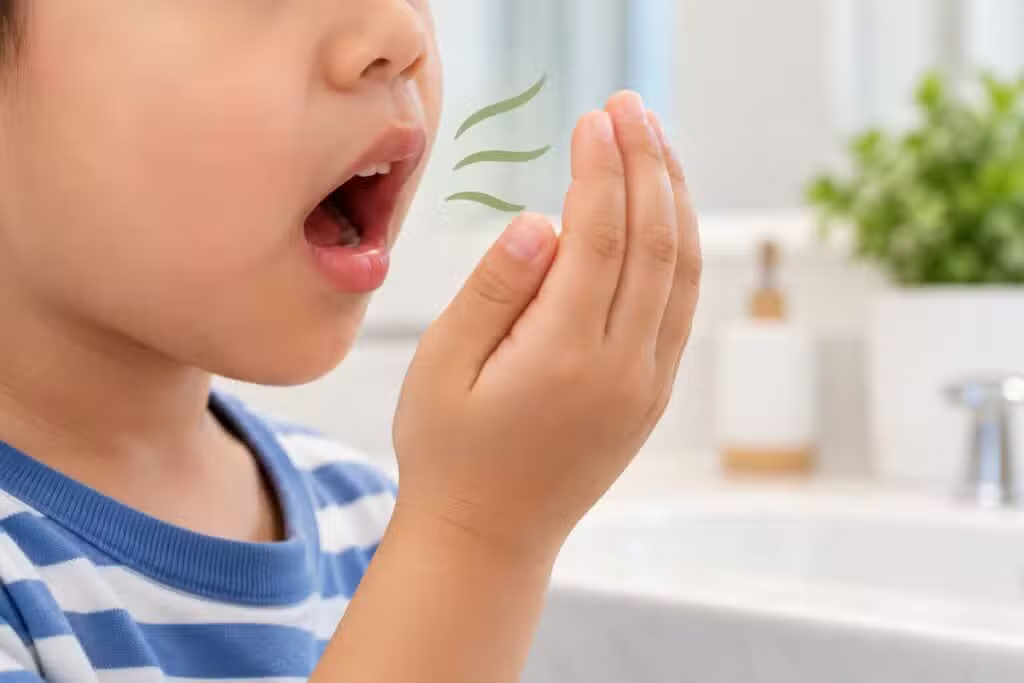
Catching an unpleasant odor when your child speaks or gives you a morning hug can be surprising. Parents often assume chronic bad breath medically known as halitosis is exclusively an adult problem or a sign of poor hygiene.
When a child brushes twice a day yet still struggles with persistent breath odor, parents naturally worry about hidden dental decay or underlying medical issues.
Our team at Pedodontic Associates helps Hawaii parents uncover the real reasons behind children's breath changes during routine visits. You can learn more about our comprehensive philosophy by visiting our about page.
Why Does Children’s Breath Turn Sour? (The Main Causes)
Halitosis in kids is rarely random. It usually points to specific localized factors in the mouth, nose, or throat.
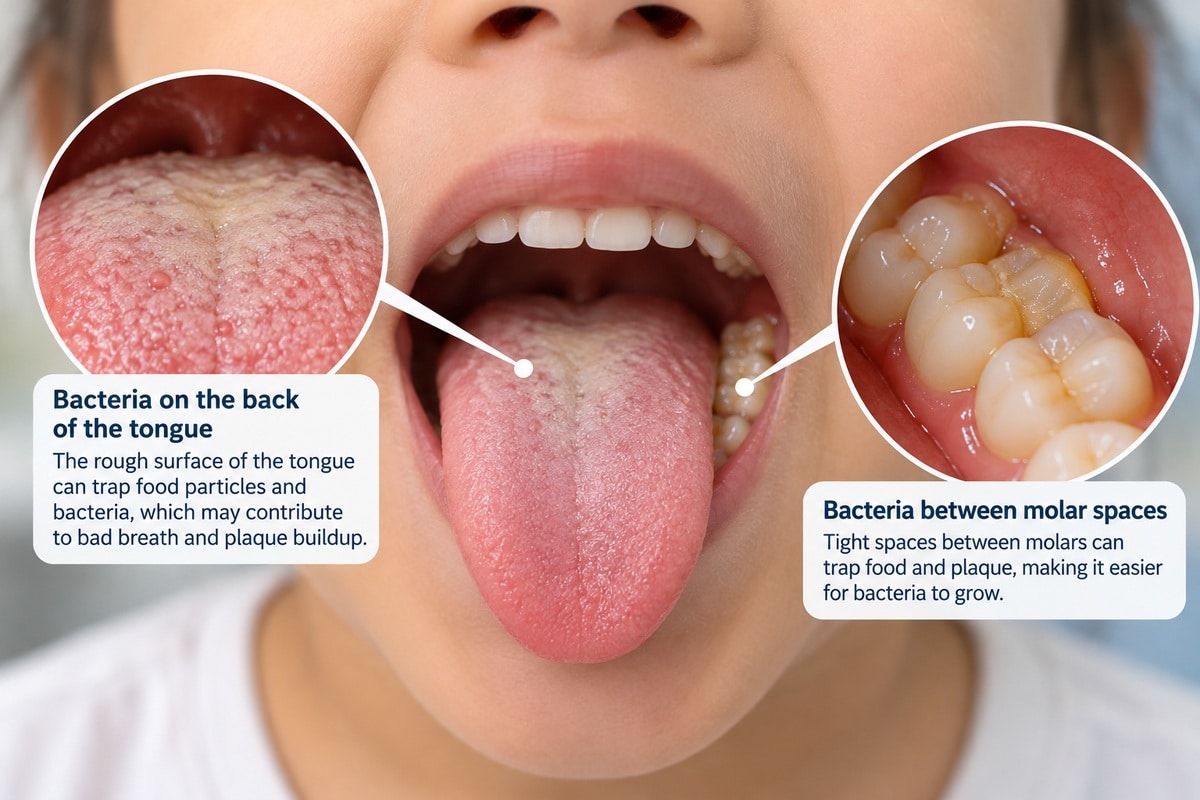
Bacterial Buildup on the Tongue: The rough, textured surface of a child's tongue easily traps microscopic food particles and dead cells. When bacteria feed on this organic debris, they release sulfur compounds that create a noticeable odor.
Mouth Breathing and Dry Saliva: Children who sleep with their mouths open—often due to allergies, enlarged tonsils, or a stuffy nose—experience reduced saliva flow. Saliva naturally washes away odor-causing bacteria, so a dry mouth quickly leads to morning breath that lingers throughout the day.
Hidden Foreign Objects: Toddlers and preschoolers are notorious for exploring the world by placing small objects where they do not belong. A tiny piece of food, a bead, or a toy part lodged deep inside the nasal cavity can create a localized infection and strong, persistent odor.
Unnoticed Dental Decay or Plaque: A hidden cavity or a deep groove trapping food particles between tight back molars provides a breeding ground for smelly bacteria that standard surface brushing misses.
Sinus Infections and Post-Nasal Drip: Mucus draining down the back of the throat during a cold or allergy flare-up feeds oral bacteria, resulting in a distinct sour smell.
Simple Ways to Freshen Breath at Home
Fixing halitosis usually comes down to targeting the areas that standard brushing misses.
Start by encouraging your child to gently brush or scrape their tongue as part of their daily routine. A simple sweep from back to front removes the bulk of sulfur-producing bacteria.
Next, ensure daily flossing is taking place. Food trapped between tight back teeth decays quickly and creates a powerful odor that toothpaste cannot reach. Finally, keeping your child well-hydrated throughout the day encourages a steady flow of protective saliva.
If you want to evaluate your child's oral health or check for hidden dental issues, you can explore our pediatric dental services page to see how we support family dental care.
Real Stories From Hawaii Families
Finding practical solutions for everyday dental worries is much easier with a supportive team behind you. Here is what local parents have to say, sourced directly from the Pedodontic Associates Testimonials Page:
"Dr. Brian Tamura is awesome with my son. He's a professional and responsive to my son's dental needs! We had another dentist but switched to Dr. Tamura and is pleased with his services and caring attitude!" — R.L. via Pedodontic Associates Testimonials
"Every time we go to Pedodontic Associates, the service and quality of care is exceptional!" — Patient Review via Pedodontic Associates Testimonials
Frequently Asked Questions About Halitosis in Kids
Can mouthwash cure bad breath in young children?
Over-the-counter mouthwashes often just mask the underlying odor temporarily and can contain alcohol or harsh ingredients unsuited for young kids. Addressing the root cause—like tongue bacteria or dry mouth is far more effective.
Could bad breath mean my child has a cavity?
Yes. Untreated decay creates a pocket where food debris and bacteria collect, which can produce a distinct, persistent odor. A routine dental exam will quickly rule out or treat any hidden cavities.
When should I worry about chronic bad breath?
If your child's bad breath persists despite thorough brushing, flossing, tongue cleaning, and good hydration—and if it is accompanied by nasal congestion or a fever—schedule an evaluation with your pediatrician and pediatric dentist.
Partnering with Your Hawaii Pediatric Dentist
Helping your child maintain a fresh, healthy smile is an important part of their overall wellness. Our team evaluates oral hygiene habits and breath health during every routine checkup.
Our team is ready to support your family with welcoming clinics across Oahu and Maui. Explore our Pearlridge office in Aiea or check out our Kahala office in Honolulu. We also serve our neighbor island patients at our Maui office. You can contact our scheduling team today to book your child's next preventive visit. You can also explore our pediatric dental services page to review our full scope of care.
Medical & Legal Disclaimer: The content on this blog is provided for general informational purposes only and is not intended as medical advice, diagnosis, or treatment. Always seek the advice of a qualified pediatric dentist regarding your child’s specific oral health needs. If your child is experiencing a severe medical emergency, call 911 or proceed to the nearest emergency room immediately.