
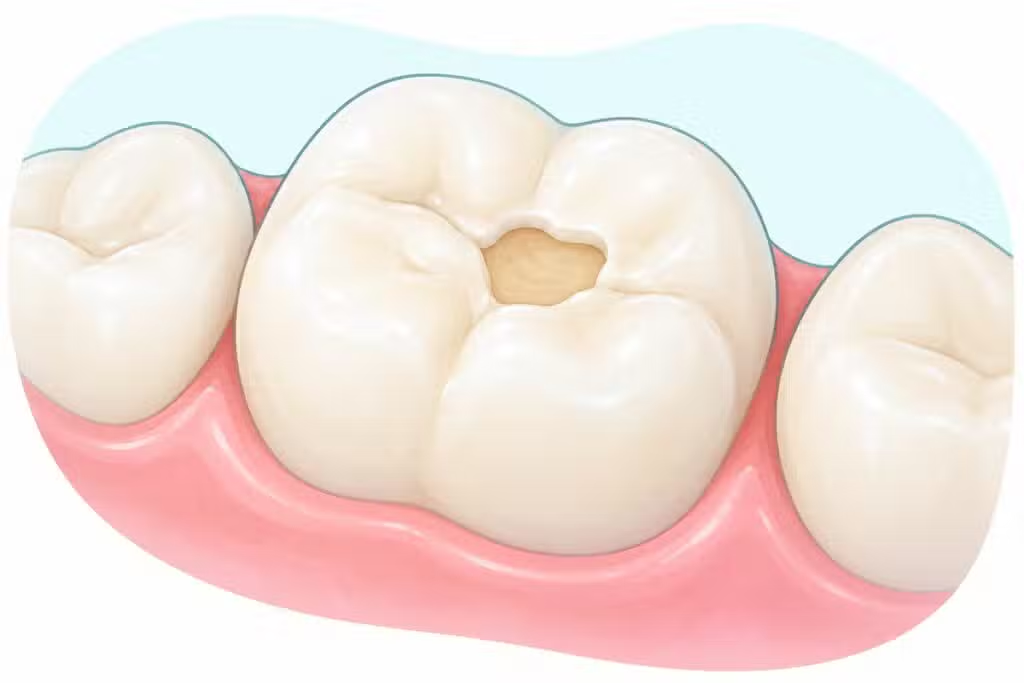
Your child is eating dinner when they suddenly notice something hard in their mouth. They spit it out, and you realize it might be part of a dental filling.
Or perhaps you notice a small hole in a tooth that was previously repaired.
If your child's filling falls out, contact their dentist promptly, even if the tooth doesn't hurt. A missing filling can leave part of the tooth exposed to food, bacteria and further damage.
The good news is that losing a filling doesn't always mean your child needs emergency treatment. What matters is the condition of the tooth and whether your child is experiencing pain or other symptoms.
Here's what to do until a pediatric dentist can examine it.
First, What Should You Do When a Filling Falls Out?
If you think your child has lost a filling, take these steps.
1. Check the Tooth Without Poking It
Ask your child to open their mouth so you can look at the area.
You might notice a small hole, a rough surface or a section of the tooth that looks different from before.
Avoid pressing on the opening or trying to remove anything attached to the tooth.
If your child finds a loose piece of filling material, have them spit it out rather than chew or swallow it. You can keep the piece to show the dentist, although it may not be reusable.
2. Gently Clean the Area
Have your child rinse with plain water if they're old enough to rinse and spit reliably.
Continue gentle brushing to remove food particles, but avoid scrubbing the exposed area aggressively.
Food can become trapped where the filling used to be, so keeping the tooth clean is important while you arrange an examination.
3. Avoid Chewing on That Tooth
Until your child is evaluated, encourage them to chew on the opposite side of their mouth when possible.
Avoid hard, crunchy or sticky foods that could place additional pressure on the damaged tooth.
If the tooth is sensitive, very hot or cold foods may also cause discomfort.
Soft foods that are comfortable to eat may be easier in the meantime.
4. Contact Your Pediatric Dentist
Call the dental office and explain what happened.
Let the team know whether your child has pain, sensitivity, swelling or a sharp edge that is irritating their tongue or cheek.
At Pedodontic Associates, we provide pediatric dental care at our Pearlridge, Kahala and Maui offices. Our team can discuss the situation with you and help determine an appropriate next step.
For details about our restorative services, visit our pediatric dental fillings page.
Is a Lost Filling a Dental Emergency?
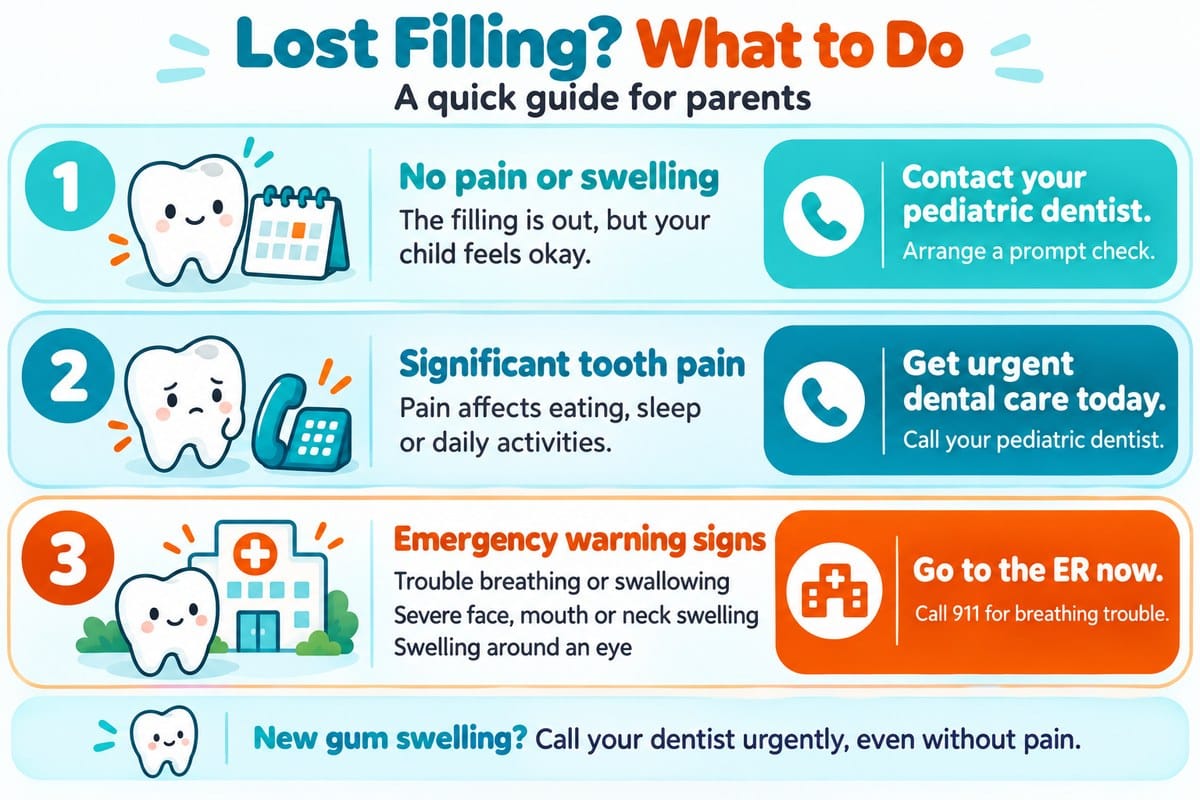
A missing filling doesn't automatically require a trip to the emergency room.
However, certain symptoms mean your child needs more urgent attention.
| What you're noticing | Recommended action |
|---|---|
| Filling is missing, but your child has no pain | Contact the dentist promptly for assessment and scheduling advice. |
| Mild sensitivity when eating or drinking | Call the dentist and explain the symptoms. Avoid foods that trigger discomfort while awaiting advice. |
| Sharp edge scratching the cheek or tongue | Contact the dentist promptly for guidance and evaluation. |
| Significant or worsening tooth pain | Seek urgent dental assessment. |
| Gum swelling, facial swelling or fever with suspected dental infection | Seek urgent professional evaluation. |
| Rapidly spreading facial swelling or difficulty breathing or swallowing | Seek emergency medical care immediately. |
Even if your child seems comfortable, don't assume the tooth can be left untreated simply because the filling was placed in a baby tooth.
The missing restoration should be evaluated to determine what remains of the tooth and whether additional treatment is needed.
Why Do Dental Fillings Fall Out?
Dental fillings are designed to restore damaged areas of teeth, but they can become loose or break over time.
There isn't always one obvious reason.
Wear From Everyday Chewing
Children use their teeth throughout the day to bite and chew food.
Repeated chewing forces can gradually affect dental restorations, particularly when a filling is large or located on a heavily used tooth.
New Decay Around an Existing Filling
Sometimes new decay develops at the edge of a filling.
If the surrounding tooth structure becomes weakened, the filling may no longer have enough support.
This is one reason why a lost filling needs professional evaluation. Replacing the missing material may not address everything happening underneath.
Biting Something Hard
Chewing ice, hard candy or other unusually hard objects can put significant force on a tooth.
In some cases, the filling may fracture or become dislodged. Part of the tooth itself may also break.
Teeth Grinding or Clenching
Some children grind or clench their teeth, particularly during sleep.
Repeated pressure can contribute to wear on teeth and restorations.
If your child frequently grinds their teeth, mention it during the examination. We can evaluate the teeth for signs of wear and discuss whether further assessment is appropriate.
Learn more about our pediatric teeth-grinding evaluations.
What Will the Dentist Do About a Missing Filling?
The next step depends on why the filling came out and how much healthy tooth structure remains.
Our pediatric dentist will examine the affected tooth and may recommend an X-ray when clinically appropriate.
Rather than simply replacing the filling automatically, we'll evaluate whether there is new decay, a fracture or another issue that affects the treatment decision.
When Another Filling May Be Enough
If the surrounding tooth is in suitable condition, a new filling may be an option.
The affected area may need to be cleaned and prepared before the replacement material is placed.
We consider the location of the tooth and the extent of damage when discussing restorative options.
When a Crown May Be Considered
If a large part of the tooth is damaged or weakened, another filling may not provide enough support.
In some cases, a pediatric crown may be recommended to cover and protect the remaining tooth structure.
A crown is not automatically necessary when a filling falls out. The decision depends on the clinical examination.
When More Extensive Treatment Is Necessary
Occasionally, the dentist may find that decay or damage extends deeper into the tooth.
Depending on the findings, treatment may involve pulp therapy or tooth extraction.
If a baby tooth must be removed earlier than expected, we may also evaluate whether a space maintainer is appropriate.
Our goal is to explain the condition of the tooth and discuss the available options with you.
Should You Use a Temporary Filling Kit at Home?
You may see temporary dental repair kits sold at pharmacies or online.
However, don't apply dental cement, household glue or another repair material to your child's tooth without guidance from a dental professional.
A child's mouth is different from an adult's, and not every product is appropriate for young patients.
Trying to fill the opening yourself may irritate the surrounding tissues or interfere with a professional assessment.
The American Dental Association also cautions against do-it-yourself dental repairs because inappropriate techniques and materials can cause harm.
While you arrange your child's appointment, focus on gentle cleaning and avoiding chewing pressure on the affected tooth.
What If the Filling Fell Out of a Baby Tooth That’s Already Loose?
A filling can occasionally become dislodged from a baby tooth that is approaching its natural shedding time.
That raises an understandable question: Does the filling really need to be replaced?
The answer depends on the individual tooth.
Our pediatric dentist may consider:
- Whether the baby tooth is close to falling out naturally
- How much tooth structure remains
- Whether decay is present
- Whether the tooth is causing discomfort or affecting chewing
- Whether there is a risk of infection or further damage
For a baby tooth that is very close to shedding, the treatment recommendation may differ from that for a molar expected to remain in place for several more years.
Don't assume the tooth can be left alone just because it's loose. A dental examination is the appropriate way to determine whether treatment or monitoring makes sense.
Does a Lost Filling Mean It Was Done Incorrectly?
Not necessarily.
Fillings can fail for several reasons, including changes in the surrounding tooth, new decay, wear or unexpected biting forces.
A lost filling alone doesn't establish whether there was a problem with the original procedure.
During the examination, we can look at the condition of the tooth and discuss possible reasons the restoration became loose.
If your child has experienced repeated filling problems, let us know. Understanding the history can help inform the next treatment decision.
Your Child Lost a Filling? Contact Our Hawaii Pediatric Dental Team
Whether your child has a small opening in a tooth or discomfort after losing a filling, it's worth having the area evaluated.
At Pedodontic Associates, we provide pediatric dental fillings and other restorative care for children at three locations:
Pearlridge Office, Aiea: 808-487-7933
Kahala Office, Honolulu: 808-735-1733
Maui Office, Kahului: 808-877-0066
When you call, tell our team when the filling came out and whether your child has pain, swelling or difficulty eating.
We'll discuss the appropriate next step and current appointment availability.
You can find office locations and additional information on our contact page.
A missing filling doesn't always require emergency treatment, but it shouldn't be ignored. Contact us so we can help you determine what your child's tooth needs.
Medical disclaimer: This article is for general educational purposes and does not replace an individualized dental examination or professional medical advice. Seek emergency medical care for difficulty breathing, difficulty swallowing or rapidly spreading facial swelling.