
Can a 4-year-old wear a mouth guard? Yes, a young child may be able to wear one, but the more important question is whether they need it and whether it fits their developing mouth.
For young children who play sports, a properly fitted mouth guard can help reduce the risk of dental injuries. But a sports mouth guard isn't the answer to every concern. Nighttime teeth grinding requires a different approach, and children who frequently chew or bite objects may need another type of evaluation.
At Pedodontic Associates, we provide custom athletic mouth guards and evaluate teeth grinding in children. Here's how to understand the options, choose the right fit, and know when to ask our pediatric dental team for guidance.
Does Your Young Child Actually Need a Mouth Guard?
A child's age alone doesn't determine whether they need a mouth guard. What matters more is the activity they're participating in, their dental development, and the reason protection is being considered.
The American Dental Association (ADA) recommends properly fitted mouth guards for sports and recreational activities that carry a meaningful risk of dental injury.
These activities can include:
- Contact sports: Football, basketball, soccer, hockey, and martial arts.
- Activities with a risk of falls: Skateboarding, gymnastics, and skating.
- Other recreational activities: Bicycling, surfing, and similar activities where a fall or collision could injure the mouth.
Even though baby teeth eventually fall out, protecting them matters. A dental injury can cause discomfort, affect eating, or damage developing permanent teeth.
A properly fitted mouth guard helps cushion impacts involving the teeth and surrounding soft tissues. However, it cannot prevent every dental injury.
For a preschooler playing a low-contact activity, the need for a mouth guard may differ from that of a child participating in organized contact sports.
If you're unsure whether your child's activity warrants protection, we can evaluate their teeth and discuss the appropriate options.
Types of Mouth Guards for Little Kids
There are three main categories of athletic mouth guards: stock, boil-and-bite, and custom-fitted.
The right choice depends on your child's mouth, ability to wear the guard comfortably, and the activity involved.
| Type | How It Fits | What Parents Should Know |
|---|---|---|
| Stock mouth guard | Comes in a predetermined size | Inexpensive and readily available, but may be bulky or difficult to keep in place |
| Boil-and-bite mouth guard | Softened in warm water and shaped to the teeth | Can provide a more individualized fit, but proper sizing and molding are important |
| Custom-fitted mouth guard | Made from an impression of your child's teeth | Designed for the child's individual dental anatomy and can be assessed by a dentist |
Stock Mouth Guards
Stock mouth guards are ready to wear without modification.
They're available in sporting goods stores, but their limited sizing can make them difficult for younger children to use.
A stock guard may shift around, interfere with speaking, or require the child to keep their teeth clenched to hold it in place.
For a child with a particularly small mouth, these limitations can be significant.
Boil-and-Bite Mouth Guards
Boil-and-bite guards are softened using heated water and then molded around the teeth.
They can fit more closely than stock mouth guards when the correct size is selected and the manufacturer's instructions are followed.
However, not every product is designed for preschool-aged children. A youth label doesn't automatically mean a guard will fit a 4-year-old.
An adult should handle the heating process, and parents should follow the product's instructions carefully.
If a child has braces or another dental appliance, ask their dentist or orthodontist before attempting to mold a guard.
Custom-Fitted Mouth Guards
Custom mouth guards are made using an impression of the child's teeth, allowing the guard to follow their individual dental anatomy.
At Pedodontic Associates, we provide custom pediatric athletic mouth guards for children who need sports-related dental protection.
Our process involves taking an impression and creating a guard designed for the child's teeth.
A custom guard may be especially worth considering when a child's mouth is difficult to fit with a store-bought option or when they regularly participate in activities with a higher risk of dental injury.
Because children are still growing, even custom guards need periodic fit checks and eventual replacement.
Mouth Guard Sizing: Why Age Isn’t Enough
Parents often search for mouth guards labeled for toddlers, preschoolers, or children under 10.
Those labels can be useful starting points, but they don't establish whether a guard will fit a particular child.
Mouth guard sizing depends on several factors:
- The width and shape of the child's dental arch
- How many teeth have erupted
- Whether the child has baby teeth, permanent teeth, or both
- The position of the teeth
- The child's ability to keep the guard in place comfortably
A child with a smaller dental arch may not fit a product marketed for their age group.
Similarly, two 7-year-olds may need different mouth guard sizes because their permanent teeth are developing at different rates.
Mouth Guards for Children Ages 3 to 5
Younger children generally still have their primary teeth.
If a preschool-aged child participates in an activity where a mouth guard is appropriate, fit requires particular attention.
A guard shouldn't be so bulky that it interferes with normal breathing or causes repeated gagging.
Because many over-the-counter guards are not designed for very small mouths, we recommend asking a pediatric dentist about an appropriate option rather than selecting a product based on age alone.
Young children also need supervision when using removable oral appliances. A poorly fitting guard that becomes loose should not be used.
Mouth Guards for Children Ages 6 to 12
This is a period of significant dental development.
Around age 6, many children begin developing their first permanent molars while their baby teeth are gradually replaced.
As new teeth emerge, the fit of an existing mouth guard can change.
A guard that worked well at the beginning of a sports season may no longer fit properly after several teeth have erupted.
That is why growing children should have their mouth guards checked regularly, especially when they notice changes in comfort or retention.
How to Tell if Your Child’s Mouth Guard Fits
An athletic mouth guard should stay in place comfortably and allow your child to breathe normally.
According to the ADA, an appropriately fitted guard should provide coverage and retention without unnecessarily interfering with speaking or breathing.
Watch for these warning signs:
- The guard keeps falling out. Your child may need to clench their teeth continuously to hold it in place.
- Your child gags repeatedly. The guard may be too bulky or extend too far backward.
- The guard causes rubbing or soreness. Edges or pressure points may need professional evaluation.
- Your child struggles to breathe normally. Stop using the guard and have its fit assessed.
- The guard no longer fits after teeth erupt. Changes in the bite may require adjustment or replacement.
A child refusing to wear a mouth guard isn't always being difficult. An uncomfortable fit can make it harder for them to tolerate the appliance.
If your child repeatedly removes their guard, check whether it fits properly before assuming they simply need more practice wearing it.
Mouth Guards for Kids With Braces
Children with braces can benefit from mouth guards during sports.
A blow to the mouth may damage brackets or wires, while the orthodontic hardware can increase the risk of injuries to the lips and cheeks.
A properly fitted guard helps create a protective barrier.
However, orthodontic treatment introduces additional considerations.
Braces can change tooth positioning, and some guards may place unwanted pressure on brackets or interfere with orthodontic movement.
Do not mold a standard boil-and-bite guard over braces without guidance from the child's orthodontist or dentist.
Our custom mouth guard service includes options for children with orthodontic appliances, including consideration of lower-arch protection when braces are present on both arches.
If your child wears a removable retainer, ask their orthodontist when to remove it for sports. Retainers are not substitutes for protective athletic mouth guards.
What if Your Little Child Grinds Their Teeth at Night?
Nighttime teeth grinding, also called sleep bruxism, is different from a sports-related injury concern.
Some young children grind their teeth while sleeping, and not every case requires an appliance.
In fact, our approach to pediatric bruxism is generally conservative. We monitor developing teeth and evaluate signs of wear or other concerns before recommending treatment.
We generally do not recommend night guards until the permanent teeth have erupted, typically around age 13, because a child's teeth and bite are still changing.
A parent should arrange an evaluation if grinding is accompanied by:
- Noticeable tooth wear or damage
- Jaw discomfort
- Tooth sensitivity
- Frequent complaints of headaches or facial discomfort
- Other concerning sleep symptoms, such as persistent snoring
A sports mouth guard should not be used as a substitute for a professionally recommended night guard.
If your child grinds their teeth, learn more about our pediatric bruxism evaluation and treatment approach.
What About Children Who Frequently Bite or Chew Objects?
Some young children regularly chew on clothing, toys, or other objects.
Parents may wonder whether a mouth guard could help prevent damage to their child's teeth or manage the behavior.
However, athletic mouth guards are designed primarily for protection during sports. They are not interchangeable with therapeutic chewing devices or appliances intended for other purposes.
Frequent chewing or biting can have different causes, including sensory or developmental needs.
If your child persistently chews objects, bites themselves, or damages their teeth, speak with their pediatrician and pediatric dentist about an appropriate evaluation.
Children with special healthcare needs may require an individualized approach to dental care. We adapt our communication and behavior guidance to children's needs, but any recommendation for an oral appliance should follow an assessment rather than an assumption that a standard sports guard will help.
How to Clean and Care for Your Child’s Mouth Guard
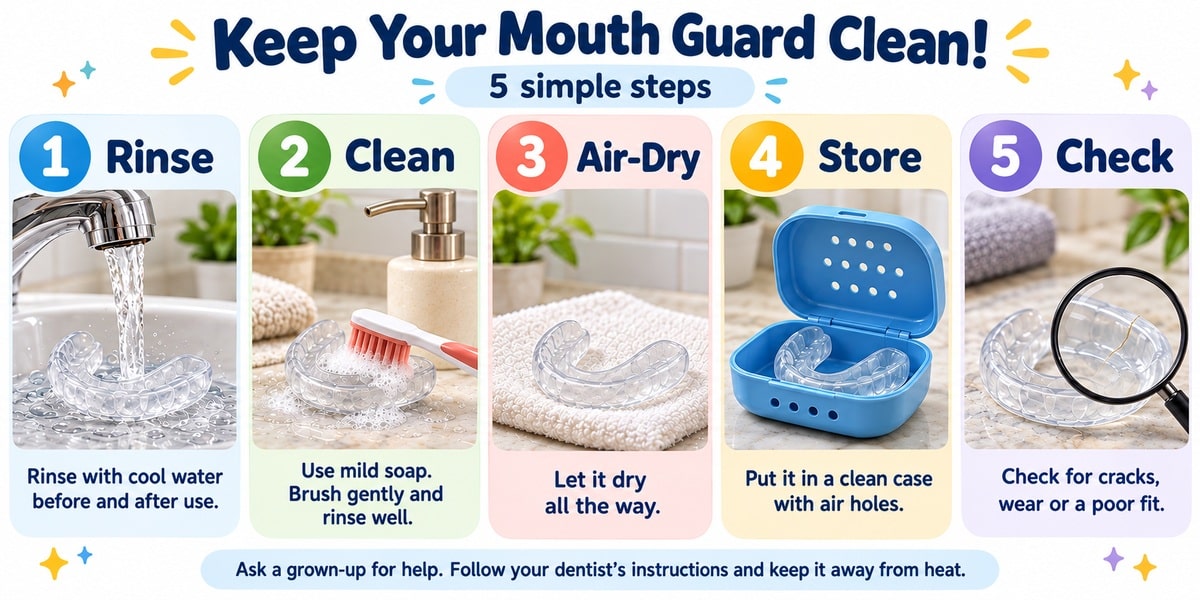
A mouth guard needs regular cleaning to remove saliva and debris and help maintain its condition.
The ADA's mouth guard guidance recommends keeping guards clean, dry, and protected between uses.
Parents can help children follow this routine:
- Rinse after use. Rinse the guard with cool water after each practice or game.
- Clean regularly. Use a toothbrush and cool, soapy water, then rinse thoroughly. Follow any specific care instructions provided for the guard.
- Allow it to dry. Place it in a sturdy, ventilated container.
- Keep it away from heat. Do not leave the guard in direct sunlight, hot water, or a parked car where the material may warp.
- Inspect it for damage. Look for tears, cracks, rough edges, or changes in shape.
Never share mouth guards between children, even if their teeth seem similar in size.
For Hawaii families, keeping a guard out of a hot car after sports practice or a beach outing is particularly important.
When Should a Child’s Mouth Guard Be Replaced?
There isn't one replacement schedule that works for every growing child.
Some children may need a new guard after substantial changes in their teeth or bite. Others may continue using the same guard as long as it remains in good condition and fits properly.
Replace a mouth guard when it becomes damaged, no longer stays in place, or begins causing discomfort.
We also recommend bringing your child's mouth guard to routine dental appointments so its condition and fit can be evaluated.
This is particularly helpful during the transition from baby teeth to permanent teeth.
Getting the Right Mouth Guard for Your Child
Choosing a mouth guard for a young child is about more than finding the smallest size on a store shelf.
A preschooler playing contact sports may need an individualized fitting assessment, while a child grinding their teeth at night may need monitoring rather than an appliance.
At Pedodontic Associates, our pediatric dental team can evaluate your child's teeth and help you understand whether a custom athletic mouth guard is appropriate.
We provide pediatric dental care at three Hawaii locations:
- Pearlridge Office, Aiea: 808-487-7933
- Kahala Office, Honolulu: 808-735-1733
- Maui Office, Kahului: 808-877-0066
Saturday appointments are also available at our Pearlridge and Kahala offices.
If your child is starting a new sport, outgrowing their current guard, or having difficulty finding a comfortable fit, we can help you determine the next step.
Contact our team to schedule an appointment or call your preferred office to discuss your child's mouth guard needs.
This article is intended for general educational purposes and does not replace an individual dental evaluation or professional medical advice.