

Bedtime routines require serious parental endurance. Guiding a tired child into the bathroom is an achievement on its own. Getting them to open their mouth for two minutes of brushing takes genuine patience. Adding flossing to the end of that sequence often feels like an impossible request.
Most adults grew up learning to brush their teeth first and floss second. You likely teach your children this exact same sequence. Dental science reveals that reversing this habit provides significantly better cavity protection for growing smiles.
Swapping the order of your child’s oral hygiene routine takes zero extra time. It dramatically increases the effectiveness of the toothpaste you already use. Our clinical team at Pedodontic Associates strongly encourages Hawaii families to adopt a “floss first” policy at home. If you want to learn more about our preventive care philosophy, visit our about us page to meet our pediatric dental specialists.
The Science of the “Sweep and Shield” Method
To understand why flossing first works better, you have to look at how cavities form. Plaque is a sticky film of bacteria that coats the teeth after eating. Plaque thrives in the tight spaces between your child’s primary teeth where a toothbrush bristle simply cannot reach.
When a child brushes their teeth first, the toothbrush easily cleans the wide flat surfaces. The plaque trapped between the teeth remains firmly in place. Flossing afterward loosens that hidden plaque and pulls it out of the crevices. The problem is that the child then spits and leaves the bathroom. That dislodged bacteria remains sitting loosely inside the mouth all night.
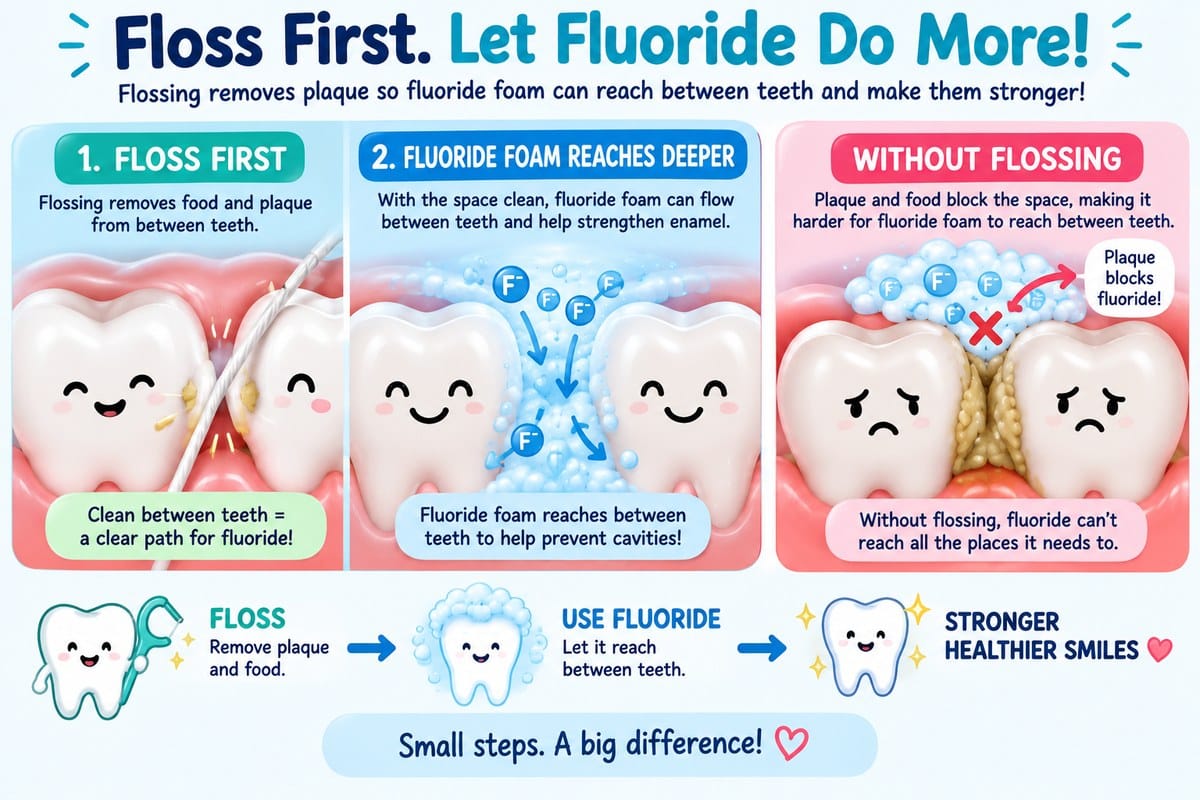
Flossing first completely changes the mechanics of cleaning. The floss breaks up the sticky bacterial colonies hiding between the teeth. It pulls trapped food particles out into the open. When your child follows up with a toothbrush, the bristles act like a broom. The brush easily sweeps away all the debris the floss just dislodged. Your child spits everything out into the sink, leaving a truly clean mouth behind.
Maximizing Fluoride Protection
Fluoride needs direct contact with bare tooth enamel to strengthen it. The American Academy of Pediatric Dentistry stresses that fluoride acts as a shield against acid attacks.
If plaque blocks the spaces between your child’s teeth, the fluoride from their toothpaste cannot penetrate those tight areas. Those hidden surfaces remain totally unprotected while the child sleeps. Cavities frequently develop in these unprotected gaps. We call this “interproximal decay.” It is one of the most common issues we treat in pediatric dentistry.
Flossing first clears the physical roadblocks. It opens the spaces between the teeth completely. When the toothpaste enters the mouth a minute later, the fluoride flows freely into those newly cleaned gaps. The enamel fully absorbs the cavity-fighting minerals.
| Routine Sequence | What Happens to Plaque | What Happens to Fluoride |
|---|---|---|
| Brush First, Floss Second | Plaque is loosened but remains in the mouth overnight. | Fluoride is blocked by plaque and cannot reach between teeth. |
| Floss First, Brush Second | Loosened plaque is actively brushed away and spit out. | Fluoride directly contacts clean enamel in the tightest spaces. |
Solving the Bedtime Fatigue Problem
Flossing is historically the most skipped step in childhood oral hygiene. Children experience extreme fatigue by the end of the day. Parents are equally tired.
When you leave flossing for the very last step, the temptation to skip it skyrockets. The child is already complaining. The parent just wants to turn the bathroom light off. Saving the most difficult task for the very end guarantees inconsistent results.
Moving flossing to the front of the routine solves this behavioral hurdle. You tackle the task while the child still has a small reserve of patience. Once the flossing is finished, brushing feels like the easy home stretch. Setting this expectation early builds a rock-solid foundation for their adult habits. If you are struggling to build healthy home habits and want to prepare your child for professional cleanings. our pediatric dental team can offer guidance on making flossing and brushing part of your child’s daily routine.
Choosing the Right Tools for Little Hands
Traditional string floss requires extreme manual dexterity. Wrapping a string tightly around two fingers and maneuvering it to the back of the mouth is incredibly difficult for young children. Even parents struggle to use string floss inside a squirming toddler’s mouth.
You must adapt the tools to fit your child’s current physical abilities. Make sure the products you choose carry the American Dental Association (ADA) Seal of Acceptance for safety and effectiveness.
Floss Picks for Kids
Plastic floss picks feature a small piece of string held tightly on a colorful handle. They are visually appealing to kids. They allow parents to floss a child’s teeth using only one hand. Older kids can easily grip the handle to practice flossing themselves. Ensure you rinse or wipe the floss pick after doing a few teeth so you do not spread bacteria around the mouth.
Water Flossers
Water flossers use a targeted stream of water to blast plaque out from between teeth. They are highly effective for older children. They are absolutely essential for teenagers wearing traditional braces. Orthodontic wires make standard flossing a frustrating chore. A water flosser simplifies the process entirely. Always supervise young children using water flossers to prevent the bathroom mirror from getting soaked.
Frequently Asked Questions About Flossing Kids
When should I start flossing my child’s teeth?
You must begin flossing as soon as any two teeth touch side-by-side. For many babies, this happens around their first birthday. Toothbrush bristles cannot clean the contact points where two teeth meet. Floss is the only tool that prevents decay in those tight spaces.
Do primary baby teeth really need flossing?
Yes. Baby teeth possess very thin outer enamel. A cavity that starts between two baby teeth spreads rapidly into the deeper nerve tissue. Losing a baby tooth early causes the surrounding teeth to shift. This shifting blocks the adult teeth from erupting properly.
My child’s gums bleed when we floss. Should I stop?
Bleeding gums indicate localized inflammation caused by sitting plaque. The medical term for this is gingivitis. You should never stop flossing when you see bleeding. Continue to floss gently every single night. The plaque will clear away. The gum tissue will heal. The bleeding will stop completely within a week.
Partnering with Your Hawaii Pediatric Dentist
Changing a deeply ingrained habit takes a little practice. Switching to a floss-first routine offers immediate benefits for your child’s long-term oral health. Our team is always here to demonstrate proper flossing techniques during your child’s preventive care appointments.
Pedodontic Associates is ready to support your family with convenient clinics across Oahu and Maui. Explore our Pearlridge office in Aiea or our Kahala office in Honolulu. We also serve neighbor island families at our Maui office. You can contact our scheduling team today to book your next preventive visit. We also encourage you to review our comprehensive pediatric dental services page to see exactly how we care for growing smiles.
Medical & Legal Disclaimer: The content on this blog is provided for general informational purposes only and is not intended as medical advice, diagnosis, or treatment. Always seek the advice of a qualified pediatric dentist regarding your child’s specific oral health needs. If your child is experiencing a severe medical emergency, call 911 or proceed to the nearest emergency room immediately.