
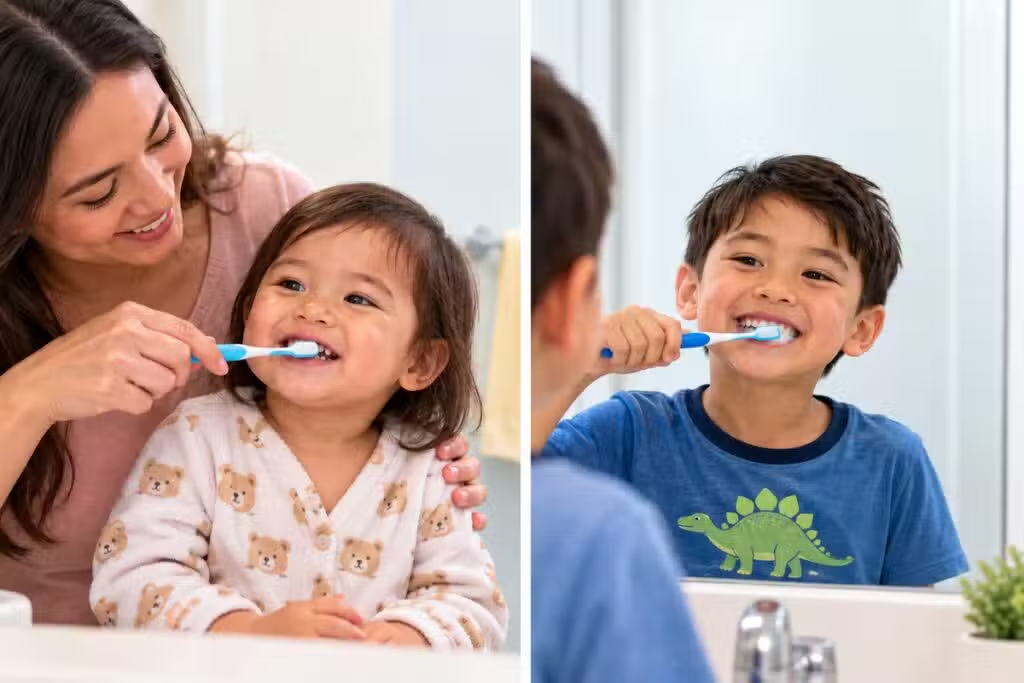
Parents eagerly await the day their child can manage the bedtime routine independently. Handing over the toothbrush permanently feels like a major parenting milestone. Transferring this responsibility too early often leads to hidden cavities.
Children naturally crave independence. They will confidently claim they brushed their teeth perfectly. A quick check of their back molars usually tells a different story. Proper oral hygiene requires complex manual dexterity. It demands patience. Brushing effectively also requires a firm grasp of spatial awareness to reach the hidden surfaces of every tooth.
Our team at Pedodontic Associates helps Hawaii families navigate this exact transition every single day. We understand the delicate balance between fostering your child’s independence and protecting their developing enamel. If you are curious about our clinical approach to patient education, visit our about us page to learn more about our doctors.
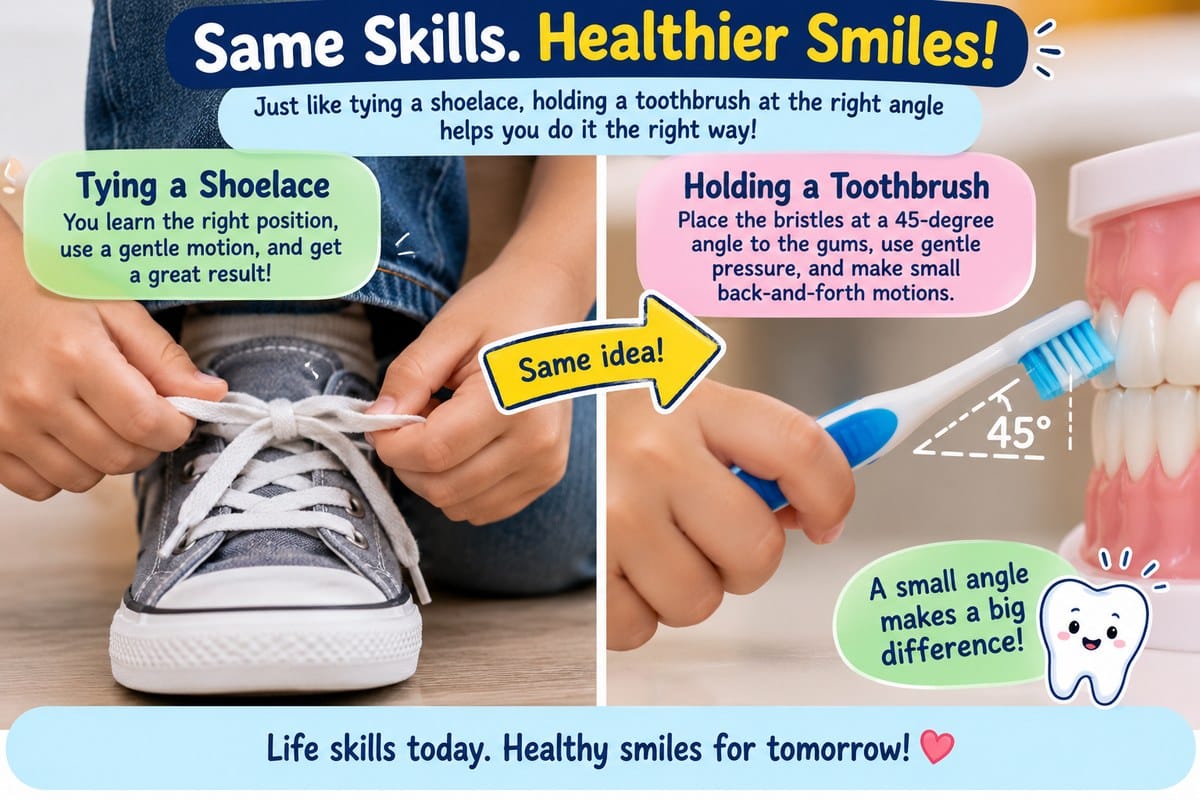
The Shoelace Rule: A Dental Milestone
Pediatric dental professionals use a specific developmental marker to gauge brushing readiness. It is widely known in the dental field as the “shoelace rule.”
If a child does not have the fine motor skills required to tie their own shoes securely, they do not possess the manual dexterity to angle a toothbrush effectively. Tying shoelaces and brushing teeth both require precise hand-eye coordination. This developmental milestone typically occurs between the ages of seven and eight.
Until your child reaches this level of physical coordination, a parent must be heavily involved in the daily brushing routine.
Age-by-Age Breakdown for Brushing Independence
The journey to complete brushing autonomy happens in distinct stages. The American Academy of Pediatric Dentistry recommends parent-assisted brushing twice a day for two full minutes. Here is how your role shifts as your child grows.
| Age Group | Developmental Stage | Parent Responsibility | Child Responsibility |
|---|---|---|---|
| Ages 0 to 3 | Zero manual dexterity. High risk of swallowing toothpaste. | 100% control. The parent performs all brushing and flossing. | Simply cooperating and keeping their mouth open. |
| Ages 4 to 6 | Developing grip strength. Craves independence. | The parent does the final, thorough pass every single time. | Practices holding the brush. Brushes the front teeth briefly. |
| Ages 7 to 9 | Can tie shoelaces. Better spatial awareness. | Supervise the routine. Spot-check the back molars randomly. | Performs the primary brushing. Learns to floss with picks. |
| Ages 10+ | Full fine motor control. Understands hygiene concepts. | Provide tools. Enforce the twice-daily habit. | 100% control of daily brushing and flossing. |
Ages 0 to 3: Complete Parent Control
Infants and toddlers lack the physical coordination to brush their own teeth. They also do not have the reflex control to spit consistently.
During these early years, parents must handle the toothbrush entirely. You are responsible for clearing away plaque before it hardens into tartar. Use a smear of fluoride toothpaste the size of a single grain of rice. This specific amount protects the enamel safely even if the child swallows it.
Do not expect a toddler to practice brushing effectively. Let them chew on a clean silicone training brush for sensory exploration during playtime. The actual bedtime cleaning remains your full responsibility.
Ages 4 to 6: The “My Turn, Your Turn” Phase
Preschoolers want to do everything themselves. Suppressing this desire entirely creates unnecessary bedtime friction. This is the perfect age to introduce the shared brushing method.
Let your child start the process. Give them the toothbrush and let them scrub the front teeth for thirty seconds. Praise their effort enthusiastically. Once they finish their turn, you must step in to complete the job. Explain that parents have to reach the tricky hiding spots in the back.
This phase focuses on building a positive habit. The parent ensures the actual plaque removal happens. If your preschooler is anxious about someone else touching their teeth, review our guide on what to expect during a pediatric dental visit to see how we desensitize kids to dental care.
Ages 7 to 9: Guided Supervision
This is the transition window. Most children master the shoelace rule around first or second grade. They now have the wrist control to angle the toothbrush properly.
You can finally step back from physically brushing their teeth. You cannot step away from the bathroom completely. Children in this age bracket rush through tasks. They will gladly brush for ten seconds and declare the job finished.
Parents must act as the bathroom monitor. Ensure they brush for a full two minutes. Look for toothpastes featuring the American Dental Association (ADA) Seal of Acceptance to guarantee they are using verified cavity-fighting products. You should also introduce plaque disclosing tablets at this stage. These chewable tablets dye missed plaque bright pink. The visual proof shows your child exactly where they need to brush better.
Ages 10 and Up: True Autonomy
By age ten, a child possesses all the physical and cognitive tools to manage their oral hygiene. They understand the consequences of cavities. They can manipulate dental floss effectively.
Your job shifts from active supervisor to inventory manager. Make sure they have fresh toothbrushes every three months. Stock up on their preferred floss picks.
Keep in mind that orthodontic treatment changes the rules. If your teenager gets braces, their brushing routine becomes significantly more complicated. Brackets and wires trap food aggressively. You may need to step back in to supervise their brushing technique until they master the complex angles required to clean around braces.
Frequently Asked Questions About Brushing Independence
How do I check my child’s brushing without starting an argument?
Use the “squeaky clean” test. After they finish brushing, run your clean index finger lightly across their front teeth. Clean enamel feels smooth and squeaky. Teeth covered in plaque feel fuzzy. This physical demonstration proves they need to try again without you raising your voice.
What if my eight-year-old still gags when brushing their back teeth?
Gagging often points to sensory sensitivities or a brush head that is simply too large. Switch to a compact pediatric brush head. Tell your child to breathe strictly through their nose while brushing the back molars. Breathing through the mouth triggers the gag reflex much faster.
Does using an electric toothbrush mean they can brush alone sooner?
Electric toothbrushes remove plaque very efficiently. They do not replace the need for parental supervision. A child still needs the spatial awareness to move the vibrating bristles across every single tooth surface. Introduce electric brushes to kids who struggle with manual dexterity, but maintain your supervision timeline.
Partnering with Your Hawaii Pediatric Dentist
Every child develops at their own unique pace. If you are unsure whether your child is ready to brush alone, our pediatric specialists can help. We evaluate your child’s brushing technique during their routine checkups and provide direct, encouraging feedback.
With convenient locations across Oahu and Maui, Pedodontic Associates is ready to support your family as your child grows. Explore our Aiea, Honolulu, and Maui office locations to find the clinic closest to you. You can contact our scheduling team today to book your next visit. We also encourage you to review our pediatric dental services page to explore all the ways we protect developing smiles.
Medical & Legal Disclaimer: The content on this blog is provided for general informational purposes only and is not intended as medical advice, diagnosis, or treatment. Always seek the advice of a qualified pediatric dentist regarding your child’s specific oral health needs. If your child is experiencing a severe medical emergency, call 911 or proceed to the nearest emergency room immediately.