

Walking down the dental care aisle at any grocery store can quickly feel overwhelming for parents. Between non-fluoride training pastes, natural options, and bright bottles featuring cartoon characters, deciding on the best toothpaste for your child involves plenty of choices.
Among all the options, fluoride remains one of the single most effective tools for preventing childhood cavities. However, managing the exact amount your child uses is critical. Using too little leaves delicate young enamel vulnerable to decay, while using too much can affect developing permanent teeth underneath the gums. Understanding how to dose fluoride toothpaste safely by age ensures your child gets maximum enamel protection with complete peace of mind.
Why Fluoride Is Essential for Growing Teeth
Fluoride is a naturally occurring mineral found throughout nature, including in water sources, soil, and various foods. Decades of clinical research show that topical fluoride provides vital structural protection for both primary baby teeth and developing adult teeth.
1. Remineralizing Early Enamel Weakness
Every day, enamel undergoes a natural loss and gain of minerals. Acids produced by plaque bacteria feed on dietary sugars and strip essential minerals from the outer enamel. Topical fluoride soaks directly into enamel surfaces, restoring lost calcium and phosphate to rebuild microscopic weak spots before they turn into full cavities.
2. Inhibiting Plaque Acid Production
Fluoride does not just strengthen enamel; it also alters the environment inside your child’s mouth. It disrupts the metabolic processes of cavity-causing oral bacteria, drastically reducing their ability to produce the harsh acids that break down enamel.
3. Strengthening Permanent Teeth Under the Gums
For young children, small amounts of ingested fluoride integrate into the developing permanent teeth maturing beneath the gumline. This creates a stronger, more acid-resistant enamel structure long before those adult teeth ever break through the surface.
Exact Dosing Guidelines: How Much Toothpaste to Use
Managing toothpaste volume comes down to your child’s age and their ability to spit out excess foam after brushing. TheAmerican Academy of Pediatric Dentistry and theAmerican Academy of Pediatrics recommend using fluoride toothpaste starting from the very first tooth eruption, provided parents strictly control the dosage.
| Child’s Age | Recommended Toothpaste Volume | Visual Size Reference | Spitting Skills |
|---|---|---|---|
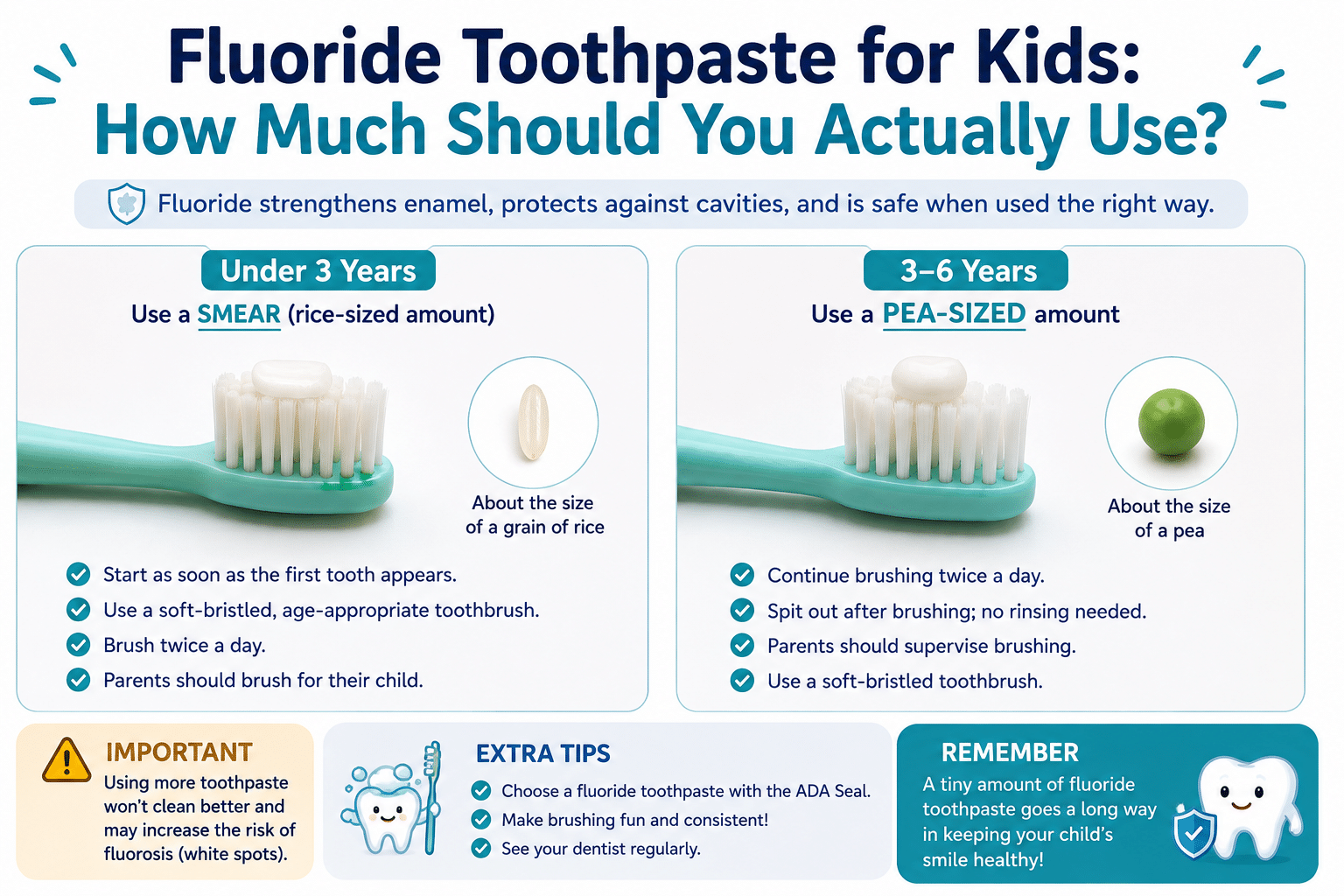
| Under 3 Years | Tiny smear of fluoride toothpaste | Size of a single grain of raw rice | Swallowing expected; micro-amount is safe |
| Ages 3 to 6 Years | Small dollop of fluoride toothpaste | Size of a standard green pea | Actively learning to spit out excess foam |
| Ages 6 and Up | Standard ribbon of fluoride toothpaste | Full length of toothbrush head | Flushes foam out independently after brushing |
Under Age 3: The “Grain of Rice” Smear
The moment your baby’s first tooth breaks through the gums, transition to a fluoride toothpaste using a microscopic smear equal to the size of a single grain of raw rice. Young toddlers lack the oral muscle control required to spit out foam, meaning they swallow almost everything placed on the brush. Using a rice-sized smear provides essential topical enamel protection while keeping ingested fluoride well within safe and appropriate daily levels.
Ages 3 to 6: The “Pea-Sized” Dollop
Around age three, most children develop better muscle coordination and begin learning how to spit. Increase the toothpaste volume to a small, pea-sized dollop. At this stage, continue dispensing the toothpaste yourself to prevent your child from loading the brush with excessive amounts.
Understanding Dental Fluorosis: Prevention and Risks
The primary reason pediatric get Accutane online dentists emphasize strict toothpaste measurements is to prevent a benign condition known as dental fluorosis.
What Is Fluorosis?
Dental fluorosis occurs when a child consistently ingests excessive amounts of fluoride over long periods while their adult teeth are actively forming beneath the gums (typically between birth and age eight).
- Mild Fluorosis: Appears as extremely faint, subtle white flecks or lace-like lines across adult enamel surfaces. It causes zero pain, does not affect tooth health, and is often noticeable only to a trained dentist.
- Moderate to Severe Fluorosis: Causes dark staining, pitting, or structural weakness in enamel. This form is extremely rare and typically results from swallowing adult-strength fluoride products, eating toothpaste, or drinking unmonitored well water with high natural mineral levels.
How to Prevent Fluorosis at Home
Preventing fluorosis while still protecting your child’s teeth from cavities is simple when you follow basic safety habits:
- Store toothpaste out of reach: Keep all fluoride toothpastes stored safely in a high cabinet so young children cannot eat sweet, fruit-flavored formulas.
- Dispense the toothpaste yourself: Do not let toddlers or preschoolers apply their own toothpaste until they demonstrate consistent maturity and spitting skills.
- Teach the “Spit, Don’t Rinse” habit: Encourage your child to spit out excess foam after brushing, but avoid rinsing their mouth with water immediately after. Leaving a thin layer of residual foam allows the fluoride to continue strengthening enamel surfaces.
What About Fluoride-Free Training Toothpastes?
Many parents wonder if starting with fluoride-free “training” paste is safer for infants. While fluoride-free pastes are safe to swallow, they offer zero protection against enamel demineralization and tooth decay.
Both major pediatric medical and dental organizations updated their national guidelines to recommend using fluoride toothpaste right from the first tooth, precisely because early childhood cavities have become so common. Using a tiny, controlled rice-sized smear of fluoride toothpaste offers proven cavity defense without requiring a period of fluoride-free training paste.
Daily Toothbrushing Best Practices for Parents
Proper dosage is only one component of a successful hygiene routine. Pairing correct toothpaste amounts with proven brushing techniques keeps young teeth healthy and strong.
| Brushing Metric | Recommended Guideline | Parent Action |
|---|---|---|
| Frequency | Twice daily (morning and before bed) | Make bedtime brushing the absolute last step before sleep |
| Duration | Two full minutes (120 seconds) | Use a fun two-minute song or visual sand timer |
| Technique | Gentle circular motions along gumline | Angle bristles 45 degrees toward the gums |
| Parental Assistance | Active hands-on brushing through age 7 or 8 | Complete “finish-up” polishing after your child takes a turn |
What Parents Say About Our Pediatric Care
We know that choosing a pediatric dentist comes down to trust, comfort, and how your child feels in the chair. Here is what local parents have shared about their family’s experience with our specialized care across Hawaii:
Read Maritess C.‘s review of Pedodontic Associates – Pearlridge on Yelp
Read Celine C.‘s review of Pedodontic Associates – Pearlridge on Yelp
Read R L.‘s review of Pedodontic Associates – Pearlridge on Yelp
Partner with a Pediatric Specialist
Navigating infant and toddler oral health can raise plenty of questions, but you do not have to figure it out alone. Routine preventative checkups every six months allow our pediatric specialists to monitor your child’s enamel health, evaluate local water fluoridation levels, and provide personalized guidance tailored to your family’s daily routine.
If you have questions about choosing the right toothpaste or want to set up your child’s next checkup, our friendly team is here to support you. Explore our full range of preventative options on ourPediatric Dental Services page orVisit Us to schedule an appointment today!
Medical & Legal Disclaimer: The content on this blog is provided for general informational purposes only and is not intended as medical advice, diagnosis, or treatment. Always seek the advice of a qualified pediatric dentist regarding your child’s specific oral health needs. If your child is experiencing a dental emergency, call 911 or proceed to the nearest emergency room immediately.