
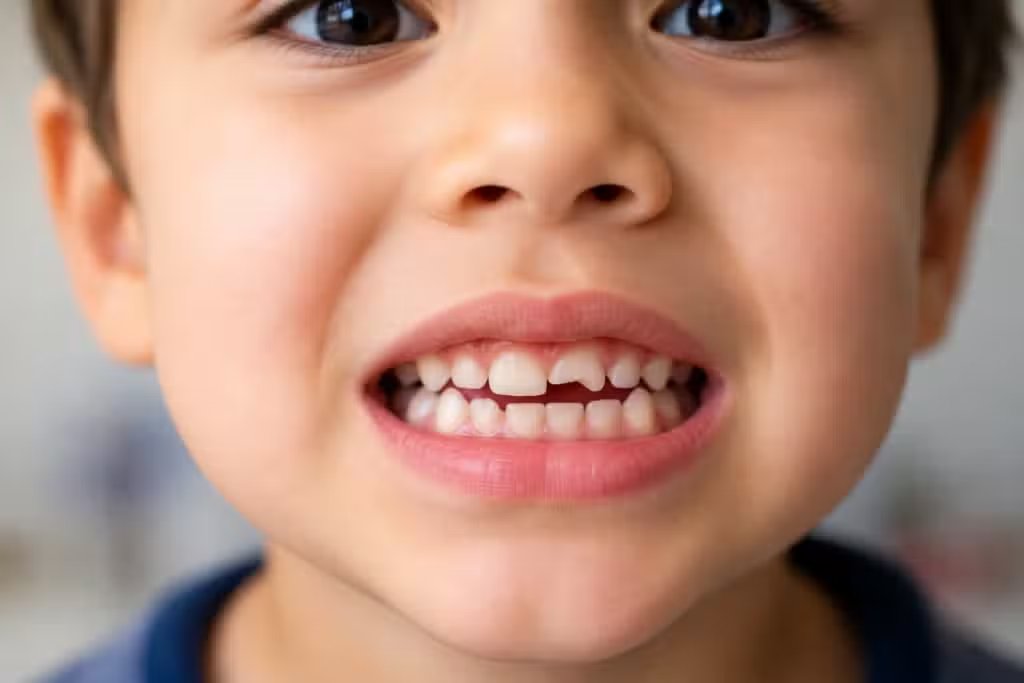
Few sounds match the sudden drop in a parent’s stomach quite like the sound of a dull thud followed by a child’s sudden cry. Whether your toddler takes a tumble while learning to walk, slips off the playground equipment, or collides with a sibling during indoor play, dental trauma is an inevitable part of raising active kids.
When an accident results in a chipped baby tooth, panic often sets in immediately. Knowing exactly what to do in those first critical minutes helps you stay calm, manage your child’s comfort, and protect their developing smile.
Assessing the Damage: Why Baby Teeth React Differently
When an adult chips a permanent tooth, it is treated as an urgent dental emergency requiring immediate repair. When a primary baby tooth chips, the clinical approach depends heavily on the severity of the fracture and how close the tooth is to its natural shedding age.
1. Enamel-Only Chips (Minor Fracture)
If the chip is small, smooth, and affects only the outer white enamel layer, your child will typically feel little to no discomfort. Because baby tooth enamel is relatively thin, minor chips on front teeth are extremely common and rarely require invasive restoration. A pediatric dentist can simply smooth down any sharp edges so they do not scratch your child’s tongue or lips.
2. Dentine or Pulp Exposure (Serious Fracture)
If the chip is deep, exposes the yellowish layer beneath the enamel (dentine), or reveals a tiny pinkish dot or bleeding spot in the center (the nerve pulp), immediate professional evaluation is required. Exposed nerves cause sharp sensitivity to air, cold liquids, and pressure, putting the tooth at risk of infection.
Step-by-Step Emergency Action Plan for Parents
If your child chips a tooth, follow this straightforward step-by-step response plan to manage the situation safely:
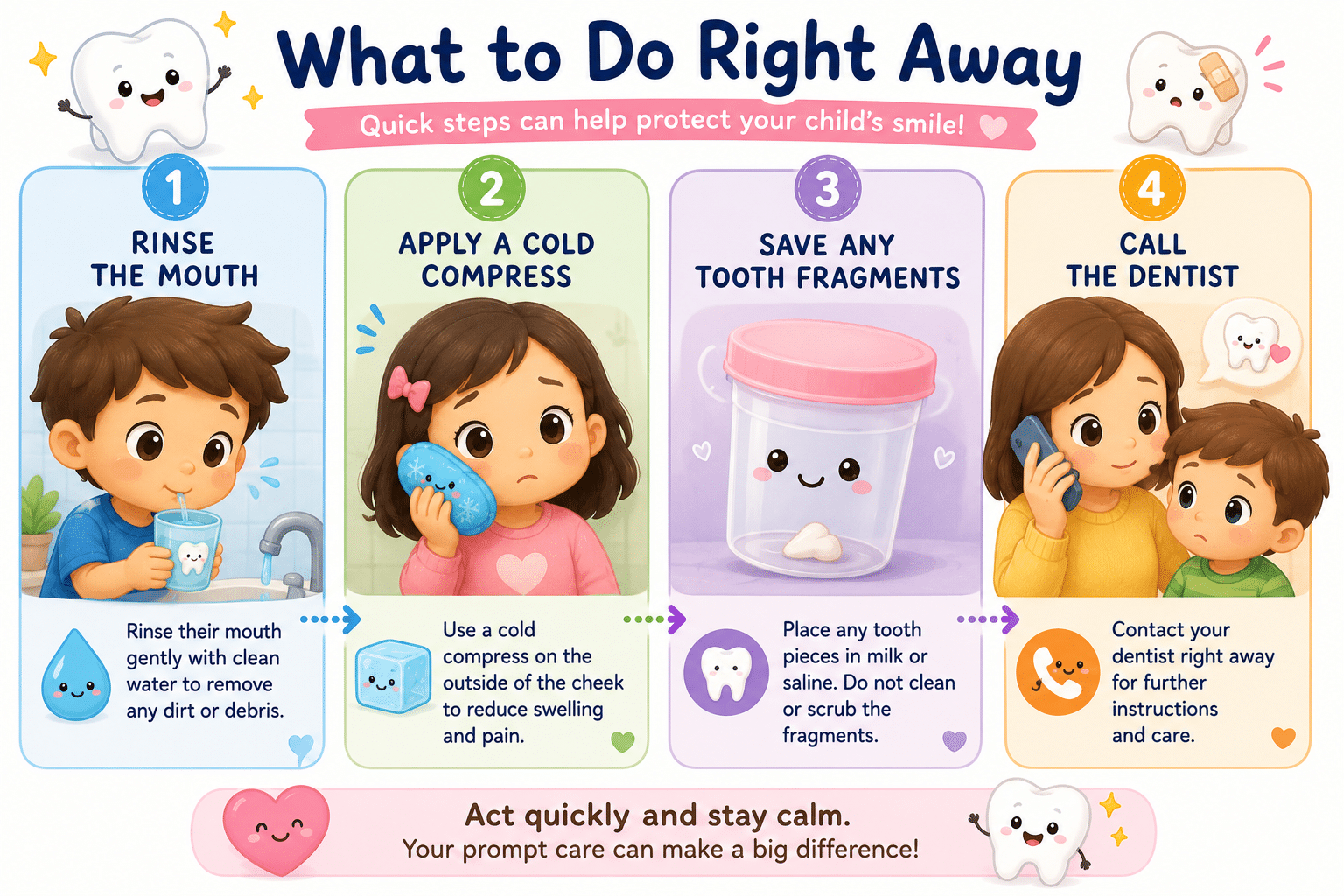
Step 1: Stay Calm and Comfort Your Child
Children take emotional cues directly from their parents. If you panic, your child will panic. Speak in a gentle, reassuring voice, wipe away any tears, and check inside their mouth to assess the bleeding.
Step 2: Rinse the Mouth with Warm Water
Gently rinse your child’s mouth with clean, warm water to clear away any blood, saliva, or dirt. If there is minor bleeding along the gumline from a bruised lip or torn frenulum, press a clean gauze pad or washcloth against the area with light pressure for five minutes.
Step 3: Apply a Cold Compress to Reduce Swelling
If your child bumped their mouth hard enough to chip a tooth, lip or cheek swelling is likely. Wrap an ice pack or a bag of frozen peas in a clean cloth and apply it gently to the outside of their cheek or lip for 10 to 15 minutes to minimize inflammation.
Step 4: Find and Save Any Tooth Fragments
If you can find the broken piece of the tooth, pick it up gently, rinse it with water, and store it in a clean container filled with milk or saliva. While pediatric dentists rarely glue a baby tooth fragment back on, bringing the piece to your appointment helps the dentist evaluate the exact angle and depth of the fracture.
Step 5: Manage Pain Safely
If your child complains of discomfort, ask your pediatric dentist or pediatrician for an age-appropriate dose of children’s ibuprofen or acetaminophen. Avoid placing aspirin directly against the gums or injured tooth, as chemical burns can damage soft tissue.
When Is a Chipped Baby Tooth a Dental Emergency?
Not every chipped tooth requires an immediate rush to the dental office, but certain red flags mean you should call our office right away:
| Clinical Red Flag | What It Looks Like | Action Required |
|---|---|---|
| Pink or Red Dot on Tooth | A tiny dot visible in the center of the broken tooth surface (nerve pulp exposure). | Urgent: Call immediately; the tooth may require pulp therapy or extraction to prevent infection. |
| Severe Tooth Mobility | The chipped tooth is wobbling heavily or pushed sideways out of alignment. | Urgent: Professional assessment needed to check root fracture or bone displacement. |
| Uncontrollable Bleeding | Heavy, continuous bleeding from the gum tissue surrounding the fractured tooth. | Urgent: Clean pressure needed; contact your dentist or visit an urgent care center if bleeding persists. |
| Facial Trauma or Concussion | Dizziness, lethargy, vomiting, or confusion following a hard blow to the head. | Emergency: Call 911 or proceed to the nearest emergency room immediately. |
Long-Term Monitoring: What Happens After a Chip?
Once the initial emergency passes and your pediatric dentist evaluates the tooth, ongoing monitoring is essential over the following weeks and months.
Watching for Color Changes
A traumatized baby tooth often undergoes internal bruising. It is very common for a chipped or bumped tooth to turn a shade of pink, grey, purple, or dark yellow a few weeks after an accident.
- Temporary Discoloration: If the tooth turns a slightly grey or yellow tint but remains asymptomatic, the internal blood vessels may have healed, and the tooth can often remain in place until it sheds naturally.
- Signs of Infection: If the tooth turns dark grey or black and develops a small pimple-like bump (fistula) on the gumline above it, the nerve inside has died, and the tooth has developed a localized infection. This requires professional treatment to protect the permanent adult tooth developing directly underneath.
What Parents Say About Our Pediatric Care
We know that choosing a pediatric dentist comes down to trust, comfort, and how your child feels in the chair. Here is what local parents have shared about their family’s experience with our specialized care across Hawaii:
Read Kimberleigh R.‘s review of Pedodontic Associates – Kahala on Yelp
Read Di S.‘s review of Pedodontic Associates – Kahala on Yelp
Partner with a Pediatric Specialist
Accidents happen in the blink of an eye, but having a trusted pediatric dental home gives you peace of mind when unexpected trauma occurs.
Both theAmerican Academy of Pediatric Dentistry and theAmerican Academy of Pediatrics recommend establishing regular preventative dental checkups every six months so your child feels comfortable in the clinic long before an emergency happens.
If your child has chipped a tooth, is experiencing oral pain, or needs an urgent evaluation, our experienced team is here to support your family. Explore our full range of emergency and restorative services on ourPediatric Dental Services page orVisit Us to schedule an appointment today!
Medical & Legal Disclaimer: The content on this blog is provided for general informational purposes only and is not intended as medical advice, diagnosis, or treatment. Always seek the advice of a qualified pediatric dentist regarding your child’s specific oral health needs. If your child is experiencing a dental emergency, call 911 or proceed to the nearest emergency room immediately.