
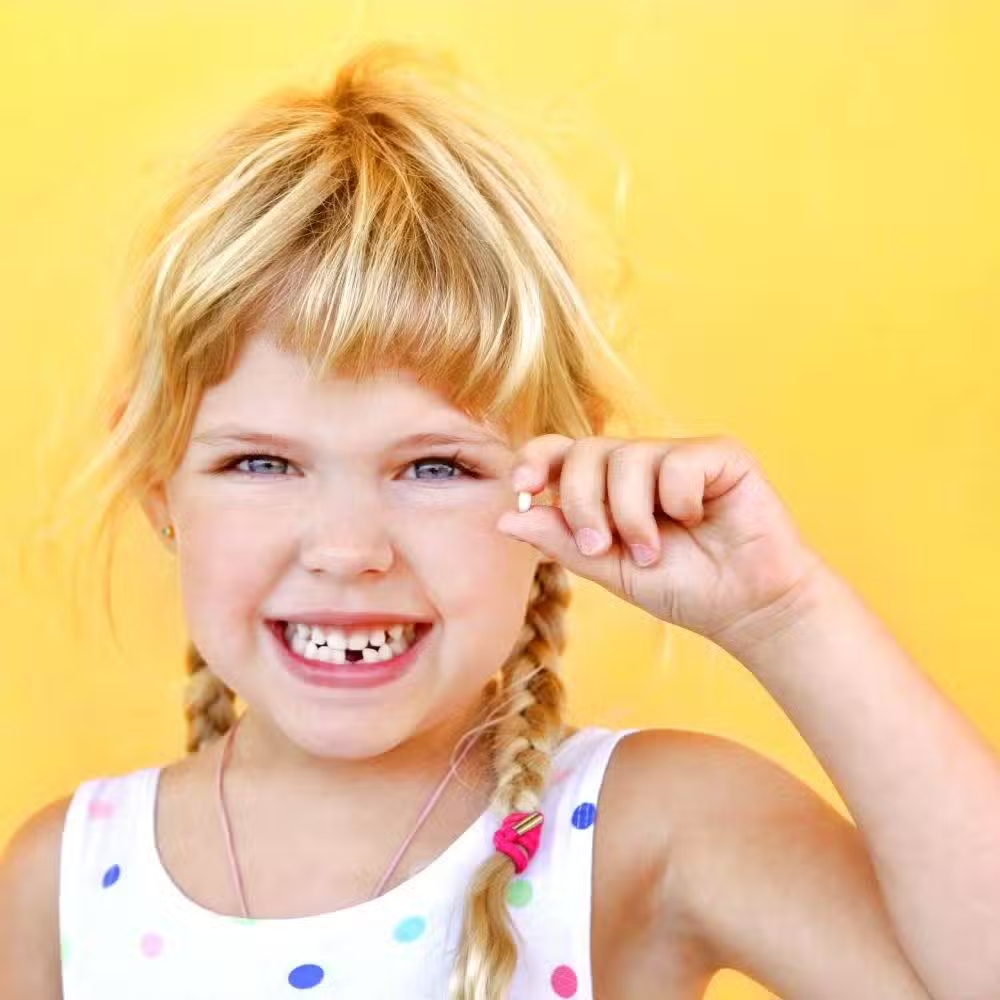
Your child’s natural teeth are irreplaceable biological assets that shape far more than just their smile. Premature tooth loss in childhood doesn’t just create gaps—it triggers a cascade of developmental issues that can require years of expensive orthodontic correction. Children who lose primary baby teeth early can face rapid, notable space loss within just six months, causing permanent adult teeth to erupt improperly and significantly increasing the likelihood of crowding, severe misalignment, and complex bite problems.
According to the American Academy of Pediatric Dentistry (AAPD), children with untreated cavities in their primary teeth are three times more likely to develop cavities in their permanent teeth. The good news? Most tooth loss in childhood is entirely preventable with the right clinical strategies and daily management. At Pedodontic Associates, we have been Hawaii’s leaders in tooth preservation since 1977. Our specialists are dedicated to ensuring your child keeps their natural teeth for a lifetime across our Aiea, Honolulu, and Maui communities.
Why Your Child’s Primary Teeth Deserve Protection
Many parents mistakenly believe that baby teeth don’t matter because they eventually fall out naturally. In reality, primary teeth are essential placeholders that guide permanent teeth into their proper positions. They maintain the arch space needed for adult teeth to erupt correctly, typically holding these vital spots until ages 10 to 12.
When a primary tooth is lost too early due to severe decay or structural injury, the neighboring teeth naturally drift and tilt into the empty space. This drifting effectively blocks the underlying permanent tooth from emerging where it should. Furthermore, the jawbone develops in direct response to the teeth it holds. Premature loss can lead to localized bone resorption, potentially affecting facial structure and creating a skeletal foundation that is too narrow for adult teeth. Early childhood caries remains one of the most common chronic childhood diseases, making early, proactive preservation a vital health milestone.
Daily Habits That Actually Preserve Enamel
Effective tooth preservation starts at the family bathroom sink. Brushing technique, instrumentation, and proper timing are far more important than frequency alone to keep enamel healthy.
The 2-2-2 Rule for Keiki
- Two Minutes: Brush thoroughly for two full minutes during every session. Use a digital timer or a favorite song to keep your child engaged.
- Twice Daily: Brush at least twice a day—once in the morning and once right before bed.
- Twice a Year: Maintain specialized pediatric checkups every six months to monitor development.
Clinical Home Care Guardrails
When executing your daily oral care routine, our specialists recommend a simple back-and-forth scrubbing motion across the flat chewing surfaces and both the tongue facing surfaces and the cheek facing surfaces of their molars. For cleaning the inside surfaces of the front teeth, tilt the toothbrush completely vertically and use short, vertical up-and-down strokes to clear away plaque.
Always implement age-appropriate fluoride guidelines: for children under the age of 3, use a tiny, rice-grain-sized smear of fluoride toothpaste. For children aged 3 to 6, increase this to a standard pea-sized amount. Parents must actively supervise brushing and perform a follow-up spot-clean until age 7 or 8, as younger children do not develop the fine manual dexterity required to clear every tooth surface effectively. Additionally, remember to floss consistently at nighttime before bed to clean the tight spaces between teeth where toothbrush bristles cannot reach.
Nutrition Choices: Strengthening vs. Sabotaging Enamel
Sugar feeds the oral bacteria that produce enamel-eroding acid, but the daily frequency of exposure is the real biological danger. Sipping on juices, sodas, or milk throughout the day bathes the teeth in a constant acid bath that rapidly dissolves tooth minerals.
Tooth-Friendly Nutrition vs. High-Risk Habits
| Food or Habit Category | Direct Impact on Preservation | Recommended Home Strategy |
|---|---|---|
| Plain Water | Boosts natural saliva flow and helps neutralize harmful oral acids. | The absolute #1 default beverage choice for tooth preservation. |
| Acidic Tropical Fruits | High acid content (like fresh pineapple or citrus) softens enamel. | Serve these items with main meals, and rinse with plain water after. |
| Sticky Snacks | Dried fruits, fruit leathers, and gummies pack tightly into molar grooves. | Avoid completely; choose fresh, crisp whole fruits instead. |
| Crunchy Raw Veggies | Celery and raw carrots act as natural mechanical toothbrushes. | Excellent for cleaning tooth surfaces naturally mid-day. |
| Nutrient-Rich Dairy | Provides vital calcium and phosphate ions to rebuild weak spots. | Essential dietary component for building dense, strong enamel layers. |
In Hawaii, our vibrant local culture features unique treats like shave ice, crack seed, and li hing mui. The combination of prolonged sugar exposure and the common temptation to crunch down on hard pieces of ice can lead to micro-fractures in the composite structure of the enamel. Enjoy these popular treats as an occasional part of a structured main meal rather than a standalone snack to minimize long-term structural damage.
Preventive Treatments: Stopping Problems Before They Start
Modern pediatric dentistry offers highly effective, conservative protective barriers that can completely stop decay before it ever requires a traditional dental drill.
Protective Dental Sealants
These are thin, smooth protective coatings applied directly to the complex chewing surfaces of the back permanent adult molars as soon as they erupt. They safely seal off the deep, anatomical pits and fissures where up to 80% of childhood cavities form. Sealants prevent food debris and bacteria from settling into hard-to-clean spaces, saving families from the stress of future restorative dental fillings.
Professional Fluoride Varnish
Applied in just a few seconds during your child’s routine cleaning visit, this professional varnish creates a highly concentrated mineral shield. It works over several days to reverse early demineralization and re-harden vulnerable white spot lesions.
Non-Invasive Guided Enamel Regeneration
For early-stage, un-cavitated “watches,” our offices provide non-invasive Curodont™ Repair therapy. Painted on with a small applicator, this fluid flows into the microscopic pores of the enamel, pulling calcium from saliva to naturally regenerate the tooth structure from the inside out without any needles or drilling.
Emergency Response: The 30-Minute Rule
When an active permanent adult tooth is completely knocked out due to physical trauma, seconds directly determine whether the natural tooth can be successfully saved. A permanent tooth that is properly replanted within 30 minutes carries an exceptionally high long-term success rate.
- Find the Tooth Immediately: Handle the tooth strictly by the crown (the white portion you see in the mouth). Never touch the sensitive root surface to protect the delicate periodontal cells.
- Clean the Surface Gently: If the tooth is dirty, rinse it briefly with milk or the child’s saliva. Do not scrub the root, and do not use tap water, as the chlorine content can instantly kill root cells.
- Store the Tooth Safely: Keep the root alive by submerging the tooth in a small container of cold milk, saliva, or a specialized tooth preservation solution.
- Get to the Dentist Fast: Contact our emergency dental line immediately and head straight to the clinic.
Strict Primary Guardrail
If a primary baby tooth is knocked out, do not attempt to replant it. Forcing a primary tooth back into the bone socket can permanently damage or infect the permanent adult tooth bud developing directly underneath it. However, you should still contact our office immediately so our specialists can evaluate the surrounding gum tissues and jawbone for hidden injury.
The Preventive Power of a “Dental Home”
The single most effective way to preserve your child’s natural teeth is to establish a permanent dental home by their first birthday, as recommended by the American Dental Association (ADA). Regular professional oral hygiene care performs vital protective maintenance that home care alone cannot achieve:
- Professional Calculus Removal: Our hygienists utilize gentle, specialized manual instrumentation to safely clear away hardened calculus (tartar) that home toothbrushes cannot move.
- Interproximal Diagnostic Screening: Routine digital dental X-rays allow our doctors to spot “hidden” cavities forming between tight tooth spaces long before they are visible to the naked eye.
- Dental Anxiety Reduction: Early, positive, and non-traumatic checkups prevent the development of severe dental phobias, ensuring kids grow up feeling completely safe in the dental chair.
Protecting Accessible Care for Hawaii Families
At Pedodontic Associates, we understand that local families must balance hectic work schedules and school commitments. To ensure consistency in your child’s preventive care, our practices provide convenient Saturday appointment blocks across Oahu and Maui.
Our experienced administrative teams work directly with leading island insurance networks to maximize your dental benefits and keep out-of-pocket costs transparent. We proudly accept and process claims with Hawaii Dental Service (HDS)—the state’s largest standalone dental insurer—alongside HMSA, HMAA, and Hawaii Quest (Medicaid) community programs. Whether your child requires a routine cleaning, a protective mouth guard evaluation, or a bruxism screening, our team is here to help.
Explore our locations and plan your family’s next visit using our office tour links below:
- Aiea Office: Explore our Aiea dental office tour right by Pearlridge Center, providing a convenient hub for Central and West Oahu families.
- Honolulu Office: Visit our Honolulu dental office tour centrally positioned to serve busy parents across Metro Honolulu.
- Maui Office: See our Maui dental office tour located in Kahului, ensuring neighbor island families have direct access to cutting-edge pediatric care.
Every natural tooth your child preserves today is an asset they won’t have to replace or realign in the future. Trust the specialized team that has been beautifully protecting Hawaii’s keiki smiles for nearly 50 years.
Are you ready to safeguard your child’s natural smile? Contact Us today to schedule a comprehensive exam at our Aiea, Honolulu, or Maui office!
Medical & Legal Disclaimer:The content on this blog is provided for general informational purposes only and is not intended as medical advice, diagnosis, or treatment. Always seek the advice of a pediatric dentist regarding your child’s specific oral health needs. If your child is experiencing a medical emergency, including severe facial swelling, call 911 or proceed to the nearest emergency room immediately.