
As parents, our primary goal is to protect and preserve every aspect of our children’s health, and their smiles are no exception. When a dentist mentions the word “extraction,” it often triggers a wave of anxiety. You might wonder, “Is this really necessary?” or “Will it hurt my child?”
At Pedodontic Associates, we share your goal of tooth preservation. Our doctors prioritize conservative care, exhausting every restorative option—from [Dental Fillings] to crowns—before recommending the removal of a tooth. However, there are specific clinical situations where an extraction is the healthiest path forward for your child’s long-term oral development.
This guide explores why extractions are performed, the different types of procedures, and how we ensure a “painless treatment” experience for your family in Aiea, Honolulu, and Maui.
When is an Extraction Necessary?
While we strive to save every tooth, several factors can make an extraction the most responsible choice for a child’s dental health.
1. Severe Dental Decay (Cavities)
If a [Cavity] is caught early, it can be treated with a filling or a crown. However, if decay is left untreated, it can consume so much of the tooth structure that there isn’t enough healthy enamel left to support a restoration. In these cases, leaving the decayed tooth in the mouth poses a risk of infection (abscess) that could travel to the bloodstream or damage the permanent tooth underneath.
2. Dental Trauma or Injury
Active kids in Hawaii often face dental accidents. If a tooth is fractured deep below the gum line or if the root is severely damaged from a fall or sports injury, the tooth may not be salvageable. Extracting a compromised tooth prevents long-term pain and ensures the surrounding bone remains healthy for the future permanent tooth.
3. Orthodontic Preparation (Crowding)
Sometimes, a child’s mouth is simply too small to accommodate all their incoming permanent teeth. To ensure a straight, functional smile, an orthodontist may recommend extracting one or more teeth to “make room.” This is a common part of interceptive orthodontic care.
4. Over-Retained Baby Teeth
Ideally, baby teeth fall out on their own to make way for permanent ones. Sometimes, however, a baby tooth stubbornly stays in place, forcing the permanent tooth to erupt behind it (often called “shark teeth”). If the baby tooth doesn’t loosen, we may remove it to allow the permanent tooth to move into its proper position.
Extraction Comparison: Simple vs. Surgical
| Feature | Simple Extraction | Surgical Extraction |
|---|---|---|
| Typical Case | Visible baby teeth or loose teeth. | Impacted teeth or teeth broken at the gum line. |
| Procedure | The tooth is loosened and removed with specialized tools. | May require a small incision in the gum to access the tooth. |
| Anesthesia | Local numbing is usually sufficient. | Often paired with “painless” sedation options. |
| Recovery | Very fast; usually 1–2 days. | Requires 3–5 days of careful monitoring. |
Medical Disclaimer: The information provided in this guide is for educational purposes only and is not a substitute for professional medical or dental advice, diagnosis, or treatment. Always seek the advice of your pediatric dentist with any questions regarding a dental condition or procedure.
The “Painless Treatment” Experience
At Pedodontic Associates, we have specialized in pediatric care since 1977. We know that the experience matters as much as the outcome. We utilize several techniques to ensure your child remains comfortable:
- Behavioral Guidance: We use “Tell-Show-Do” techniques to explain the process in kid-friendly terms (e.g., “we are going to wiggle your tooth sleepy”).
- Advanced Numbing: We use high-quality local anesthetics to ensure the area is completely numb. Your child will feel “pressure” but should not feel “pain.”
- Sedation Options: For anxious children or complex extractions, we offer safe sedation options to ensure the child remains relaxed and has no negative memories of the procedure.
- Diagnostic Safety: We utilize low-radiation [Dental X-Rays] to map the roots precisely before we begin, ensuring the most efficient and gentle removal possible.
Understanding the Impact: Why We Use Space Maintainers
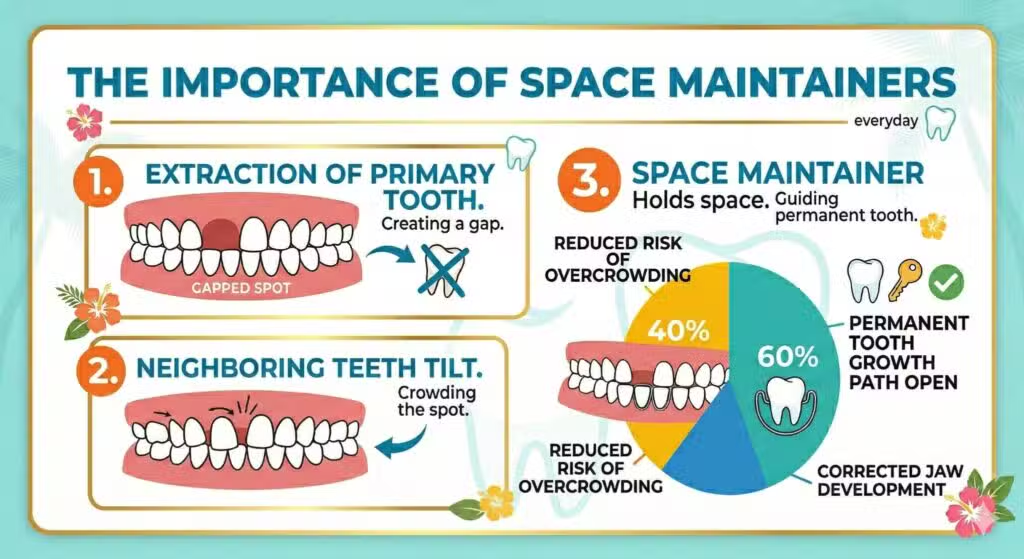
When a baby tooth is extracted prematurely, it leaves a gap. Because teeth are naturally inclined to shift into open spaces, the neighboring teeth may tilt or drift into that gap. This blocks the permanent tooth from erupting correctly. To prevent this, we often recommend a Space Maintainer.

Data Source: Clinical guidelines from the American Academy of Pediatric Dentistry (AAPD).
Post-Extraction Recovery: Hawaii-Specific Tips
The first 24 hours are the most important for healing. Your goal is to help a blood clot form in the extraction site and keep your child comfortable.
- The Gauze Pack: Have your child bite firmly on a clean gauze pack for 30–45 minutes following the procedure.
- The “No Straws” Rule: Sucking through a straw or spitting forcefully can dislodge the blood clot, leading to a painful condition called “dry socket.”
- The “Island Soft” Diet: Stick to cool, soft foods for the first 24–48 hours. In Hawaii, we have great options!
- Poi: Naturally soft and easy on the mouth.
- Smoothies/Açaí Bowls: (Eat with a spoon, not a straw!)
- Chilled Yogurt or Applesauce.
- Avoid: Crunchy chips, popcorn, or spicy foods that can irritate the site.
- Stay Hydrated: Drink plenty of water, but avoid carbonated “fizzy” drinks which can interfere with the clot.
- Pain Management: We will provide specific instructions for children’s pain relievers. Often, a cold compress on the outside of the cheek is the most effective way to manage minor swelling.
Frequently Asked Questions: Tooth Extractions
Will my child be awake during the extraction?
In most simple cases, yes.
How long does the procedure take?
A simple extraction often takes less than 15 minutes. We spend more time ensuring the child is comfortable and the area is numb than we do on the actual removal.
Does an extraction affect how my child speaks?
If a front tooth is removed, there may be a temporary “lisp” while they adjust, but this is usually minor and resolves quickly.
When can my child go back to school?
Most children can return to school the day after a simple extraction. For surgical removals, we may recommend an extra day of rest.
Real Stories from Hawaii Families
“My daughter had to have two teeth pulled for her braces. I was so worried she would be traumatized, but the doctors were so incredibly gentle. She didn’t even realize the teeth were out! They really live up to the ‘painless’ reputation.” — Sarah W. | Read the Google Review
“Excellent pediatric dental office! Very professional, kind, and great with kids. My children actually look forward to their dental visits—even when they need a filling or a tooth pulled. We have been coming here for over 10 years.” — Michelle M. | Read the Google Review
Final Thoughts: Building a Foundation for the Future
An extraction is never our first choice, but it is sometimes the most important step in protecting your child’s future smile. By removing a source of infection or clearing the way for permanent teeth, we are ensuring their adult smile has the best possible start.
If you are concerned about a loose tooth, severe decay, or crowding, don’t wait. Early intervention is the key to simpler, faster, and more affordable care.
- Aiea (Pearlridge): (808) 487-7933
- Honolulu (Kahala): (808) 735-1733
- Maui (Kahului): (808) 877-0066
Additional Resources
- American Academy of Pediatric Dentistry (AAPD)
- Mouth Healthy – ADA Guide to Extractions
- Mayo Clinic – Wisdom Tooth Extraction
Medical & Legal Disclaimer: The content on this blog is provided for general informational purposes only and is not intended as medical advice, diagnosis, or treatment. Every child’s dental needs are unique; always seek the advice of a qualified pediatric dentist regarding any questions you have about a dental condition. If your child is experiencing a medical emergency, including severe facial swelling, high fever, or difficulty breathing, call 911 or proceed to the nearest emergency room immediately.